Abstract
Soil-borne infection of Bipolaris sorokiniana caused foot and root rot in all spring barley cultivars studied. Significant differences in susceptibility of the cultivars and pathogenicity of the fungus isolates were found. Primary symptoms caused by the fungus were seedling blight, later foot and root rot. Yield losses caused by the fungus varied from 3 % to 33 % the mean being c. 15 %. Yield losses could occur without severe disease symptoms. Toxic metabolites produced by the fungus induced visible foot and root symptoms in all cultivars tested and caused lesions in the leaves of some cultivars. Variability in toxin production of fungus isolates as well as the reaction of a cultivar to toxins was demonstrated. The cultivars most susceptible to soil-borne infection by the fungus also showed the most severe symptoms when exposed to toxic metabolites of the fungus.
Abstract from the paper’s OpenAlex record; open copy licensed cc-by. Read at the source ↗
The text the model read, with the source record’s inline markup (italics, sub- and superscripts) rendered and its character entities decoded; quote offsets refer to the raw text.
Claims 11
Claim · model-written summary
Soil-borne Bipolaris sorokiniana infection caused foot and root rot in all spring barley cultivars studied.
- Taxon
- spring barley
 Hordeum vulgaree0
- Interactor
- Bipolaris sorokiniana
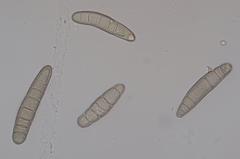 Bipolaris sorokinianae0pathogen
- Outcome
- foot and root rote0
- Setting
- Finlandt0
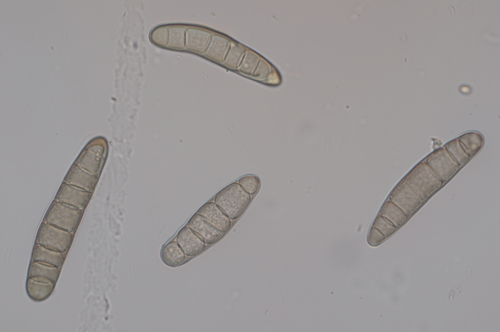
Organisms pictured · Representative pictures of the matched species, not figures from the paper.

Verbatim
e0“Soil-borne infection of Bipolaris sorokiniana caused foot and root rot in all spring barley cultivars studied”
t0“Reaction of spring barley cultivars grown in Finland to soil-borne infection by Bipolaris sorokiniana and to its toxic metabolites”
Claim · model-written summary
Spring barley cultivars differed significantly in susceptibility to soil-borne infection.
- Taxon
- spring barleyHordeum vulgaree0
- Outcome
- susceptibility of the cultivarse1
Organisms pictured · Representative pictures of the matched species, not figures from the paper.
Verbatim
e0“Soil-borne infection of Bipolaris sorokiniana caused foot and root rot in all spring barley cultivars studied”
e1“Significant differences in susceptibility of the cultivars and pathogenicity of the fungus isolates were found”
Claim · model-written summary
Bipolaris sorokiniana isolates differed significantly in pathogenicity.
- Taxon
- spring barleyHordeum vulgaree0
- Interactor
- Bipolaris sorokinianaBipolaris sorokinianae0pathogen
- Outcome
- pathogenicity of the fungus isolatese1
Organisms pictured · Representative pictures of the matched species, not figures from the paper.
Verbatim
e0“Soil-borne infection of Bipolaris sorokiniana caused foot and root rot in all spring barley cultivars studied”
e1“Significant differences in susceptibility of the cultivars and pathogenicity of the fungus isolates were found”
Claim · model-written summary
Yield losses caused by Bipolaris sorokiniana varied from 3% to 33%.
- Taxon
- spring barleyHordeum vulgaree0
- Interactor
- Bipolaris sorokinianaBipolaris sorokinianae0pathogen
- Outcome
- Yield lossese2
- Value
- 3 % to 33 %e2
Organisms pictured · Representative pictures of the matched species, not figures from the paper.
Verbatim
e0“Soil-borne infection of Bipolaris sorokiniana caused foot and root rot in all spring barley cultivars studied”
e2“Yield losses caused by the fungus varied from 3 % to 33 % the mean being c. 15 %”
Claim · model-written summary
Mean yield loss caused by Bipolaris sorokiniana was about 15%.
- Taxon
- spring barleyHordeum vulgaree0
- Interactor
- Bipolaris sorokinianaBipolaris sorokinianae0pathogen
- Outcome
- Yield lossese2
- Value
- c. 15 %e2
Organisms pictured · Representative pictures of the matched species, not figures from the paper.
Verbatim
e0“Soil-borne infection of Bipolaris sorokiniana caused foot and root rot in all spring barley cultivars studied”
e2“Yield losses caused by the fungus varied from 3 % to 33 % the mean being c. 15 %”
Claim · model-written summary
Yield losses could occur without severe disease symptoms.
- Taxon
- spring barleyHordeum vulgaree0
- Outcome
- Yield lossese3
- Qualifier
- without severe disease symptomse3
Organisms pictured · Representative pictures of the matched species, not figures from the paper.
Verbatim
e0“Soil-borne infection of Bipolaris sorokiniana caused foot and root rot in all spring barley cultivars studied”
e3“Yield losses could occur without severe disease symptoms”
Claim · model-written summary
Toxic metabolites produced by the fungus induced visible foot and root symptoms in all spring barley cultivars tested.
- Taxon
- spring barleyHordeum vulgaree0
- Treatment
- Toxic metabolites produced by the funguse4
- Outcome
- visible foot and root symptomse4
Not reportedComparatorDirection
Organisms pictured · Representative pictures of the matched species, not figures from the paper.
Verbatim
e0“Soil-borne infection of Bipolaris sorokiniana caused foot and root rot in all spring barley cultivars studied”
e4“Toxic metabolites produced by the fungus induced visible foot and root symptoms in all cultivars tested and caused lesions in the leaves of some cultivars”
Claim · model-written summary
Toxic metabolites produced by the fungus caused leaf lesions in some spring barley cultivars.
- Taxon
- spring barleyHordeum vulgaree0
- Treatment
- Toxic metabolites produced by the funguse4
- Outcome
- lesions in the leavese4
Not reportedComparatorDirection
Organisms pictured · Representative pictures of the matched species, not figures from the paper.
Verbatim
e0“Soil-borne infection of Bipolaris sorokiniana caused foot and root rot in all spring barley cultivars studied”
e4“Toxic metabolites produced by the fungus induced visible foot and root symptoms in all cultivars tested and caused lesions in the leaves of some cultivars”
Claim · model-written summary
Toxin production varied among Bipolaris sorokiniana isolates.
- Taxon
- spring barleyHordeum vulgaree0
- Interactor
- fungus isolatese5pathogen
- Outcome
- toxin productione5
Organisms pictured · Representative pictures of the matched species, not figures from the paper.
Verbatim
e0“Soil-borne infection of Bipolaris sorokiniana caused foot and root rot in all spring barley cultivars studied”
e5“Variability in toxin production of fungus isolates as well as the reaction of a cultivar to toxins was demonstrated”
Claim · model-written summary
The reaction of a spring barley cultivar to toxins varied among cultivars.
- Taxon
- spring barleyHordeum vulgaree0
- Outcome
- reaction of a cultivar to toxinse5
Organisms pictured · Representative pictures of the matched species, not figures from the paper.
Verbatim
e0“Soil-borne infection of Bipolaris sorokiniana caused foot and root rot in all spring barley cultivars studied”
e5“Variability in toxin production of fungus isolates as well as the reaction of a cultivar to toxins was demonstrated”
Claim · model-written summary
Cultivars most susceptible to soil-borne infection showed the most severe symptoms when exposed to the fungus toxic metabolites.
- Taxon
- spring barleyHordeum vulgaree0
- Treatment
- toxic metabolites of the funguse6
- Outcome
- symptomse6
- Direction
- most severee6
Organisms pictured · Representative pictures of the matched species, not figures from the paper.
Verbatim
e0“Soil-borne infection of Bipolaris sorokiniana caused foot and root rot in all spring barley cultivars studied”
e6“The cultivars most susceptible to soil-borne infection by the fungus also showed the most severe symptoms when exposed to toxic metabolites of the fungus”
The same questions in other papers
metabolite · disease · Hordeum vulgare (barley)Positive and negative results
1 in the opposite direction
- positive
Claims are grouped by organism, treatment and what was measured or targeted. A paper counts as positive when any of its claims in the group is positive.