Abstract
Salinity stress is one of the most important environmental stresses limiting economic gains from land to produce plants and crops. In this regard, an experiment was conducted to study salinity priming as an interesting strategy for increasing the salt tolerance and its effect on seed germination and growth of Cumin (Cuminumcyminum). This study was carried out using a Factorial experiment based on RCD design with 3 replications to determine the influence of priming (0, 0.5, 1 M NaCl solution for 24 hours at room temperature and control with distilled water) and osmotic potentials (0, -2, -4, -6, -8, -10 bar) on germination of Cumin plants. These researches were conducted in two separate experiments both in laboratory and greenhouse. The results indicated that seed priming treatments significantly increased germination percentage, seedling weight, germination rate, root length and plumule length. The results also showed that K + , Mg 2+ andCa 2+ concentration significantly increased in P2, P3 (0.5, 1 M NaCl ) with increasing salinity levels and Na + concentration decreased in seedling in primed seeds. To determine the influence of Salinity priming (0, 0.5, 1 M NaCl solution for 24 hours at room temperature and control with distilled water) and different salinity stress (0, 3, 6, 9, 12 ds/m) on cumin growth stages, an experiment was carried out in greenhouse condition. The results also indicated that seed priming treatments were significantly increased dry matter accumulation and relative growth rate (RGR). Furthermore the results indicated that K + , Ca 2+ and Mg 2+ concentration significantly increased in P3 (1M NaCl) and Na + concentration decreased in seedling in primed seeds compared with non-primed seeds. These results suggest that the use of NaCl pre-treatments could be a useful strategy to increase the salt tolerance of cumin plants in the long-term and to permit the establishment of cumin crop by direct sowing in a saline medium.
Abstract from the paper’s OpenAlex record, shown for indexing and research. Copyright remains with the authors or the publisher. Read at the source ↗
The text the model read, with the source record’s inline markup (italics, sub- and superscripts) rendered and its character entities decoded; quote offsets refer to the raw text.
Claims 7
Claim · model-written summary
Seed priming treatments significantly increased germination percentage, seedling weight and germination rate of cumin.
- Taxon
- Cumin
 Cuminum cyminumt0
- Treatment
- seed priming treatmentse0
- Outcome
- germination percentage, seedling weight, germination ratee0
- Direction
- increasede0
Not reportedComparator
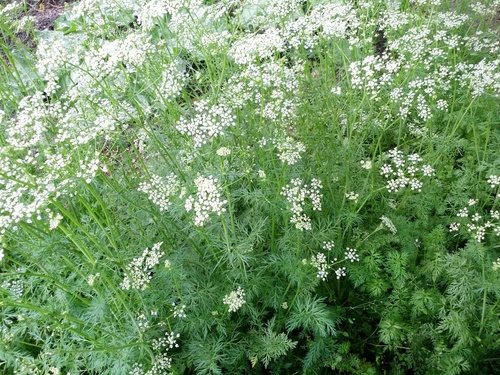
Organisms pictured · Representative pictures of the matched species, not figures from the paper.
Verbatim
t0“Cumin (Cuminum cyminum L.)”
e0“seed priming treatments significantly increased germination percentage, seedling weight, germination rate, root length and plumule length”
Claim · model-written summary
Seed priming treatments significantly increased root length and plumule length of cumin.
- Taxon
- CuminCuminum cyminumt0
- Treatment
- seed priming treatmentse0
- Outcome
- root length and plumule lengthe0
- Direction
- increasede0
Not reportedComparator
Organisms pictured · Representative pictures of the matched species, not figures from the paper.
Verbatim
t0“Cumin (Cuminum cyminum L.)”
e0“seed priming treatments significantly increased germination percentage, seedling weight, germination rate, root length and plumule length”
Claim · model-written summary
K+, Mg2+ and Ca2+ concentrations significantly increased in seedlings from the P2 and P3 priming treatments (0.5 and 1 M NaCl) with increasing salinity levels.
- Taxon
- CuminCuminum cyminumt0
- Treatment
- P2, P3 (0.5, 1 M NaCl )e1
- Outcome
- K + , Mg 2+ andCa 2+ concentratione1
- Direction
- increasede1
Not reportedComparator
Organisms pictured · Representative pictures of the matched species, not figures from the paper.
Verbatim
t0“Cumin (Cuminum cyminum L.)”
e1“K + , Mg 2+ andCa 2+ concentration significantly increased in P2, P3 (0.5, 1 M NaCl ) with increasing salinity levels”
Claim · model-written summary
Na+ concentration in seedlings decreased in primed seeds compared with non-primed seeds.
- Taxon
- CuminCuminum cyminumt0
- Treatment
- primed seedse2
- Outcome
- Na + concentratione2
- Direction
- decreasede2
- Comparator
- non-primed seedse2
Organisms pictured · Representative pictures of the matched species, not figures from the paper.
Verbatim
t0“Cumin (Cuminum cyminum L.)”
e2“Na + concentration decreased in seedling in primed seeds compared with non-primed seeds”
Claim · model-written summary
K+, Ca2+ and Mg2+ concentrations significantly increased in seedlings from the P3 (1M NaCl) priming treatment in the second greenhouse experiment.
- Taxon
- CuminCuminum cyminumt0
- Treatment
- P3 (1M NaCl)e3
- Outcome
- K + , Ca 2+ and Mg 2+ concentratione3
- Direction
- increasede3
Not reportedComparator
Organisms pictured · Representative pictures of the matched species, not figures from the paper.
Verbatim
t0“Cumin (Cuminum cyminum L.)”
e3“K + , Ca 2+ and Mg 2+ concentration significantly increased in P3 (1M NaCl)”
Claim · model-written summary
Seed priming treatments increased dry matter accumulation and relative growth rate of cumin under salinity stress in the greenhouse.
- Taxon
- CuminCuminum cyminumt0
- Treatment
- seed priming treatmentse4
- Outcome
- dry matter accumulation and relative growth rate (RGR)e4
- Direction
- increasede4
Not reportedComparator
Organisms pictured · Representative pictures of the matched species, not figures from the paper.
Verbatim
t0“Cumin (Cuminum cyminum L.)”
e4“seed priming treatments were significantly increased dry matter accumulation and relative growth rate (RGR)”
Claim · model-written summary
The authors suggest NaCl pre-treatment could be a useful strategy to increase long-term salt tolerance of cumin and to establish the crop by direct sowing in saline soil.
- Taxon
- cumin plantsCuminum cyminume5
- Treatment
- NaCl pre-treatmentse5
- Outcome
- salt tolerancee5
Organisms pictured · Representative pictures of the matched species, not figures from the paper.
Verbatim
e5“the use of NaCl pre-treatments could be a useful strategy to increase the salt tolerance of cumin plants in the long-term”
The same questions in other papers
seed treatment · growth · Cuminum cyminum (cumin)Results agree
9 papers in the same direction as this paper
- positive
- positive
- positive
6 papers more in this group
See all 10 papers →Claims are grouped by organism, treatment and what was measured or targeted. A paper counts as positive when any of its claims in the group is positive.