Abstract
Pretreatment with sucrose or abscisic acid is thought to afford protection for plant tissues during dehydration and freezing by increasing desiccation tolerance. It is possible that the natural desiccation tolerance exhibited by some mosses will provide adequate protection during cryopreservation. The aim of this study was to determine whether three mosses with differing levels of desiccation tolerance would survive and regenerate after cryopreservation without prior encapsulation and pretreatment. The species chosen were Bryum rubens Mitt. (desiccation tolerant), Cyclodictyon laetevirens (Hook. & Tayl.) Mitt. (desiccation intolerant), and Ditrichum cornubicum Paton (limited desiccation tolerance). Encapsulated and non-encapsulated protonemal samples were air dried for 18 days. After desiccation, 100% of B. rubens and 40% of D. cornubicum survived in both non-encapsulated and encapsulated samples. After freezing, 90–100% of B. rubens, and 30–20% of D. cornubicum survived in non-encapsulated and encapsulated samples, respectively, while C. laetevirens did not survive either dehydration or freezing. Cryopreservation reduced the growth rate of D. cornubicum and B. rubens. The reduction in growth rate of B. rubens was temporary, with that of encapsulated protonemata eventually exceeding controls. It was concluded from this study that the natural desiccation tolerance of some mosses would be adequate to allow them to survive cryopreservation without prior pretreatment.
Abstract from the paper’s OpenAlex record, shown for indexing and research. Copyright remains with the authors or the publisher. Read at the source ↗
The text the model read, with the source record’s inline markup (italics, sub- and superscripts) rendered and its character entities decoded; quote offsets refer to the raw text.
Claims 9
Claim · model-written summary
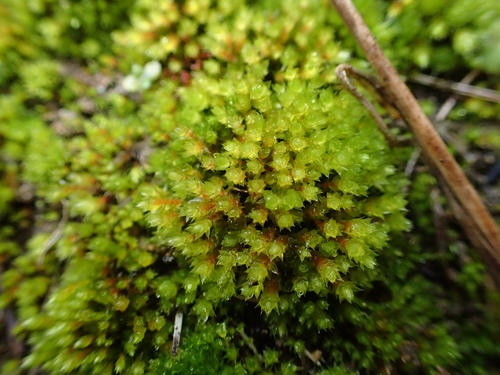
Bryum rubens survived desiccation at 100% in both encapsulated and nonencapsulated samples.
- Taxon
- B. rubens
 Ptychostomum rubense0
- Treatment
- desiccatione0
- Outcome
- survivede0
- Value
- 100%e0
- Comparator
- non-encapsulated and encapsulated samplese0
Not reportedDirection
Organisms pictured · Representative pictures of the matched species, not figures from the paper.
Verbatim
e0“After desiccation, 100% of B. rubens and 40% of D. cornubicum survived in both non-encapsulated and encapsulated samples”
Claim · model-written summary
Ditrichum cornubicum survived desiccation at 40% in both sample types.
- Taxon
- D. cornubicum
 Ditrichum cornubicume0
- Treatment
- desiccatione0
- Outcome
- survivede0
- Value
- 40%e0
- Comparator
- non-encapsulated and encapsulated samplese0
Not reportedDirection
Organisms pictured · Representative pictures of the matched species, not figures from the paper.

Verbatim
e0“After desiccation, 100% of B. rubens and 40% of D. cornubicum survived in both non-encapsulated and encapsulated samples”
Claim · model-written summary
After freezing, Bryum rubens survival was 90–100% across sample types.
- Taxon
- B. rubensPtychostomum rubense0
- Treatment
- freezinge0
- Outcome
- survivede0
- Value
- 90–100%e0
- Comparator
- non-encapsulated and encapsulated samplese0
Not reportedDirection
Organisms pictured · Representative pictures of the matched species, not figures from the paper.
Verbatim
e0“After freezing, 90–100% of B. rubens, and 30–20% of D. cornubicum survived in non-encapsulated and encapsulated samples, respectively”
Claim · model-written summary
After freezing, Ditrichum cornubicum survival was 30% in nonencapsulated and 20% in encapsulated samples.
- Taxon
- D. cornubicumDitrichum cornubicume0
- Treatment
- non-encapsulated and encapsulated samplese0
- Outcome
- survivede0
- Value
- 30–20%e0
Not reportedComparatorDirection
Organisms pictured · Representative pictures of the matched species, not figures from the paper.
Verbatim
e0“30–20% of D. cornubicum survived in non-encapsulated and encapsulated samples, respectively”
Claim · model-written summary
Cyclodictyon laetevirens did not survive dehydration or freezing.
- Taxon
- C. laetevirensCyclodictyon laetevirense0
- Treatment
- dehydration or freezinge0
- Outcome
- survivee0
- Direction
- did not survivee0
Not reportedComparator
Verbatim
e0“C. laetevirens did not survive either dehydration or freezing”
Claim · model-written summary
Cryopreservation reduced the growth rate of Ditrichum cornubicum.
- Taxon
- D. cornubicumDitrichum cornubicume0
- Treatment
- Cryopreservatione0
- Outcome
- growth ratee0
- Direction
- reducede0
Not reportedComparator
Organisms pictured · Representative pictures of the matched species, not figures from the paper.
Verbatim
e0“Cryopreservation reduced the growth rate of D. cornubicum and B. rubens”
Claim · model-written summary
Cryopreservation reduced Bryum rubens growth rate temporarily.
- Taxon
- B. rubensPtychostomum rubense0
- Treatment
- Cryopreservatione0
- Outcome
- growth ratee0
- Direction
- reducede0
- Qualifier
- temporarye0
Not reportedComparator
Organisms pictured · Representative pictures of the matched species, not figures from the paper.
Verbatim
e0“Cryopreservation reduced the growth rate of D. cornubicum and B. rubens. The reduction in growth rate of B. rubens was temporary”
Claim · model-written summary
Encapsulated Bryum rubens protonemata eventually grew faster than controls.
- Taxon
- B. rubensPtychostomum rubense1
- Treatment
- encapsulated protonematae0
- Outcome
- growth ratee1
- Direction
- exceedinge0
- Comparator
- controlse0
Organisms pictured · Representative pictures of the matched species, not figures from the paper.
Verbatim
e0“encapsulated protonemata eventually exceeding controls”
e1“growth rate of B. rubens”
Claim · model-written summary
Natural desiccation tolerance was judged sufficient for some mosses to survive cryopreservation without pretreatment.
- Outcome
- survive cryopreservation without prior pretreatmente0
Verbatim
e0“the natural desiccation tolerance of some mosses would be adequate to allow them to survive cryopreservation without prior pretreatment”