Abstract
Contents of proteins, carbohydrates and oil of seeds of 57 individuals of Vochysiaceae, involving one species of Callisthene, six of Qualea, one of Salvertia and eight of Vochysia were determined. The main nutritional reserves of Vochysiaceae seeds are proteins (20% in average) and oils (21. 6%). Mean of carbohydrate contents was 5. 8%. Callisthene showed the lowest protein content (16. 9%), while Q. cordata was the species with the highest content (30% in average). The contents of ethanol soluble carbohydrates were much higher than those of water soluble carbohydrates. Oil contents lay above 20% for most species (30. 4% in V. pygmaea and V. pyramidalis seeds). The predominant fatty acids are lauric (Q. grandiflora), oleic (Qualea and Salvertia) or acids with longer carbon chains (Salvertia and a group of Vochysia species). The distribution of Vochysiaceae fatty acids suggests for seeds of some species an exploitation as food sources (predominance of oleic acid), for other species an alternative to cocoa butter (high contents or predominance of stearic acid) or the production of lubricants, surfactants, detergents, cosmetics and plastic (predominance of acids with C(20) or C(22) chains) or biodiesel (predominance of monounsaturated acids). The possibility of exploitation of Vochysiaceae products in a cultivation regimen and in extractive reserves is discussed.
Abstract from the paper’s OpenAlex record; open copy licensed cc-by-nc. Read at the source ↗
The text the model read, with the source record’s inline markup (italics, sub- and superscripts) rendered and its character entities decoded; quote offsets refer to the raw text.
Claims 12
Claim · model-written summary
Protein was a main Vochysiaceae seed reserve averaging 20%.
- Taxon
- VochysiaceaeVochysiaceaee0
- Organ / stage
- seedse0
- Outcome
- proteinse0
- Value
- 20%e0
Verbatim
e0“The main nutritional reserves of Vochysiaceae seeds are proteins (20% in average) and oils (21. 6%)”
Claim · model-written summary
Oil was a main Vochysiaceae seed reserve averaging 21. 6%.
- Taxon
- VochysiaceaeVochysiaceaee0
- Organ / stage
- seedse0
- Outcome
- oilse0
- Value
- 21. 6%e0
Verbatim
e0“The main nutritional reserves of Vochysiaceae seeds are proteins (20% in average) and oils (21. 6%)”
Claim · model-written summary
Mean carbohydrate content in Vochysiaceae seeds was 5. 8%.
- Taxon
- VochysiaceaeVochysiaceaet0
- Outcome
- carbohydrate contentse0
- Value
- 5. 8%e0
Verbatim
e0“Mean of carbohydrate contents was 5. 8%”
t0“Vochysiaceae seeds”
Claim · model-written summary
Callisthene had the lowest protein content, 16. 9%.
- Taxon
- Callisthene
 Callisthenee0
- Outcome
- protein contente0
- Direction
- loweste0
- Value
- 16. 9%e0
Organisms pictured · Representative pictures of the matched species, not figures from the paper.

Verbatim
e0“Callisthene showed the lowest protein content (16. 9%)”
Claim · model-written summary
Q. cordata had the highest protein content, averaging 30%.
- Taxon
- Q. cordataQualea cordatae0
- Outcome
- highest contente0
- Direction
- higheste0
- Value
- 30%e0
Verbatim
e0“Q. cordata was the species with the highest content (30% in average)”
e1“protein content”
Claim · model-written summary
Ethanol soluble carbohydrate content exceeded water soluble carbohydrate content.
- Taxon
- VochysiaceaeVochysiaceaet0
- Outcome
- contents of ethanol soluble carbohydratese0
- Direction
- much highere0
- Comparator
- water soluble carbohydratese0
Verbatim
e0“The contents of ethanol soluble carbohydrates were much higher than those of water soluble carbohydrates”
t0“Vochysiaceae seeds”
Claim · model-written summary
Most species had seed oil content above 20%.
Verbatim
e0“Oil contents lay above 20% for most species”
t0“Vochysiaceae seeds”
Claim · model-written summary
V. pygmaea seed oil content reached 30. 4%.
- Taxon
- V. pygmaeaVochysia pygmaeae0
- Outcome
- seedse0
- Value
- 30. 4%e0
Verbatim
e0“30. 4% in V. pygmaea and V. pyramidalis seeds”
Claim · model-written summary
V. pyramidalis seed oil content reached 30. 4%.
- Taxon
- V. pyramidalis
 Vochysia pyramidalise0
- Outcome
- seedse0
- Value
- 30. 4%e0
Organisms pictured · Representative pictures of the matched species, not figures from the paper.

Verbatim
e0“30. 4% in V. pygmaea and V. pyramidalis seeds”
Claim · model-written summary
Lauric acid predominated in Q. grandiflora seeds.
- Taxon
- Q. grandiflora
 Qualea grandiflorae0
- Outcome
- predominant fatty acids are laurice0
Organisms pictured · Representative pictures of the matched species, not figures from the paper.

Verbatim
e0“The predominant fatty acids are lauric (Q. grandiflora)”
Claim · model-written summary
Oleic acid predominated in Qualea and Salvertia seeds.
- Outcome
- oleic (Qualea and Salvertia)e0
 Qualea
Organisms pictured · Representative pictures of the matched species, not figures from the paper.

Verbatim
e0“oleic (Qualea and Salvertia)”
Claim · model-written summary
Longer chain fatty acids predominated in Salvertia and some Vochysia species.
- Outcome
- acids with longer carbon chainse0
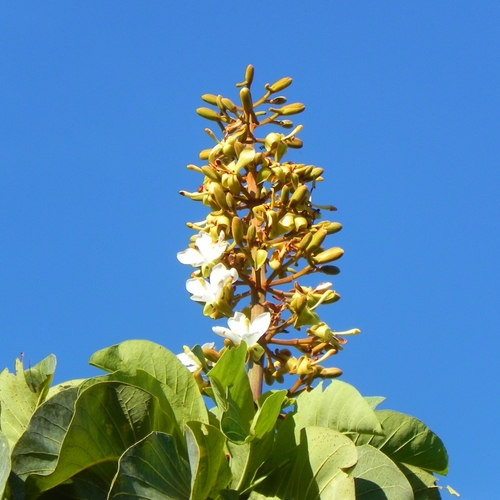
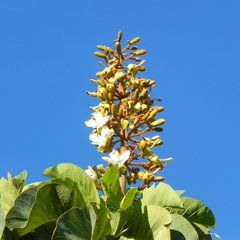 Salvertia
Organisms pictured · Representative pictures of the matched species, not figures from the paper.
Verbatim
e0“acids with longer carbon chains (Salvertia and a group of Vochysia species)”