Abstract
In dry heat treatments of barley seeds naturally infected with B. sorokiniana, as the temperature and the time of exposure to treatment increased survival of both fungus and seeds decreased but not at the same rate. A severe reduction in viability of barley was produced under conditions required to eliminate the fungus from the seeds. The best seed survival associated with a treatment giving complete elimination of the fungus was only 42% (60 h at
Abstract from the paper’s OpenAlex record, shown for indexing and research. Copyright remains with the authors or the publisher. Read at the source ↗
The text the model read, with the source record’s inline markup (italics, sub- and superscripts) rendered and its character entities decoded; quote offsets refer to the raw text.
Claims 4
Claim · model-written summary
Fungal survival decreased as dry heat temperature and exposure duration increased.
- Taxon
- barley
 Hordeum vulgaret0
- Treatment
- dry heat treatmentst0
- Interactor
- Bipolaris sorokiniana
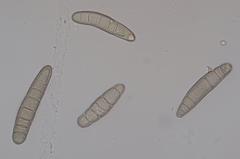 Bipolaris sorokinianat0pathogen
- Outcome
- survival of both funguse0
- Direction
- decreasede0
Not reportedComparator
Organisms pictured · Representative pictures of the matched species, not figures from the paper.

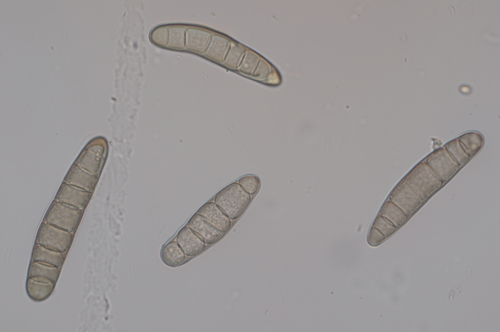
Verbatim
e0“as the temperature and the time of exposure to treatment increased survival of both fungus and seeds decreased but not at the same rate”
t0“dry heat treatments on survival of seed borne Bipolaris sorokiniana and germination of barley seeds”
Claim · model-written summary
Barley seed survival decreased as dry heat temperature and exposure duration increased, at a different rate from fungal survival.
- Taxon
- barleyHordeum vulgaret0
- Treatment
- dry heat treatmentst0
- Outcome
- seedse0
- Direction
- decreasede0
- Qualifier
- not at the same ratee0
Not reportedComparator
Organisms pictured · Representative pictures of the matched species, not figures from the paper.
Verbatim
e0“as the temperature and the time of exposure to treatment increased survival of both fungus and seeds decreased but not at the same rate”
t0“dry heat treatments on survival of seed borne Bipolaris sorokiniana and germination of barley seeds”
Claim · model-written summary
Heat conditions needed to eliminate the fungus severely reduced barley viability.
- Taxon
- barleyHordeum vulgaree0
- Treatment
- conditions required to eliminate the funguse0
- Outcome
- viability of barleye0
- Direction
- severe reductione0
Not reportedComparator
Organisms pictured · Representative pictures of the matched species, not figures from the paper.
Verbatim
e0“A severe reduction in viability of barley was produced under conditions required to eliminate the fungus from the seeds”
Claim · model-written summary
The best barley seed survival with complete fungal elimination was 42%.
- Taxon
- barleyHordeum vulgaret0
- Outcome
- seed survivale0
- Value
- 42%e0
- Qualifier
- complete elimination of the funguse0
Organisms pictured · Representative pictures of the matched species, not figures from the paper.
Verbatim
e0“The best seed survival associated with a treatment giving complete elimination of the fungus was only 42%”
t0“barley seeds”
The same questions in other papers
heat · Bipolaris sorokiniana · Hordeum vulgare (barley)Positive and negative results
1 paper in the same direction as this paper · 2 in the opposite direction
- no effect
- positive
- negative
heat · yield · Hordeum vulgare (barley)Positive and negative results
21 papers in the same direction as this paper · 3 in the opposite direction
- positive
- positive
- positive
21 papers more in this group
See all 25 papers →Claims are grouped by organism, treatment and what was measured or targeted. A paper counts as positive when any of its claims in the group is positive.