Abstract
A field experiment was conducted on sandy loam soil at Sriniketan, Visva-Bharati University, Birbhum, West Bengal, India during 1999 to 2009 in medium land transplanted rice-yellow sarson cropping system to know the effect of continuous use of weed management practices on weed shift and yield. Continuous use of butachlor at 1.0 kg as preemergence + 2, 4-D (Na- Salt) at 0.4 kg as post emergence in rice paved the way for dominance of sedge like Fimbristylis miliacea and grass like Digitaria sanguinalis in rice under rice- yellow sarson cropping system. Rotational use of pretilachlor at 1.0 kg and butachlor at 1.0 kg as pre-emergence + 2, 4- D (Na-Salt) at 0.5 kg with organic matter lowered the menace of broadleaved as well as sedges, but not the grasses and registered higher yield of rice in 2009. Continuous or rotational use of pretilachlor or butachlor + 2, 4-D (Na- Salt) resulted in disappearance of Hydrolea zeylanica but Cynodon dactylon appeared as one of the dominant grassy weeds in 2009. Similarly continuous or rotational use of pendimethalin and isoproturon at 1.0 kg in yellow sarson lowered the density of Digitaria sanguinalis in 2009. Cynodon dactylon and Croton bonplandianum which were not present initially came into dominant group in the final year. Rotational use of isoproturon or pendimethalin along with FYM reduced the number of grasses and broadleaved weeds and registered higher yield of yellow sarson over other treatments.
Abstract from the paper’s OpenAlex record, shown for indexing and research. Copyright remains with the authors or the publisher. Read at the source ↗
The text the model read, with the source record’s inline markup (italics, sub- and superscripts) rendered and its character entities decoded; quote offsets refer to the raw text.
Claims 10
Claim · model-written summary
Continuous butachlor plus 2,4-D favored Fimbristylis miliacea dominance in rice.
- Taxon
- rice
 Oryza sativae0
- Treatment
- Continuous use of butachlor at 1.0 kg as preemergence + 2, 4-D (Na- Salt) at 0.4 kg as post emergencee0
- Interactor
- Fimbristylis miliacea
 Fimbristylis quinquangularise0weed
- Outcome
- dominance of sedge like Fimbristylis miliaceae0
Not reportedComparatorDirection
Organisms pictured · Representative pictures of the matched species, not figures from the paper.


Verbatim
e0“Continuous use of butachlor at 1.0 kg as preemergence + 2, 4-D (Na- Salt) at 0.4 kg as post emergence in rice paved the way for dominance of sedge like Fimbristylis miliacea”
Claim · model-written summary
The same regime favored Digitaria sanguinalis dominance in rice.
- Taxon
- riceOryza sativae0
- Interactor
- Digitaria sanguinalis
 Digitaria sanguinalise0weed
- Outcome
- Digitaria sanguinalise0
Not reportedTreatmentComparatorDirection
Organisms pictured · Representative pictures of the matched species, not figures from the paper.

Verbatim
e0“grass like Digitaria sanguinalis in rice under rice- yellow sarson cropping system”
Claim · model-written summary
Rotational pretilachlor and butachlor with 2,4-D and organic matter reduced broadleaved weeds and sedges.
- Treatment
- Rotational use of pretilachlor at 1.0 kg and butachlor at 1.0 kg as pre-emergence + 2, 4- D (Na-Salt) at 0.5 kg with organic mattere0
- Outcome
- menace of broadleaved as well as sedgese0
- Direction
- lowerede0
Not reportedTaxonComparator
Verbatim
e0“Rotational use of pretilachlor at 1.0 kg and butachlor at 1.0 kg as pre-emergence + 2, 4- D (Na-Salt) at 0.5 kg with organic matter lowered the menace of broadleaved as well as sedges”
Claim · model-written summary
Rotational herbicides with organic matter raised rice yield in 2009.
- Taxon
- riceOryza sativae0
- Outcome
- yield of ricee0
- Direction
- highere0
- Qualifier
- 2009e0
Not reportedTreatmentComparator
Organisms pictured · Representative pictures of the matched species, not figures from the paper.
Verbatim
e0“registered higher yield of rice in 2009”
Claim · model-written summary
Continuous or rotational pretilachlor or butachlor plus 2,4-D eliminated Hydrolea zeylanica.
- Treatment
- Continuous or rotational use of pretilachlor or butachlor + 2, 4-D (Na- Salt)e0
- Interactor
- Hydrolea zeylanica
 Hydrolea zeylanicae0weed
- Outcome
- disappearance of Hydrolea zeylanicae0
Not reportedTaxonComparatorDirection
Organisms pictured · Representative pictures of the matched species, not figures from the paper.
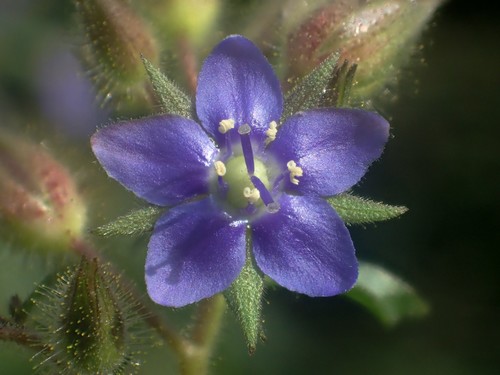
Verbatim
e0“Continuous or rotational use of pretilachlor or butachlor + 2, 4-D (Na- Salt) resulted in disappearance of Hydrolea zeylanica”
Claim · model-written summary
Cynodon dactylon became a dominant grass weed in 2009.
- Interactor
- Cynodon dactylon
 Cynodon dactylone0weed
- Outcome
- dominant grassy weedse0
Not reportedTaxon
Organisms pictured · Representative pictures of the matched species, not figures from the paper.

Verbatim
e0“Cynodon dactylon appeared as one of the dominant grassy weeds in 2009”
Claim · model-written summary
Pendimethalin and isoproturon lowered Digitaria sanguinalis density in yellow sarson.
- Taxon
- yellow sarsone0
- Treatment
- continuous or rotational use of pendimethalin and isoproturon at 1.0 kge0
- Interactor
- Digitaria sanguinalisDigitaria sanguinalise0weed
- Outcome
- density of Digitaria sanguinalise0
- Direction
- lowerede0
Not reportedComparator
Organisms pictured · Representative pictures of the matched species, not figures from the paper.
Verbatim
e0“continuous or rotational use of pendimethalin and isoproturon at 1.0 kg in yellow sarson lowered the density of Digitaria sanguinalis in 2009”
Claim · model-written summary
Croton bonplandianum became dominant in the final year.
Not reportedTaxon
Verbatim
e0“Croton bonplandianum which were not present initially came into dominant group in the final year”
Claim · model-written summary
Rotational isoproturon or pendimethalin with FYM reduced grasses and broadleaved weeds.
- Treatment
- Rotational use of isoproturon or pendimethalin along with FYMe0
- Outcome
- number of grasses and broadleaved weedse0
- Direction
- reducede0
Not reportedTaxonComparator
Verbatim
e0“Rotational use of isoproturon or pendimethalin along with FYM reduced the number of grasses and broadleaved weeds”
Claim · model-written summary
The same rotation increased yellow sarson yield over other treatments.
Not reportedTreatment
Verbatim
e0“registered higher yield of yellow sarson over other treatments”
The same questions in other papers
2,4-D · organism · Oryza sativa (rice)Positive and negative results
1 in the opposite direction
- negative
butachlor · Fimbristylis quinquangularis · Oryza sativa (rice)Positive and negative results
1 in the opposite direction
- positive
butachlor · organism · Oryza sativa (rice)Positive and negative results
1 paper in the same direction as this paper · 2 in the opposite direction
- negative
- negative
- positive
pendimethalin · weed · Oryza sativa (rice)Positive and negative results
124 papers in the same direction as this paper · 2 in the opposite direction · 1 reporting no difference from an alternative
- negative
- negative
- no effect
124 papers more in this group
See all 128 papers →Pretilachlor · organism · Oryza sativa (rice)Results agree
2 papers in the same direction as this paper
- positive
- positive
rotation · organism · Oryza sativa (rice)Positive and negative results
2 papers in the same direction as this paper · 2 in the opposite direction
- negative
- negative
- positive
1 paper more in this group
See all 5 papers →herbicide · Fimbristylis quinquangularis · Oryza sativa (rice)Positive and negative results
5 in the opposite direction
- positive
- positive
- positive
2 papers more in this group
See all 6 papers →organic · organism · Oryza sativa (rice)Positive and negative results
11 papers in the same direction as this paper · 5 in the opposite direction · 1 reporting no difference from an alternative
- no effect
- negative
- negative
14 papers more in this group
See all 18 papers →8 of 11 groups shown: named compounds and organisms first, then groups whose results differ (checked claim by claim), then those with positive and negative results, then the smaller groups.
Claims are grouped by organism, treatment and what was measured or targeted. A paper counts as positive when any of its claims in the group is positive.