Abstract
A major frontier in global change research is predicting how multiple agents of global change will alter plant productivity, a critical component of the carbon cycle. Recent research has shown that plant responses to climate change are phylogenetically conserved such that species within some lineages are more productive than those within other lineages in changing environments. However, it remains unclear how phylogenetic patterns in plant responses to changing abiotic conditions may be altered by another agent of global change, the introduction of non-native species. Using a system of 28 native Tasmanian Eucalyptus species belonging to two subgenera, Symphyomyrtus and Eucalyptus, we hypothesized that productivity responses to abiotic agents of global change (elevated CO2 and increased soil N) are unique to lineages, but that novel interactions with a non-native species mediate these responses. We tested this hypothesis by examining productivity of 1) native species monocultures and 2) mixtures of native species with an introduced hardwood plantation species, Eucalyptus nitens, to experimentally manipulated soil N and atmospheric CO2. Consistent with past research, we found that N limits productivity overall, especially in elevated CO2 conditions. However, monocultures of species within the Symphyomyrtus subgenus showed the strongest response to N (gained 127% more total biomass) in elevated CO2 conditions, whereas those within the Eucalyptus subgenus did not respond to N. Root:shoot ratio (an indicator of resource use) was on average greater in species pairs containing Symphyomyrtus species, suggesting that functional traits important for resource uptake are phylogenetically conserved and explaining the phylogenetic pattern in plant response to changing environmental conditions. Yet, native species mixtures with E. nitens exhibited responses to CO2 and N that differed from those of monocultures, supporting our hypothesis and highlighting that both plant evolutionary history and introduced species will shape community productivity in a changing world.
Abstract from the paper’s OpenAlex record; open copy licensed cc-by. Read at the source ↗
The text the model read, with the source record’s inline markup (italics, sub- and superscripts) rendered and its character entities decoded; quote offsets refer to the raw text.
Claims 5
Claim · model-written summary
Nitrogen limited Eucalyptus productivity overall, especially under elevated CO2.
- Taxon
- Eucalyptus
 Eucalyptust0
- Outcome
- productivitye0
- Direction
- limitse0
- Qualifier
- especially in elevated CO2 conditionse0
Organisms pictured · Representative pictures of the matched species, not figures from the paper.

Verbatim
e0“we found that N limits productivity overall, especially in elevated CO2 conditions”
t0“native Tasmanian Eucalyptus species”
Claim · model-written summary
Symphyomyrtus monocultures gained 127% more total biomass in response to nitrogen under elevated CO2.
- Taxon
- Eucalyptus speciesEucalyptust0
- Material
- Symphyomyrtuse0
- Treatment
- Ne0
- Outcome
- total biomasse0
- Direction
- gainede0
- Value
- 127%e0
- Qualifier
- elevated CO2 conditionse0
Not reportedComparator
Organisms pictured · Representative pictures of the matched species, not figures from the paper.
Verbatim
e0“monocultures of species within the Symphyomyrtus subgenus showed the strongest response to N (gained 127% more total biomass) in elevated CO2 conditions”
t0“Eucalyptus species”
Claim · model-written summary
Eucalyptus subgenus monocultures did not respond to nitrogen under elevated CO2.
- Taxon
- EucalyptusEucalyptuse0
- Material
- Eucalyptus subgenuse0
- Treatment
- Ne0
- Outcome
- respond to Ne0
- Direction
- did not responde0
- Qualifier
- elevated CO2 conditionse1
Not reportedComparator
Organisms pictured · Representative pictures of the matched species, not figures from the paper.
Verbatim
e0“those within the Eucalyptus subgenus did not respond to N”
e1“in elevated CO2 conditions, whereas those within the Eucalyptus subgenus”
Claim · model-written summary
Root-to-shoot ratio was greater on average in pairs containing Symphyomyrtus species.
- Taxon
- Eucalyptus speciesEucalyptuse1
- Material
- Symphyomyrtus speciese0
- Outcome
- Root:shoot ratioe0
- Direction
- greatere0
Organisms pictured · Representative pictures of the matched species, not figures from the paper.
Verbatim
e0“Root:shoot ratio (an indicator of resource use) was on average greater in species pairs containing Symphyomyrtus species”
e1“Eucalyptus species”
Claim · model-written summary
Native mixtures with E. nitens responded to CO2 and nitrogen differently from native monocultures.
- Taxon
- Eucalyptus speciesEucalyptuse1
- Treatment
- mixtures with E. nitense0
- Interactor
- E. nitens
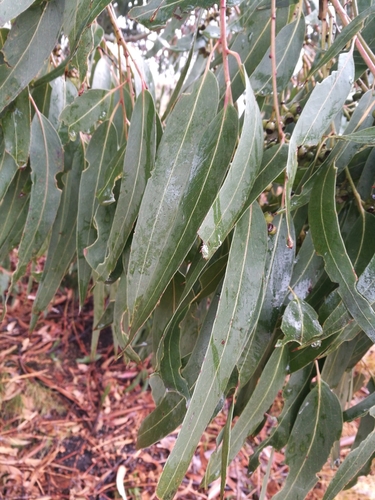
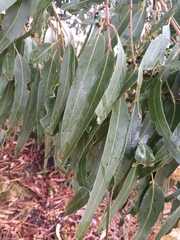 Eucalyptus nitense0other
- Outcome
- responses to CO2 and Ne0
- Direction
- differede0
- Comparator
- monoculturese0
Organisms pictured · Representative pictures of the matched species, not figures from the paper.
Verbatim
e0“native species mixtures with E. nitens exhibited responses to CO2 and N that differed from those of monocultures”
e1“native Tasmanian Eucalyptus species”
The same questions in other papers
nitrogen · growth · EucalyptusPositive and negative results
6 papers in the same direction as this paper · 4 in the opposite direction
- negative
- negative
- no effect
7 papers more in this group
See all 11 papers →Claims are grouped by organism, treatment and what was measured or targeted. A paper counts as positive when any of its claims in the group is positive.