Abstract
Tomato powdery mildew can cause remarkable reduction in fruit size and quality (4). In March of 2008, powdery mildew appeared as circular, white colonies on leaves, petioles, and stems of tomato plants grown in greenhouses in Shangqiu, Henan Province, China. The pathogenic fungus had unbranched conidiophores with an average length of 58.4 μm and width of 5.1 μm. Conidia were hyaline, elliptical, and were borne singly. Average length and width of conidia were 30.6 and 15.1 μm, respectively. Germ tubes were straight and formed at the ends or very close to the ends of conidia. Chasmothecium was not found in the collected samples. Different tomato cultivars and species, including Lycopersicon esculentum Mill (cvs. Moneymaker, Micro-Tom, Zaofen, Fenguo, and Zhongza series), L. peruvianum cv. LA2172, and L. hirsutum cv. G1.1560, were inoculated with a conidial suspension with a concentration of 5 × 10 4 conidia/ml. Plants developed powdery mildew symptoms as early as 4 days after inoculation. Susceptible symptoms developed on all L. esculentum cultivars, while L. peruvianum LA2172 and L. hirsutum G1.1560 displayed complete resistance, which is similar to the results of Bai et al 2004 (1) and Lindhout and Pet 1990 (3). Morphological characteristics of the pathogen on susceptible genotypes were similar to those from naturally infected plants. On the basis of the characteristics of the asexual stage, the pathogen was identified as an isolate of Oidium neolycopersici L. Kiss, which was confirmed by internal transcribed spacer (ITS) sequence analysis. PCR amplification and sequencing of the ITS region were performed with primers ITS1 and ITS4. The nucleotide sequence was assigned GenBank Accession No. EU486992, which had a 100% homology with 10 ITS sequences of O. neolycopersici in GenBank (Accession Nos. EU047559 to 047568) (2). In Asia, the spread of this pathogen has been recently reported in Japan (2). To our knowledge, this is the first report of tomato powdery mildew in China. Voucher specimens are available at the Specimen Center in the Department of Life Science, Shangqiu Normal University. References: (1) Y. Bai et al. Mol. Plant-Microbe. Interact. 18:354, 2005. (2) T. Jankovics et al. Phytopathology 98:529, 2008. (3) P. Lindhout and G. Pet. Tomato Gen. Coop. Rep. 40:19, 1990. (4) J. M. Whipps et al. Plant Pathol. 47:36, 1998.
Abstract from the paper’s OpenAlex record, shown for indexing and research. Copyright remains with the authors or the publisher. Read at the source ↗
The text the model read, with the source record’s inline markup (italics, sub- and superscripts) rendered and its character entities decoded; quote offsets refer to the raw text.
Claims 16
Claim · model-written summary
Powdery mildew appeared on tomato leaves, petioles and stems in Shangqiu greenhouses.
- Taxon
- tomato
 Solanum lycopersicume0
- Organ / stage
- leaves, petioles, and stemse0
- Interactor
- Oidium neolycopersiciErysiphe neolycopersicit0pathogene0
- Outcome
- powdery mildew appeared as circular, white coloniese0
- Setting
- greenhouses in Shangqiu, Henan Province, Chinae0
Organisms pictured · Representative pictures of the matched species, not figures from the paper.

Verbatim
e0“powdery mildew appeared as circular, white colonies on leaves, petioles, and stems of tomato plants grown in greenhouses in Shangqiu, Henan Province, China”
t0“Oidium neolycopersici”
Claim · model-written summary
The fungus had unbranched conidiophores averaging 58.4 μm long.
- Taxon
- TomatoSolanum lycopersicumt0
- Interactor
- Oidium neolycopersiciErysiphe neolycopersicit1pathogene0
- Outcome
- conidiophores with an average lengthe0
- Value
- 58.4 μme0
Organisms pictured · Representative pictures of the matched species, not figures from the paper.
Verbatim
e0“The pathogenic fungus had unbranched conidiophores with an average length of 58.4 μm and width of 5.1 μm”
t0“on Tomato”
t1“Oidium neolycopersici”
Claim · model-written summary
The fungus had conidiophores averaging 5.1 μm wide.
- Taxon
- TomatoSolanum lycopersicumt0
- Interactor
- Oidium neolycopersiciErysiphe neolycopersicit1pathogene0
- Outcome
- widthe0
- Value
- 5.1 μme0
Organisms pictured · Representative pictures of the matched species, not figures from the paper.
Verbatim
e0“The pathogenic fungus had unbranched conidiophores with an average length of 58.4 μm and width of 5.1 μm”
t0“on Tomato”
t1“Oidium neolycopersici”
Claim · model-written summary
The pathogen conidia were hyaline, elliptical and borne singly.
- Taxon
- TomatoSolanum lycopersicumt0
- Interactor
- Oidium neolycopersiciErysiphe neolycopersicit1pathogene0
- Outcome
- Conidia were hyaline, elliptical, and were borne singlye0
Organisms pictured · Representative pictures of the matched species, not figures from the paper.
Verbatim
e0“Conidia were hyaline, elliptical, and were borne singly”
t0“on Tomato”
t1“Oidium neolycopersici”
Claim · model-written summary
Conidia averaged 30.6 μm in length.
- Taxon
- TomatoSolanum lycopersicumt0
- Interactor
- Oidium neolycopersiciErysiphe neolycopersicit1pathogene0
- Outcome
- lengthe0
- Value
- 30.6e0
Organisms pictured · Representative pictures of the matched species, not figures from the paper.
Verbatim
e0“Average length and width of conidia were 30.6 and 15.1 μm, respectively”
t0“on Tomato”
t1“Oidium neolycopersici”
Claim · model-written summary
Conidia averaged 15.1 μm in width.
- Taxon
- TomatoSolanum lycopersicumt0
- Interactor
- Oidium neolycopersiciErysiphe neolycopersicit1pathogene0
- Outcome
- widthe0
- Value
- 15.1 μme0
Organisms pictured · Representative pictures of the matched species, not figures from the paper.
Verbatim
e0“Average length and width of conidia were 30.6 and 15.1 μm, respectively”
t0“on Tomato”
t1“Oidium neolycopersici”
Claim · model-written summary
Conidial germ tubes were straight and formed near conidial ends.
- Taxon
- TomatoSolanum lycopersicumt0
- Interactor
- Oidium neolycopersiciErysiphe neolycopersicit1pathogene0
- Outcome
- Germ tubes were straight and formed at the ends or very close to the ends of conidiae0
Organisms pictured · Representative pictures of the matched species, not figures from the paper.
Verbatim
e0“Germ tubes were straight and formed at the ends or very close to the ends of conidia”
t0“on Tomato”
t1“Oidium neolycopersici”
Claim · model-written summary
No chasmothecium was found in collected samples.
- Taxon
- TomatoSolanum lycopersicumt0
- Interactor
- Oidium neolycopersiciErysiphe neolycopersicit1pathogene0
- Outcome
- Chasmothecium was not founde0
Organisms pictured · Representative pictures of the matched species, not figures from the paper.
Verbatim
e0“Chasmothecium was not found in the collected samples”
t0“on Tomato”
t1“Oidium neolycopersici”
Claim · model-written summary
Inoculated tomato plants developed powdery mildew symptoms by four days.
- Taxon
- TomatoSolanum lycopersicumt0
- Treatment
- inoculatione0
- Interactor
- Oidium neolycopersiciErysiphe neolycopersicit1pathogene0
- Outcome
- powdery mildew symptomse0
- Value
- 4 dayse0
Not reportedComparatorDirection
Organisms pictured · Representative pictures of the matched species, not figures from the paper.
Verbatim
e0“Plants developed powdery mildew symptoms as early as 4 days after inoculation”
t0“on Tomato”
t1“Oidium neolycopersici”
Claim · model-written summary
All L. esculentum cultivars showed susceptibility.
- Taxon
- L. esculentumSolanum lycopersicume0
- Interactor
- Oidium neolycopersiciErysiphe neolycopersicit0pathogene0
- Outcome
- Susceptible symptomse0
Organisms pictured · Representative pictures of the matched species, not figures from the paper.
Verbatim
e0“Susceptible symptoms developed on all L. esculentum cultivars”
t0“Oidium neolycopersici”
Claim · model-written summary
L. peruvianum LA2172 displayed complete resistance.
- Taxon
- L. peruvianumSolanum peruvianume0
- Material
- LA2172e0
- Interactor
- Oidium neolycopersiciErysiphe neolycopersicit0pathogene0
- Outcome
- complete resistancee0
Verbatim
e0“L. peruvianum LA2172 and L. hirsutum G1.1560 displayed complete resistance”
t0“Oidium neolycopersici”
Claim · model-written summary
L. hirsutum G1.1560 displayed complete resistance.
- Taxon
- L. hirsutum
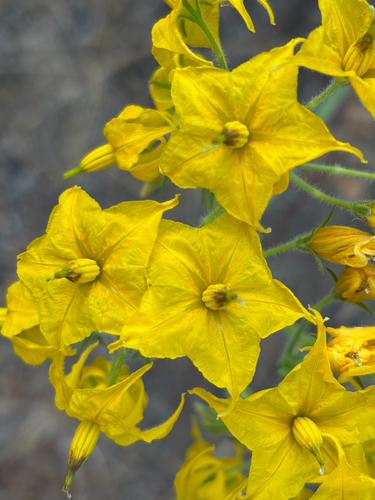
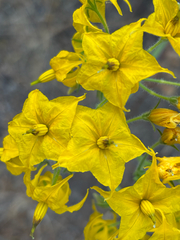 Solanum habrochaitese0
- Material
- G1.1560e0
- Interactor
- Oidium neolycopersiciErysiphe neolycopersicit0pathogene0
- Outcome
- complete resistancee0
Organisms pictured · Representative pictures of the matched species, not figures from the paper.
Verbatim
e0“L. peruvianum LA2172 and L. hirsutum G1.1560 displayed complete resistance”
t0“Oidium neolycopersici”
Claim · model-written summary
Pathogen morphology on susceptible genotypes matched that from naturally infected plants.
- Taxon
- TomatoSolanum lycopersicumt0
- Interactor
- Oidium neolycopersiciErysiphe neolycopersicit1pathogene0
- Outcome
- Morphological characteristics of the pathogene0
- Direction
- similare0
- Comparator
- naturally infected plantse0
Organisms pictured · Representative pictures of the matched species, not figures from the paper.
Verbatim
e0“Morphological characteristics of the pathogen on susceptible genotypes were similar to those from naturally infected plants”
t0“on Tomato”
t1“Oidium neolycopersici”
Claim · model-written summary
The pathogen was identified as Oidium neolycopersici by asexual morphology and ITS sequence analysis.
- Taxon
- TomatoSolanum lycopersicumt0
- Interactor
- Oidium neolycopersiciErysiphe neolycopersicie0pathogen
- Outcome
- identified as an isolate of Oidium neolycopersici L. Kisse0
Organisms pictured · Representative pictures of the matched species, not figures from the paper.
Verbatim
e0“the pathogen was identified as an isolate of Oidium neolycopersici L. Kiss, which was confirmed by internal transcribed spacer (ITS) sequence analysis”
t0“on Tomato”
Claim · model-written summary
The ITS sequence had 100% homology with ten GenBank O. neolycopersici sequences.
- Taxon
- TomatoSolanum lycopersicumt0
- Interactor
- O. neolycopersiciErysiphe neolycopersicie0pathogen
- Outcome
- homology with 10 ITS sequences of O. neolycopersicie0
- Value
- 100%e0
Organisms pictured · Representative pictures of the matched species, not figures from the paper.
Verbatim
e0“The nucleotide sequence was assigned GenBank Accession No. EU486992, which had a 100% homology with 10 ITS sequences of O. neolycopersici in GenBank”
t0“on Tomato”
Claim · model-written summary
The authors report tomato powdery mildew in China for the first time.
- Taxon
- tomatoSolanum lycopersicume0
- Interactor
- Oidium neolycopersiciErysiphe neolycopersicit0pathogene0
- Outcome
- first report of tomato powdery mildewe0
- Setting
- Chinae0
Organisms pictured · Representative pictures of the matched species, not figures from the paper.
Verbatim
e0“this is the first report of tomato powdery mildew in China”
t0“Oidium neolycopersici”
The same questions in other papers
inoculation · Erysiphe neolycopersici · Solanum lycopersicum (tomato)Positive and negative results
2 papers in the same direction as this paper · 1 in the opposite direction
- positive
- negative
- negative
Claims are grouped by organism, treatment and what was measured or targeted. A paper counts as positive when any of its claims in the group is positive.