Abstract
Frequency of fungicide-resistant strains of Podosphaera xanthii on pumpkins in New York before treatment varied from 3 to 80% for the demethylation inhibiting (DMI) fungicide triadimefon and from 0 to 48% for the benzimidazole fungicide benomyl between 1993 and 1996. When the initial frequency of triadimefon-resistant strains was less than 55%, one application of triadimefon plus chlorothalonil was effective. This application was made after reaching the action threshold of one leaf with powdery mildew symptoms per 50 old leaves (defined as the oldest third of the foliage). The frequency of triadimefon-resistant strains increased from 3 to 71% by 20 days after the first fungicide application in 1993. Triadimefon in the second application did not contribute to control. Loss of efficacy was due to resistance because, compared with triadimefon-treated pumpkins, pumpkins treated with other systemic fungicides were less severely infected by powdery mildew on abaxial leaf surfaces where the companion multi-site contact fungicide contributes little to control. Triadimefon was not effective in 1995 when 80% of the pathogen population was resistant before treatment. Benomyl was effective in 1995, but not in 1996 when 48% of the isolates tested were resistant to both benomyl and triadimefon before treatment. An in-field seedling assay was developed to determine local occurrence of resistant strains before the first treatment was needed. Although sensitivity of the pathogen population to the DMI fungicides myclobutanil and propiconazole also decreased after they were applied, these fungicides were more effective than triadimefon.
Abstract from the paper’s OpenAlex record, shown for indexing and research. Copyright remains with the authors or the publisher. Read at the source ↗
The text the model read, with the source record’s inline markup (italics, sub- and superscripts) rendered and its character entities decoded; quote offsets refer to the raw text.
Claims 12
Claim · model-written summary
Before treatment, the frequency of triadimefon-resistant Podosphaera xanthii strains on pumpkins in New York varied from 3 to 80%.
- Interactor
- Podosphaera xanthii
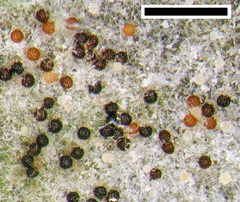 Podosphaera xanthiie0pathogen
- Outcome
- Frequency of fungicide-resistant strainse0
- Value
- 3 to 80%e0
- Qualifier
- triadimefone0
- Setting
- New Yorke0
 Cucurbita
Organisms pictured · Representative pictures of the matched species, not figures from the paper.


Verbatim
e0“Frequency of fungicide-resistant strains of Podosphaera xanthii on pumpkins in New York before treatment varied from 3 to 80% for the demethylation inhibiting (DMI) fungicide triadimefon”
Claim · model-written summary
Before treatment, the frequency of benomyl-resistant Podosphaera xanthii strains on pumpkins in New York varied from 0 to 48% between 1993 and 1996.
- Interactor
- Podosphaera xanthiiPodosphaera xanthiie0pathogen
- Outcome
- Frequency of fungicide-resistant strainse0
- Value
- 0 to 48%e0
- Qualifier
- benomyle0
- Setting
- New Yorke0
Organisms pictured · Representative pictures of the matched species, not figures from the paper.
Verbatim
e0“Frequency of fungicide-resistant strains of Podosphaera xanthii on pumpkins in New York before treatment varied from 3 to 80% for the demethylation inhibiting (DMI) fungicide triadimefon and from 0 to 48% for the benzimidazole fungicide benomyl between 1993 and 1996”
Claim · model-written summary
When the initial frequency of triadimefon-resistant strains was below 55%, one application of triadimefon plus chlorothalonil was effective against powdery mildew.
- Taxon
- Cucurbitt0
- Treatment
- one application of triadimefon plus chlorothalonile0
- Interactor
- Powdery Mildewt0pathogen
- Outcome
- effectivee0
- Direction
- effectivee0
- Qualifier
- initial frequency of triadimefon-resistant strains was less than 55%e0
Not reportedComparator
Verbatim
t0“Cucurbit Powdery Mildew”
e0“When the initial frequency of triadimefon-resistant strains was less than 55%, one application of triadimefon plus chlorothalonil was effective”
Claim · model-written summary
The frequency of triadimefon-resistant strains increased from 3 to 71% within 20 days after the first fungicide application in 1993.
- Taxon
- Cucurbitt0
- Treatment
- first fungicide applicatione0
- Interactor
- Powdery Mildewt0pathogen
- Outcome
- frequency of triadimefon-resistant strainse0
- Direction
- increasede0
- Value
- 3 to 71%e0
Not reportedComparator
Verbatim
t0“Cucurbit Powdery Mildew”
e0“The frequency of triadimefon-resistant strains increased from 3 to 71% by 20 days after the first fungicide application in 1993”
Claim · model-written summary
Triadimefon in the second application did not contribute to powdery mildew control.
- Taxon
- Cucurbitt0
- Treatment
- Triadimefon in the second applicatione0
- Interactor
- Powdery Mildewt0pathogen
- Outcome
- controle0
- Direction
- did not contributee0
Not reportedComparator
Verbatim
t0“Cucurbit Powdery Mildew”
e0“Triadimefon in the second application did not contribute to control”
Claim · model-written summary
The authors attribute the loss of triadimefon efficacy to resistance.
Verbatim
t0“Cucurbit Powdery Mildew”
e0“Loss of efficacy was due to resistance”
Claim · model-written summary
Pumpkins treated with other systemic fungicides were less severely infected by powdery mildew on abaxial leaf surfaces than triadimefon-treated pumpkins.
- Treatment
- other systemic fungicidese0
- Interactor
- powdery mildewe0pathogen
- Outcome
- infected by powdery mildew on abaxial leaf surfacese0
- Direction
- less severelye0
- Comparator
- triadimefon-treated pumpkinse0
Organisms pictured · Representative pictures of the matched species, not figures from the paper.
Verbatim
e0“compared with triadimefon-treated pumpkins, pumpkins treated with other systemic fungicides were less severely infected by powdery mildew on abaxial leaf surfaces”
Claim · model-written summary
Triadimefon was not effective in 1995 when 80% of the pathogen population was resistant before treatment.
- Taxon
- Cucurbitt0
- Treatment
- Triadimefone0
- Interactor
- Powdery Mildewt0pathogen
- Outcome
- effectivee0
- Direction
- not effectivee0
- Qualifier
- 80% of the pathogen population was resistant before treatmente0
Not reportedComparator
Verbatim
t0“Cucurbit Powdery Mildew”
e0“Triadimefon was not effective in 1995 when 80% of the pathogen population was resistant before treatment”
Claim · model-written summary
Benomyl was effective in 1995.
- Taxon
- Cucurbitt0
- Treatment
- Benomyle0
- Interactor
- Powdery Mildewt0pathogen
- Outcome
- effectivee0
- Direction
- effectivee0
Not reportedComparator
Verbatim
t0“Cucurbit Powdery Mildew”
e0“Benomyl was effective in 1995”
Claim · model-written summary
Benomyl was not effective in 1996, when 48% of the isolates tested were resistant to both benomyl and triadimefon before treatment.
- Taxon
- Cucurbitt0
- Treatment
- Benomyle0
- Interactor
- Powdery Mildewt0pathogen
- Outcome
- effectivee0
- Direction
- not in 1996e0
- Qualifier
- 48% of the isolates tested were resistant to both benomyl and triadimefon before treatmente0
Not reportedComparator
Verbatim
t0“Cucurbit Powdery Mildew”
e0“Benomyl was effective in 1995, but not in 1996 when 48% of the isolates tested were resistant to both benomyl and triadimefon before treatment”
Claim · model-written summary
Sensitivity of the pathogen population to the DMI fungicides myclobutanil and propiconazole also decreased after they were applied.
- Taxon
- Cucurbitt0
- Treatment
- DMI fungicides myclobutanil and propiconazolee0
- Interactor
- Powdery Mildewt0pathogen
- Outcome
- sensitivity of the pathogen populatione0
- Direction
- decreasede0
Not reportedComparator
Verbatim
t0“Cucurbit Powdery Mildew”
e0“sensitivity of the pathogen population to the DMI fungicides myclobutanil and propiconazole also decreased after they were applied”
Claim · model-written summary
Myclobutanil and propiconazole were more effective than triadimefon.
Verbatim
t0“Cucurbit Powdery Mildew”
e0“Although sensitivity of the pathogen population to the DMI fungicides myclobutanil and propiconazole also decreased after they were applied, these fungicides were more effective than triadimefon”
The same questions in other papers
fungicide · disease · Cucurbita (pumpkins)Positive and negative results
9 papers in the same direction as this paper · 1 in the opposite direction
- positive
- negative
- positive
7 papers more in this group
See all 11 papers →Claims are grouped by organism, treatment and what was measured or targeted. A paper counts as positive when any of its claims in the group is positive.