Abstract
During malting the water-insoluble β-glucan of barley is diminished whilst water-soluble gum is little decreased. The amount of β-glucan surviving into malt depends on variety but barleys rich in glucan give malts with high β-glucan levels. The β-glucan content of barley depends on variety and growth site. β-Glucan solubilase survives mashing and catalyses the release of hemicellulose into solution. There is no correlation between the β-glucan content of malt and the amount released into wort. However, barley adjuncts containing high levels of β-glucan give worts rich in β-glucan. β-Glucan dissolution in mashing is dependent on time, temperature, grist particle size and liquor: grist ratio. Use of adjuncts derived from barley contribute relatively more β-glucan in wort, coinciding with reduced rates of wort separation, but these can be increased by using a β-glucanase produced by growing the fungus Trichoderma viride on spent grains.
Abstract from the paper’s OpenAlex record, shown for indexing and research. Copyright remains with the authors or the publisher. Read at the source ↗
The text the model read, with the source record’s inline markup (italics, sub- and superscripts) rendered and its character entities decoded; quote offsets refer to the raw text.
Claims 11
Claim · model-written summary
During malting the water-insoluble β-glucan of barley was diminished.
- Taxon
- barley
 Hordeum vulgaree0
- Treatment
- maltinge0
- Outcome
- water-insoluble β-glucane0
- Direction
- diminishede0
Not reportedComparator
Organisms pictured · Representative pictures of the matched species, not figures from the paper.

Verbatim
e0“During malting the water-insoluble β-glucan of barley is diminished whilst water-soluble gum is little decreased”
Claim · model-written summary
During malting the water-soluble gum of barley was only little decreased.
- Taxon
- barleyHordeum vulgaree0
- Treatment
- maltinge0
- Outcome
- water-soluble gume0
- Direction
- little decreasede0
Not reportedComparator
Organisms pictured · Representative pictures of the matched species, not figures from the paper.
Verbatim
e0“During malting the water-insoluble β-glucan of barley is diminished whilst water-soluble gum is little decreased”
Claim · model-written summary
The amount of β-glucan surviving into malt depends on barley variety.
- Taxon
- barleyHordeum vulgaree1
- Material
- varietye0
- Outcome
- amount of β-glucan surviving into malte0
Not reportedDirection
Organisms pictured · Representative pictures of the matched species, not figures from the paper.
Verbatim
e0“The amount of β-glucan surviving into malt depends on variety”
e1“the water-insoluble β-glucan of barley”
Claim · model-written summary
Barleys rich in glucan gave malts with high β-glucan levels.
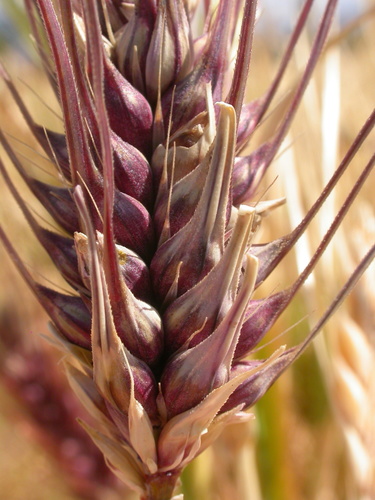
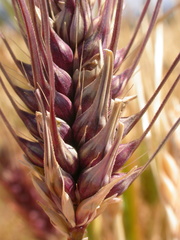 Hordeum
Organisms pictured · Representative pictures of the matched species, not figures from the paper.
Verbatim
e0“barleys rich in glucan give malts with high β-glucan levels”
Claim · model-written summary
The β-glucan content of barley depends on variety and growth site.
- Taxon
- barleyHordeum vulgaree0
- Material
- varietye0
- Outcome
- β-glucan contente0
- Setting
- growth sitee0
Not reportedDirection
Organisms pictured · Representative pictures of the matched species, not figures from the paper.
Verbatim
e0“The β-glucan content of barley depends on variety and growth site”
Claim · model-written summary
β-Glucan solubilase survives mashing and catalyses the release of hemicellulose into solution.
- Taxon
- barleyHordeum vulgaree1
- Gene
- β-Glucan solubilasee0
- Outcome
- release of hemicellulose into solutione0
Organisms pictured · Representative pictures of the matched species, not figures from the paper.
Verbatim
e0“β-Glucan solubilase survives mashing and catalyses the release of hemicellulose into solution”
e1“the water-insoluble β-glucan of barley”
Claim · model-written summary
There was no correlation between the β-glucan content of malt and the amount released into wort.
- Taxon
- barleyHordeum vulgaree1
- Organ / stage
- malte0
- Outcome
- amount released into worte0
Not reportedDirection
Organisms pictured · Representative pictures of the matched species, not figures from the paper.
Verbatim
e0“There is no correlation between the β-glucan content of malt and the amount released into wort”
e1“the water-insoluble β-glucan of barley”
Claim · model-written summary
Barley adjuncts containing high levels of β-glucan gave worts rich in β-glucan.
- Taxon
- barleyHordeum vulgaree0
- Material
- barley adjuncts containing high levels of β-glucane0
- Outcome
- worts rich in β-glucane0
- Direction
- riche0
Organisms pictured · Representative pictures of the matched species, not figures from the paper.
Verbatim
e0“barley adjuncts containing high levels of β-glucan give worts rich in β-glucan”
Claim · model-written summary
β-Glucan dissolution in mashing depends on time, temperature, grist particle size and liquor:grist ratio.
- Taxon
- barleyHordeum vulgaree1
- Treatment
- time, temperature, grist particle size and liquor: grist ratioe0
- Outcome
- β-Glucan dissolution in mashinge0
Not reportedDirection
Organisms pictured · Representative pictures of the matched species, not figures from the paper.
Verbatim
e0“β-Glucan dissolution in mashing is dependent on time, temperature, grist particle size and liquor: grist ratio”
e1“the water-insoluble β-glucan of barley”
Claim · model-written summary
Use of adjuncts derived from barley coincided with reduced rates of wort separation.
- Taxon
- barleyHordeum vulgaree0
- Treatment
- adjuncts derived from barleye0
- Outcome
- rates of wort separatione0
- Direction
- reducede0
Organisms pictured · Representative pictures of the matched species, not figures from the paper.
Verbatim
e0“Use of adjuncts derived from barley contribute relatively more β-glucan in wort, coinciding with reduced rates of wort separation”
Claim · model-written summary
The reduced rates of wort separation can be increased by using a β-glucanase produced by growing Trichoderma viride on spent grains.
- Taxon
- barleyHordeum vulgaree2
- Treatment
- β-glucanase produced by growing the fungus Trichoderma viride on spent grainse0
- Outcome
- rates of wort separatione1
- Direction
- increasede0
Not reportedComparator
Organisms pictured · Representative pictures of the matched species, not figures from the paper.
Verbatim
e0“these can be increased by using a β-glucanase produced by growing the fungus Trichoderma viride on spent grains”
e1“reduced rates of wort separation”
e2“the water-insoluble β-glucan of barley”
The same questions in other papers
processing · molecular: metabolites · Hordeum vulgare (barley)Positive and negative results
5 papers in the same direction as this paper · 8 in the opposite direction
- positive
- positive
- positive
10 papers more in this group
See all 14 papers →Claims are grouped by organism, treatment and what was measured or targeted. A paper counts as positive when any of its claims in the group is positive.