Abstract
ABSTRACT Lack of crop yield response to planted tree fallow led to introducing a two-year fallow phase to determine if planted tree fallow can improve soil fertility and yields over a no-tree control. Three cycles of two years fallow followed by slash-and-burn land preparation and one year of groundnut/cassava/maize intercropping were conducted with Senna spectabilis, Flemingia macrophylla and Dactyladenia barteri as planted hedgerow fallows and a no-tree control on an Ultisol in southern Cameroon. The land had been continuously cropped to maize/cassava intercrop for 5 years previous to the first two-year fallow phase. Groundnut grain yields were unaffected by fallow system in 1998 and 2001 and the sum of the three cropping years. Maize grain yield was unaffected by fallow system in 1998. In 2001 and 2004 maize grain yield was highest in the S. spectabilis system. Total maize grain yield across the three cropping years was higher in the F. macrophylla and S. spectabilis systems than in the D. barteri system. Cassava root yields were in all years and the sum of the 3 years unaffected by fallow system. Cassava root (1998, 2001) and groundnut grain (2001) yields had significant spatial responses to the distance from hedgerows, with yield increases with increasing distance from hedgerows. Annual biomass production of hedgerow prunings during cropping phases ranged from zero (D. barteri) to 3.4 Mg ha−1 (S. spectabilis). During the growth of groundnut and maize, hedgerows produced < 1 Mg ha−1 in 1998, < 0.6 Mg ha in 2001 and <0.8 Mg ha at any individual pruning. Combined relative crop yields over the three cycles were lower in planted fallow than in the no-tree control. The N export with groundnut and maize grain and cassava roots, as an indicator of crude protein production was lower in the planted hedgerow fallow systems than in no-tree control. The planted fallow hedgerow system appears unsuitable to improve crop yields because the nutrient supply from prunings is low due to their low biomass production. Yet on short distances, the spatial response of cassava and groundnut indicates competition between hedgerows and crops, which was most pronounced on cassava and groundnut in the S. spectabilis system. The crop combination appears incompatible as benefits realized by the maize were outweighed by losses in groundnut.
Abstract from the paper’s OpenAlex record, shown for indexing and research. Copyright remains with the authors or the publisher. Read at the source ↗
The text the model read, with the source record’s inline markup (italics, sub- and superscripts) rendered and its character entities decoded; quote offsets refer to the raw text.
Claims 15
Claim · model-written summary
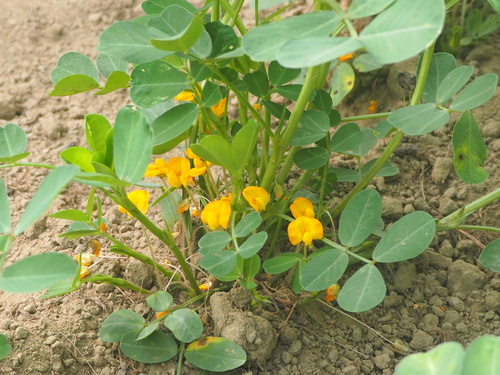
Groundnut grain yield was unaffected by fallow system in 1998, 2001, and across three cropping years.
- Taxon
- Groundnut
 Arachis hypogaeae0
- Treatment
- fallow systeme0
- Outcome
- grain yieldse0
- Direction
- unaffectede0
- Qualifier
- in 1998 and 2001 and the sum of the three cropping yearse0
Not reportedComparator
Organisms pictured · Representative pictures of the matched species, not figures from the paper.
Verbatim
e0“Groundnut grain yields were unaffected by fallow system in 1998 and 2001 and the sum of the three cropping years.”
Claim · model-written summary
Maize grain yield was unaffected by fallow system in 1998.
Not reportedComparator
Organisms pictured · Representative pictures of the matched species, not figures from the paper.

Verbatim
e0“Maize grain yield was unaffected by fallow system in 1998.”
Claim · model-written summary
Maize grain yield was highest in the Senna spectabilis fallow system in 2001 and 2004.
Not reportedComparator
Organisms pictured · Representative pictures of the matched species, not figures from the paper.
Verbatim
e0“In 2001 and 2004 maize grain yield was highest in the S. spectabilis system.”
e1“Senna spectabilis, Flemingia macrophylla and Dactyladenia barteri as planted hedgerow fallows”
Claim · model-written summary
Total maize grain yield across three years was higher with Flemingia macrophylla fallow than with Dactyladenia barteri.
Organisms pictured · Representative pictures of the matched species, not figures from the paper.
Verbatim
e0“Total maize grain yield across the three cropping years was higher in the F. macrophylla and S. spectabilis systems than in the D. barteri system.”
Claim · model-written summary
Total maize grain yield across three years was higher with Senna spectabilis fallow than with Dactyladenia barteri.
- Treatment
- S. spectabilis systemse0
- Outcome
- maize grain yielde0
- Direction
- highere0
- Comparator
- D. barteri systeme0
Organisms pictured · Representative pictures of the matched species, not figures from the paper.
Verbatim
e0“Total maize grain yield across the three cropping years was higher in the F. macrophylla and S. spectabilis systems than in the D. barteri system.”
Claim · model-written summary
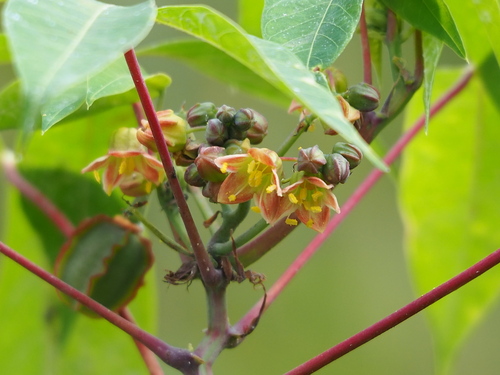
Cassava root yield was unaffected by fallow system in every year and across all three years.
- Taxon
- Cassava
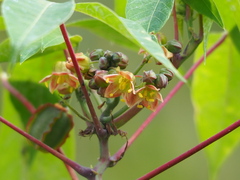 Manihot esculentae0
- Treatment
- fallow systeme0
- Outcome
- root yieldse0
- Direction
- unaffectede0
- Qualifier
- in all years and the sum of the 3 yearse0
Not reportedComparator
Organisms pictured · Representative pictures of the matched species, not figures from the paper.
Verbatim
e0“Cassava root yields were in all years and the sum of the 3 years unaffected by fallow system.”
Claim · model-written summary
Cassava root yield increased with distance from hedgerows in 1998 and 2001.
- Taxon
- CassavaManihot esculentae0
- Outcome
- roote0
- Direction
- yield increasese0
- Qualifier
- 1998, 2001e0
- Setting
- distance from hedgerowse0
Organisms pictured · Representative pictures of the matched species, not figures from the paper.
Verbatim
e0“Cassava root (1998, 2001) and groundnut grain (2001) yields had significant spatial responses to the distance from hedgerows, with yield increases with increasing distance from hedgerows.”
Claim · model-written summary
Groundnut grain yield increased with distance from hedgerows in 2001.
- Taxon
- groundnutArachis hypogaeae0
- Outcome
- graine0
- Direction
- yield increasese0
- Qualifier
- 2001e0
- Setting
- distance from hedgerowse0
Organisms pictured · Representative pictures of the matched species, not figures from the paper.
Verbatim
e0“Cassava root (1998, 2001) and groundnut grain (2001) yields had significant spatial responses to the distance from hedgerows, with yield increases with increasing distance from hedgerows.”
Claim · model-written summary
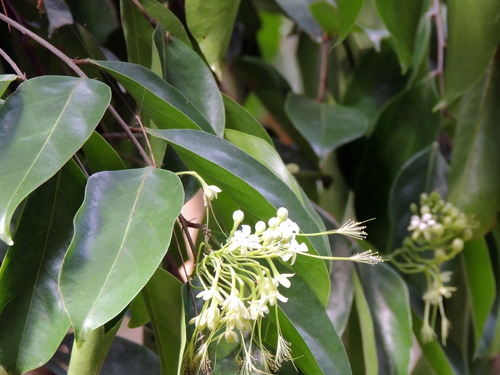
Annual hedgerow pruning biomass during cropping ranged from zero for Dactyladenia barteri to 3.4 Mg ha−1 for Senna spectabilis.
- Taxon
- D. barteri
 Dactyladenia barterie0
- Outcome
- Annual biomass production of hedgerow pruningse0
- Value
- 3.4 Mg ha−1e0
Organisms pictured · Representative pictures of the matched species, not figures from the paper.
Verbatim
e0“Annual biomass production of hedgerow prunings during cropping phases ranged from zero (D. barteri) to 3.4 Mg ha−1 (S. spectabilis).”
Claim · model-written summary
Hedgerow biomass production during groundnut and maize growth was below 1 Mg ha−1 in 1998, below 0.6 Mg ha in 2001 and below 0.8 Mg ha per pruning.
Verbatim
e0“During the growth of groundnut and maize, hedgerows produced < 1 Mg ha−1 in 1998, < 0.6 Mg ha in 2001 and <0.8 Mg ha at any individual pruning.”
Claim · model-written summary
Combined relative crop yield across cycles was lower in planted fallow than no-tree control.
Verbatim
e0“Combined relative crop yields over the three cycles were lower in planted fallow than in the no-tree control.”
Claim · model-written summary
Nitrogen export in grain and roots was lower with planted hedgerow fallows than no-tree control.
- Taxon
- groundnut and maize grain and cassava rootsArachis hypogaeaManihot esculenta
 Zea mayse0
- Treatment
- planted hedgerow fallow systemse0
- Outcome
- N exporte0
- Direction
- lowere0
- Comparator
- no-tree controle0
Organisms pictured · Representative pictures of the matched species, not figures from the paper.
Verbatim
e0“The N export with groundnut and maize grain and cassava roots, as an indicator of crude protein production was lower in the planted hedgerow fallow systems than in no-tree control.”
Claim · model-written summary
The planted fallow hedgerow system was judged unsuitable for improving crop yields because pruning nutrient supply was low.
Verbatim
e0“The planted fallow hedgerow system appears unsuitable to improve crop yields because the nutrient supply from prunings is low due to their low biomass production.”
Claim · model-written summary
Spatial yield patterns suggest hedgerow competition with cassava and groundnut, strongest in the Senna spectabilis system.
- Taxon
- cassava and groundnutArachis hypogaeaManihot esculentae0
- Outcome
- spatial responsee0
- Qualifier
- competition between hedgerows and cropse0
Organisms pictured · Representative pictures of the matched species, not figures from the paper.
Verbatim
e0“the spatial response of cassava and groundnut indicates competition between hedgerows and crops, which was most pronounced on cassava and groundnut in the S. spectabilis system.”
Claim · model-written summary
The authors judged the crop combination incompatible because maize benefits were outweighed by groundnut losses.
- Outcome
- crop combination appears incompatiblee0
- Qualifier
- benefits realized by the maize were outweighed by losses in groundnute0
Organisms pictured · Representative pictures of the matched species, not figures from the paper.
Verbatim
e0“The crop combination appears incompatible as benefits realized by the maize were outweighed by losses in groundnut.”
The same questions in other papers
rotation · yield · Manihot esculenta (cassava)Positive and negative results
1 paper in the same direction as this paper · 6 in the opposite direction
- positive
- no effect
- positive
4 papers more in this group
See all 8 papers →rotation · yield · Arachis hypogaea (peanut)Positive and negative results
14 papers in the same direction as this paper · 22 in the opposite direction
- negative
- positive
- positive
33 papers more in this group
See all 37 papers →rotation · yield · Zea mays (maize)Positive and negative results
67 papers in the same direction as this paper · 254 in the opposite direction
- no effect
- no effect
- positive
318 papers more in this group
See all 322 papers →Claims are grouped by organism, treatment and what was measured or targeted. A paper counts as positive when any of its claims in the group is positive.