Abstract
Field plots of alfalfa, Medicago sativa L., sprayed weekly with Dithane M‐45 during the 1965 growing season to control leaf and stem diseases yielded 2.8 MT/ha (18%) more hay than did unsprayed plots (Average of four varieties in four cuttings). Disease control increased carotene content 21% (third cutting) and decreased stem defoliation 18%. Increases in annual forage yields in MT/ha, for sprayed over unsprayed plots, respectively, were ‘Cody’ 1.57 (8.8%), ‘Lahontan’ 3.47 (21.1%), ‘Ranger’ 3.11 (19.4%), and ‘Vernal’ 3.11 (26.9%). Phoma medicaginis and Leptosphaerulina briosiana were the major pathogens in the first and second cuttings. Their control increased yields of Cody 4%, Lahontan 14%, Ranger 19%, and Vernal 19% for the first two cuttings combined. Cercospora zebrina was the principal pathogen in the third and fourth cuttings. Control of C. zebrina increased yields of Cody 16%, Ranger 29%, Lahontan 30%, and Vernal 38% for the third and fourth cuttings combined. Corresponding increases in carotene content for the third cutting were 17, 20, 45, and 10%, respectively. Defoliation was reduced by spray treatments. Protein percentage was not affected.
Abstract from the paper’s OpenAlex record, shown for indexing and research. Copyright remains with the authors or the publisher. Read at the source ↗
The text the model read, with the source record’s inline markup (italics, sub- and superscripts) rendered and its character entities decoded; quote offsets refer to the raw text.
Claims 18
Claim · model-written summary
Weekly spraying to control leaf and stem diseases increased alfalfa hay yield by 2.8 MT/ha (18%) over unsprayed plots.
- Taxon
- Medicago sativa
 Medicago sativae1
- Treatment
- sprayed weeklye1
- Outcome
- haye1
- Direction
- moree1
- Value
- 2.8 MT/ha (18%)e1
- Comparator
- unsprayed plotse1
Organisms pictured · Representative pictures of the matched species, not figures from the paper.

Verbatim
e1“Field plots of alfalfa, Medicago sativa L., sprayed weekly with Dithane M‐45 during the 1965 growing season to control leaf and stem diseases yielded 2.8 MT/ha (18%) more hay than did unsprayed plots”
Claim · model-written summary
Disease control increased carotene content of alfalfa by 21% in the third cutting.
- Taxon
- Medicago sativaMedicago sativae1
- Treatment
- Disease controle2
- Outcome
- carotene contente2
- Direction
- increasede2
- Value
- 21%e2
- Qualifier
- third cuttinge2
- Comparator
- unsprayed plotse1
Organisms pictured · Representative pictures of the matched species, not figures from the paper.
Verbatim
e1“Field plots of alfalfa, Medicago sativa L., sprayed weekly with Dithane M‐45 during the 1965 growing season to control leaf and stem diseases yielded 2.8 MT/ha (18%) more hay than did unsprayed plots”
e2“Disease control increased carotene content 21% (third cutting) and decreased stem defoliation 18%”
Claim · model-written summary
Disease control decreased stem defoliation of alfalfa by 18%.
- Taxon
- Medicago sativaMedicago sativae1
- Treatment
- Disease controle2
- Outcome
- stem defoliatione2
- Direction
- decreasede2
- Value
- 18%e2
- Comparator
- unsprayed plotse1
Organisms pictured · Representative pictures of the matched species, not figures from the paper.
Verbatim
e1“Field plots of alfalfa, Medicago sativa L., sprayed weekly with Dithane M‐45 during the 1965 growing season to control leaf and stem diseases yielded 2.8 MT/ha (18%) more hay than did unsprayed plots”
e2“Disease control increased carotene content 21% (third cutting) and decreased stem defoliation 18%”
Claim · model-written summary
Phoma medicaginis and Leptosphaerulina briosiana were the major pathogens of alfalfa in the first and second cuttings.
- Taxon
- Medicago sativaMedicago sativae1
- Organ / stage
- first and second cuttingse3
- Interactor
- Phoma medicaginisAscochyta medicaginicolae3pathogen
- Second interactor
- Leptosphaerulina briosiana
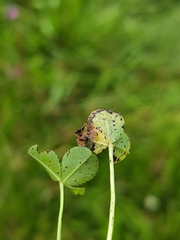 Leptosphaerulina trifoliie3pathogen
- Outcome
- major pathogense3
Organisms pictured · Representative pictures of the matched species, not figures from the paper.
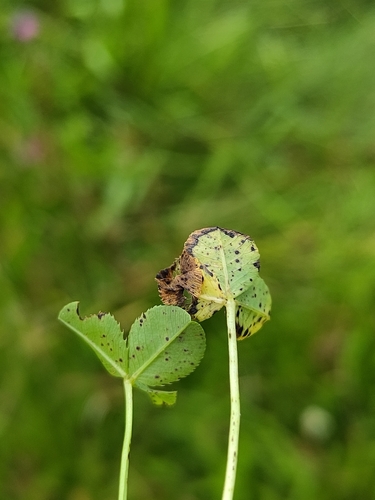
Verbatim
e1“Field plots of alfalfa, Medicago sativa L., sprayed weekly with Dithane M‐45 during the 1965 growing season to control leaf and stem diseases yielded 2.8 MT/ha (18%) more hay than did unsprayed plots”
e3“Phoma medicaginis and Leptosphaerulina briosiana were the major pathogens in the first and second cuttings”
Claim · model-written summary
Control of the first- and second-cutting pathogens increased yield of Cody alfalfa by 4% in the first two cuttings combined.
- Taxon
- Medicago sativaMedicago sativae1
- Material
- Codye4
- Treatment
- Their controle4
- Interactor
- Phoma medicaginisAscochyta medicaginicolae3pathogen
- Second interactor
- Leptosphaerulina briosianaLeptosphaerulina trifoliie3pathogen
- Outcome
- yieldse4
- Direction
- increasede4
- Value
- 4%e4
- Qualifier
- for the first two cuttings combinede4
- Comparator
- unsprayed plotse1
Organisms pictured · Representative pictures of the matched species, not figures from the paper.
Verbatim
e1“Field plots of alfalfa, Medicago sativa L., sprayed weekly with Dithane M‐45 during the 1965 growing season to control leaf and stem diseases yielded 2.8 MT/ha (18%) more hay than did unsprayed plots”
e3“Phoma medicaginis and Leptosphaerulina briosiana were the major pathogens in the first and second cuttings”
e4“Their control increased yields of Cody 4%, Lahontan 14%, Ranger 19%, and Vernal 19% for the first two cuttings combined”
Claim · model-written summary
Control of the first- and second-cutting pathogens increased yield of Lahontan alfalfa by 14% in the first two cuttings combined.
- Taxon
- Medicago sativaMedicago sativae1
- Material
- Lahontane4
- Treatment
- Their controle4
- Interactor
- Phoma medicaginisAscochyta medicaginicolae3pathogen
- Second interactor
- Leptosphaerulina briosianaLeptosphaerulina trifoliie3pathogen
- Outcome
- yieldse4
- Direction
- increasede4
- Value
- 14%e4
- Qualifier
- for the first two cuttings combinede4
- Comparator
- unsprayed plotse1
Organisms pictured · Representative pictures of the matched species, not figures from the paper.
Verbatim
e1“Field plots of alfalfa, Medicago sativa L., sprayed weekly with Dithane M‐45 during the 1965 growing season to control leaf and stem diseases yielded 2.8 MT/ha (18%) more hay than did unsprayed plots”
e3“Phoma medicaginis and Leptosphaerulina briosiana were the major pathogens in the first and second cuttings”
e4“Their control increased yields of Cody 4%, Lahontan 14%, Ranger 19%, and Vernal 19% for the first two cuttings combined”
Claim · model-written summary
Control of the first- and second-cutting pathogens increased yield of Ranger alfalfa by 19% in the first two cuttings combined.
- Taxon
- Medicago sativaMedicago sativae1
- Material
- Rangere4
- Treatment
- Their controle4
- Interactor
- Phoma medicaginisAscochyta medicaginicolae3pathogen
- Second interactor
- Leptosphaerulina briosianaLeptosphaerulina trifoliie3pathogen
- Outcome
- yieldse4
- Direction
- increasede4
- Value
- 19%e4
- Qualifier
- for the first two cuttings combinede4
- Comparator
- unsprayed plotse1
Organisms pictured · Representative pictures of the matched species, not figures from the paper.
Verbatim
e1“Field plots of alfalfa, Medicago sativa L., sprayed weekly with Dithane M‐45 during the 1965 growing season to control leaf and stem diseases yielded 2.8 MT/ha (18%) more hay than did unsprayed plots”
e3“Phoma medicaginis and Leptosphaerulina briosiana were the major pathogens in the first and second cuttings”
e4“Their control increased yields of Cody 4%, Lahontan 14%, Ranger 19%, and Vernal 19% for the first two cuttings combined”
Claim · model-written summary
Control of the first- and second-cutting pathogens increased yield of Vernal alfalfa by 19% in the first two cuttings combined.
- Taxon
- Medicago sativaMedicago sativae1
- Material
- Vernale4
- Treatment
- Their controle4
- Interactor
- Phoma medicaginisAscochyta medicaginicolae3pathogen
- Second interactor
- Leptosphaerulina briosianaLeptosphaerulina trifoliie3pathogen
- Outcome
- yieldse4
- Direction
- increasede4
- Value
- 19%e4
- Qualifier
- for the first two cuttings combinede4
- Comparator
- unsprayed plotse1
Organisms pictured · Representative pictures of the matched species, not figures from the paper.
Verbatim
e1“Field plots of alfalfa, Medicago sativa L., sprayed weekly with Dithane M‐45 during the 1965 growing season to control leaf and stem diseases yielded 2.8 MT/ha (18%) more hay than did unsprayed plots”
e3“Phoma medicaginis and Leptosphaerulina briosiana were the major pathogens in the first and second cuttings”
e4“Their control increased yields of Cody 4%, Lahontan 14%, Ranger 19%, and Vernal 19% for the first two cuttings combined”
Claim · model-written summary
Cercospora zebrina was the principal pathogen of alfalfa in the third and fourth cuttings.
- Taxon
- Medicago sativaMedicago sativae1
- Organ / stage
- third and fourth cuttingse5
- Interactor
- Cercospora zebrina
 Cercospora zebrinae5pathogen
- Outcome
- principal pathogene5
Organisms pictured · Representative pictures of the matched species, not figures from the paper.

Verbatim
e1“Field plots of alfalfa, Medicago sativa L., sprayed weekly with Dithane M‐45 during the 1965 growing season to control leaf and stem diseases yielded 2.8 MT/ha (18%) more hay than did unsprayed plots”
e5“Cercospora zebrina was the principal pathogen in the third and fourth cuttings”
Claim · model-written summary
Control of C. zebrina increased yield of Cody alfalfa by 16% in the third and fourth cuttings combined.
- Taxon
- Medicago sativaMedicago sativae1
- Material
- Codye6
- Treatment
- Control of C. zebrinae6
- Interactor
- C. zebrinaCercospora zebrinae6pathogen
- Outcome
- yieldse6
- Direction
- increasede6
- Value
- 16%e6
- Qualifier
- for the third and fourth cuttings combinede6
- Comparator
- unsprayed plotse1
Organisms pictured · Representative pictures of the matched species, not figures from the paper.
Verbatim
e1“Field plots of alfalfa, Medicago sativa L., sprayed weekly with Dithane M‐45 during the 1965 growing season to control leaf and stem diseases yielded 2.8 MT/ha (18%) more hay than did unsprayed plots”
e6“Control of C. zebrina increased yields of Cody 16%, Ranger 29%, Lahontan 30%, and Vernal 38% for the third and fourth cuttings combined”
Claim · model-written summary
Control of C. zebrina increased yield of Ranger alfalfa by 29% in the third and fourth cuttings combined.
- Taxon
- Medicago sativaMedicago sativae1
- Material
- Rangere6
- Treatment
- Control of C. zebrinae6
- Interactor
- C. zebrinaCercospora zebrinae6pathogen
- Outcome
- yieldse6
- Direction
- increasede6
- Value
- 29%e6
- Qualifier
- for the third and fourth cuttings combinede6
- Comparator
- unsprayed plotse1
Organisms pictured · Representative pictures of the matched species, not figures from the paper.
Verbatim
e1“Field plots of alfalfa, Medicago sativa L., sprayed weekly with Dithane M‐45 during the 1965 growing season to control leaf and stem diseases yielded 2.8 MT/ha (18%) more hay than did unsprayed plots”
e6“Control of C. zebrina increased yields of Cody 16%, Ranger 29%, Lahontan 30%, and Vernal 38% for the third and fourth cuttings combined”
Claim · model-written summary
Control of C. zebrina increased yield of Lahontan alfalfa by 30% in the third and fourth cuttings combined.
- Taxon
- Medicago sativaMedicago sativae1
- Material
- Lahontane6
- Treatment
- Control of C. zebrinae6
- Interactor
- C. zebrinaCercospora zebrinae6pathogen
- Outcome
- yieldse6
- Direction
- increasede6
- Value
- 30%e6
- Qualifier
- for the third and fourth cuttings combinede6
- Comparator
- unsprayed plotse1
Organisms pictured · Representative pictures of the matched species, not figures from the paper.
Verbatim
e1“Field plots of alfalfa, Medicago sativa L., sprayed weekly with Dithane M‐45 during the 1965 growing season to control leaf and stem diseases yielded 2.8 MT/ha (18%) more hay than did unsprayed plots”
e6“Control of C. zebrina increased yields of Cody 16%, Ranger 29%, Lahontan 30%, and Vernal 38% for the third and fourth cuttings combined”
Claim · model-written summary
Control of C. zebrina increased yield of Vernal alfalfa by 38% in the third and fourth cuttings combined.
- Taxon
- Medicago sativaMedicago sativae1
- Material
- Vernale6
- Treatment
- Control of C. zebrinae6
- Interactor
- C. zebrinaCercospora zebrinae6pathogen
- Outcome
- yieldse6
- Direction
- increasede6
- Value
- 38%e6
- Qualifier
- for the third and fourth cuttings combinede6
- Comparator
- unsprayed plotse1
Organisms pictured · Representative pictures of the matched species, not figures from the paper.
Verbatim
e1“Field plots of alfalfa, Medicago sativa L., sprayed weekly with Dithane M‐45 during the 1965 growing season to control leaf and stem diseases yielded 2.8 MT/ha (18%) more hay than did unsprayed plots”
e6“Control of C. zebrina increased yields of Cody 16%, Ranger 29%, Lahontan 30%, and Vernal 38% for the third and fourth cuttings combined”
Claim · model-written summary
Control of C. zebrina increased carotene content of Cody alfalfa by 17 in the third cutting.
- Taxon
- Medicago sativaMedicago sativae1
- Material
- Codye6
- Treatment
- Control of C. zebrinae6
- Interactor
- C. zebrinaCercospora zebrinae6pathogen
- Outcome
- carotene contente7
- Direction
- increasese7
- Value
- 17e7
- Qualifier
- third cuttinge7
- Comparator
- unsprayed plotse1
Organisms pictured · Representative pictures of the matched species, not figures from the paper.
Verbatim
e1“Field plots of alfalfa, Medicago sativa L., sprayed weekly with Dithane M‐45 during the 1965 growing season to control leaf and stem diseases yielded 2.8 MT/ha (18%) more hay than did unsprayed plots”
e6“Control of C. zebrina increased yields of Cody 16%, Ranger 29%, Lahontan 30%, and Vernal 38% for the third and fourth cuttings combined”
e7“Corresponding increases in carotene content for the third cutting were 17, 20, 45, and 10%, respectively”
Claim · model-written summary
Control of C. zebrina increased carotene content of Ranger alfalfa by 20 in the third cutting.
- Taxon
- Medicago sativaMedicago sativae1
- Material
- Rangere6
- Treatment
- Control of C. zebrinae6
- Interactor
- C. zebrinaCercospora zebrinae6pathogen
- Outcome
- carotene contente7
- Direction
- increasese7
- Value
- 20e7
- Qualifier
- third cuttinge7
- Comparator
- unsprayed plotse1
Organisms pictured · Representative pictures of the matched species, not figures from the paper.
Verbatim
e1“Field plots of alfalfa, Medicago sativa L., sprayed weekly with Dithane M‐45 during the 1965 growing season to control leaf and stem diseases yielded 2.8 MT/ha (18%) more hay than did unsprayed plots”
e6“Control of C. zebrina increased yields of Cody 16%, Ranger 29%, Lahontan 30%, and Vernal 38% for the third and fourth cuttings combined”
e7“Corresponding increases in carotene content for the third cutting were 17, 20, 45, and 10%, respectively”
Claim · model-written summary
Control of C. zebrina increased carotene content of Lahontan alfalfa by 45 in the third cutting.
- Taxon
- Medicago sativaMedicago sativae1
- Material
- Lahontane6
- Treatment
- Control of C. zebrinae6
- Interactor
- C. zebrinaCercospora zebrinae6pathogen
- Outcome
- carotene contente7
- Direction
- increasese7
- Value
- 45e7
- Qualifier
- third cuttinge7
- Comparator
- unsprayed plotse1
Organisms pictured · Representative pictures of the matched species, not figures from the paper.
Verbatim
e1“Field plots of alfalfa, Medicago sativa L., sprayed weekly with Dithane M‐45 during the 1965 growing season to control leaf and stem diseases yielded 2.8 MT/ha (18%) more hay than did unsprayed plots”
e6“Control of C. zebrina increased yields of Cody 16%, Ranger 29%, Lahontan 30%, and Vernal 38% for the third and fourth cuttings combined”
e7“Corresponding increases in carotene content for the third cutting were 17, 20, 45, and 10%, respectively”
Claim · model-written summary
Control of C. zebrina increased carotene content of Vernal alfalfa by 10% in the third cutting.
- Taxon
- Medicago sativaMedicago sativae1
- Material
- Vernale6
- Treatment
- Control of C. zebrinae6
- Interactor
- C. zebrinaCercospora zebrinae6pathogen
- Outcome
- carotene contente7
- Direction
- increasese7
- Value
- 10%e7
- Qualifier
- third cuttinge7
- Comparator
- unsprayed plotse1
Organisms pictured · Representative pictures of the matched species, not figures from the paper.
Verbatim
e1“Field plots of alfalfa, Medicago sativa L., sprayed weekly with Dithane M‐45 during the 1965 growing season to control leaf and stem diseases yielded 2.8 MT/ha (18%) more hay than did unsprayed plots”
e6“Control of C. zebrina increased yields of Cody 16%, Ranger 29%, Lahontan 30%, and Vernal 38% for the third and fourth cuttings combined”
e7“Corresponding increases in carotene content for the third cutting were 17, 20, 45, and 10%, respectively”
Claim · model-written summary
Spray treatment did not affect protein percentage of alfalfa.
- Taxon
- Medicago sativaMedicago sativae1
- Treatment
- sprayed weeklye1
- Outcome
- Protein percentagee2
- Direction
- not affectede2
- Comparator
- unsprayed plotse1
Organisms pictured · Representative pictures of the matched species, not figures from the paper.
Verbatim
e1“Field plots of alfalfa, Medicago sativa L., sprayed weekly with Dithane M‐45 during the 1965 growing season to control leaf and stem diseases yielded 2.8 MT/ha (18%) more hay than did unsprayed plots”
e2“Protein percentage was not affected”
The same questions in other papers
application · quality: protein · Medicago sativa (alfalfa)Positive and negative results
2 papers in the same direction as this paper · 4 in the opposite direction
- positive
- positive
- positive
3 papers more in this group
See all 7 papers →Claims are grouped by organism, treatment and what was measured or targeted. A paper counts as positive when any of its claims in the group is positive.