Abstract
Acid phosphatases (3.1.3.2) are a group of enzymes widely distributed in nature, which catalyze the hydrolysis of a variety of phosphate esters in the pH range of 4-6. We confirmed the presence of acid phosphatases in seedlings of cucumber (Cucumis sativus), radish (Raphanus sativus) and rocket salad (Eruca vesicaria) under different assay conditions using a rapid and simple preparation. The results showed that the optimum pH and temperature used for all species were close to 5.5 and 35°C, respectively. The enzyme was inhibited by molybdate, fluoride, azide, levamisole, orthovanadate, Zn2+ and Cu2+. Suramin had no effect on enzyme activity. The acid phosphatase from cucumber, radish and rocket salad hydrolyzed a wide variety of phosphate esters and the highest activity was observed with PPi, ATP and GTP. These results demonstrate that the enzyme investigated in this study is different from well known ester phosphate cleaving plant enzymes (apyrase and inorganic pyrophosphatases) and this preparation could be a useful tool to future toxicological studies and to study initially all isoforms of acid phosphatase.
Abstract from the paper’s OpenAlex record; open copy licensed cc-by-nc. Read at the source ↗
The text the model read, with the source record’s inline markup (italics, sub- and superscripts) rendered and its character entities decoded; quote offsets refer to the raw text.
Claims 8
Claim · model-written summary
Acid phosphatases were confirmed in seedlings of all three species.
- Taxon
- cucumber (Cucumis sativus), radish (Raphanus sativus) and rocket salad (Eruca vesicaria)
 Cucumis sativus
 Raphanus sativus
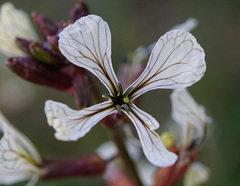 Eruca vesicariae1
- Organ / stage
- seedlingse1
- Gene
- acid phosphatasese1
- Outcome
- presence of acid phosphatasese1
Not reportedDirection
Organisms pictured · Representative pictures of the matched species, not figures from the paper.


Verbatim
e1“We confirmed the presence of acid phosphatases in seedlings of cucumber (Cucumis sativus), radish (Raphanus sativus) and rocket salad (Eruca vesicaria)”
Claim · model-written summary
Optimum pH was close to 5.5 for all three species.
- Taxon
- cucumber (Cucumis sativus), radish (Raphanus sativus) and rocket salad (Eruca vesicaria)Cucumis sativusRaphanus sativusEruca vesicariae0
- Outcome
- optimum pHe1
- Direction
- optimume1
- Value
- 5.5e1
Organisms pictured · Representative pictures of the matched species, not figures from the paper.
Verbatim
e0“cucumber (Cucumis sativus), radish (Raphanus sativus) and rocket salad (Eruca vesicaria)”
e1“optimum pH and temperature used for all species were close to 5.5 and 35°C, respectively”
Claim · model-written summary
Optimum temperature was close to 35°C for all three species.
- Taxon
- cucumber (Cucumis sativus), radish (Raphanus sativus) and rocket salad (Eruca vesicaria)Cucumis sativusRaphanus sativusEruca vesicariae0
- Outcome
- temperaturee1
- Direction
- optimume1
- Value
- 35°Ce1
Organisms pictured · Representative pictures of the matched species, not figures from the paper.
Verbatim
e0“cucumber (Cucumis sativus), radish (Raphanus sativus) and rocket salad (Eruca vesicaria)”
e1“optimum pH and temperature used for all species were close to 5.5 and 35°C, respectively”
Claim · model-written summary
Seven tested agents inhibited acid phosphatase activity.
- Taxon
- cucumber (Cucumis sativus), radish (Raphanus sativus) and rocket salad (Eruca vesicaria)Cucumis sativusRaphanus sativusEruca vesicariae0
- Treatment
- molybdate, fluoride, azide, levamisole, orthovanadate, Zn2+ and Cu2+e1
- Outcome
- enzymee1
- Direction
- inhibitede1
Not reportedComparator
Organisms pictured · Representative pictures of the matched species, not figures from the paper.
Verbatim
e0“cucumber (Cucumis sativus), radish (Raphanus sativus) and rocket salad (Eruca vesicaria)”
e1“The enzyme was inhibited by molybdate, fluoride, azide, levamisole, orthovanadate, Zn2+ and Cu2+”
Claim · model-written summary
Suramin had no effect on enzyme activity.
- Taxon
- cucumber (Cucumis sativus), radish (Raphanus sativus) and rocket salad (Eruca vesicaria)Cucumis sativusRaphanus sativusEruca vesicariae0
- Treatment
- Suramine1
- Outcome
- enzyme activitye1
- Direction
- no effecte1
Not reportedComparator
Organisms pictured · Representative pictures of the matched species, not figures from the paper.
Verbatim
e0“cucumber (Cucumis sativus), radish (Raphanus sativus) and rocket salad (Eruca vesicaria)”
e1“Suramin had no effect on enzyme activity”
Claim · model-written summary
Phosphatase hydrolyzed a wide variety of phosphate esters.
- Taxon
- cucumber, radish and rocket salade1
- Gene
- acid phosphatasee1
- Outcome
- hydrolyzed a wide variety of phosphate esterse1
Not reportedDirection
Verbatim
e1“acid phosphatase from cucumber, radish and rocket salad hydrolyzed a wide variety of phosphate esters”
Claim · model-written summary
Highest activity was with PPi, ATP and GTP.
Verbatim
e0“acid phosphatase from cucumber, radish and rocket salad”
e1“highest activity was observed with PPi, ATP and GTP”
Claim · model-written summary
The preparation could aid toxicological and isoform studies.
Verbatim
e0“cucumber, radish and rocket salad”
e1“this preparation could be a useful tool to future toxicological studies and to study initially all isoforms of acid phosphatase”
The same questions in other papers
copper(2+) · physiology: enzyme activity · Cucumis sativus (cucumber)Results agree
2 papers in the same direction as this paper
- negative
- negative
Claims are grouped by organism, treatment and what was measured or targeted. A paper counts as positive when any of its claims in the group is positive.