Abstract
The effects of drought on the photosynthetic characteristics of three Mediterranean plants (olive, Olea europea L.; rosemary, Rosmarinus officinalis L.; lavender, Lavandula stoechas L.) exposed to elevated UV-B irradiation in a glasshouse were investigated over a period of weeks. Drought conditions were imposed on 2-year-old plants by withholding water. During the onset of water stress, analyses of the response of net carbon assimilation of leaves to their intercellular CO2 concentration were used to examine the potential limitations imposed by stomata, carboxylation velocity and capacity for regeneration of ribulose 1,5-bisphosphate on photosynthesis. Measurements of chlorophyll fluorescence were used to determine changes in the efficiency of light utilization for electron transport, the occurrence of photoinhibition of photosystem II photochemistry and the possibility of stomatal patchiness across leaves. The first stages of water stress produced decreases in the light-saturated rate of CO2 assimilation which were accompanied by decreases in the maximum carboxylation velocity and the capacity for regeneration of ribulose 1,5-bisphosphate in the absence of any significant photodamage to photosystem II. Leaves of rosemary and lavender were more sensitive than those of olive during the first stages of the drought treatment and also exhibited increases in stomatal limitation. With increasing water stress, significant decreases in the maximum quantum efficiency of photosystem II photochemistry occurred in lavender and rosemary, and stomatal limitation was increased in olive. No indication of any heterogeneity of photosynthesis was found in any leaves. Drought treatment significantly decreased leaf area in all species, an important factor in drought-induced decreases in photosynthetic productivity. Exposure of plants to elevated UV-B radiation (0.47 W m(-2)) prior to and during the drought treatment had no significant effects on the growth or photosynthetic activities of the plants. Consequently, it is predicted that increasing UV-B due to future stratospheric ozone depletion is unlikely to have any significant impact on the photosynthetic productivity of olive, lavender and rosemary in the field.
Abstract from the paper’s OpenAlex record, shown for indexing and research. Copyright remains with the authors or the publisher. Read at the source ↗
The text the model read, with the source record’s inline markup (italics, sub- and superscripts) rendered and its character entities decoded; quote offsets refer to the raw text.
Claims 12
Claim · model-written summary
Initial drought decreased light-saturated CO2 assimilation.
- Taxon
- olive
 Olea europaeae2
- Treatment
- water stresse0
- Outcome
- light-saturated rate of CO2 assimilatione0
- Direction
- decreasese0
Not reportedComparator
Organisms pictured · Representative pictures of the matched species, not figures from the paper.

Verbatim
e0“The first stages of water stress produced decreases in the light-saturated rate of CO2 assimilation”
e2“three Mediterranean plants (olive, Olea europea L.; rosemary, Rosmarinus officinalis L.; lavender, Lavandula stoechas L.)”
Claim · model-written summary
Initial drought decreased maximum carboxylation velocity.
- Taxon
- oliveOlea europaeae2
- Treatment
- water stresse1
- Outcome
- maximum carboxylation velocitye0
- Direction
- decreasese0
Not reportedComparator
Organisms pictured · Representative pictures of the matched species, not figures from the paper.
Verbatim
e0“decreases in the maximum carboxylation velocity”
e2“three Mediterranean plants (olive, Olea europea L.; rosemary, Rosmarinus officinalis L.; lavender, Lavandula stoechas L.)”
e1“The first stages of water stress produced decreases in the light-saturated rate of CO2 assimilation”
Claim · model-written summary
Initial drought decreased capacity for ribulose 1,5-bisphosphate regeneration.
- Taxon
- oliveOlea europaeae2
- Treatment
- water stresse1
- Outcome
- capacity for regeneration of ribulose 1,5-bisphosphatee0
- Direction
- decreasese0
Not reportedComparator
Organisms pictured · Representative pictures of the matched species, not figures from the paper.
Verbatim
e0“decreases in the maximum carboxylation velocity and the capacity for regeneration of ribulose 1,5-bisphosphate”
e2“three Mediterranean plants (olive, Olea europea L.; rosemary, Rosmarinus officinalis L.; lavender, Lavandula stoechas L.)”
e1“The first stages of water stress produced decreases in the light-saturated rate of CO2 assimilation”
Claim · model-written summary
The initial stress response occurred without significant photosystem II photodamage.
- Taxon
- oliveOlea europaeae2
- Outcome
- absence of any significant photodamage to photosystem IIe0
Organisms pictured · Representative pictures of the matched species, not figures from the paper.
Verbatim
e0“in the absence of any significant photodamage to photosystem II”
e2“three Mediterranean plants (olive, Olea europea L.; rosemary, Rosmarinus officinalis L.; lavender, Lavandula stoechas L.)”
Claim · model-written summary
Rosemary and lavender leaves were more sensitive than olive leaves during early drought.
- Taxon
- rosemary
 Salvia rosmarinuse0
- Outcome
- more sensitivee0
- Direction
- more sensitivee0
- Comparator
- olivee0
Organisms pictured · Representative pictures of the matched species, not figures from the paper.

Verbatim
e0“Leaves of rosemary and lavender were more sensitive than those of olive during the first stages of the drought treatment”
Claim · model-written summary
Early drought increased stomatal limitation in rosemary and lavender.
- Taxon
- rosemarySalvia rosmarinuse0
- Treatment
- drought treatmente0
- Outcome
- stomatal limitatione0
- Direction
- increasese0
Not reportedComparator
Organisms pictured · Representative pictures of the matched species, not figures from the paper.
Verbatim
e0“Leaves of rosemary and lavender were more sensitive than those of olive during the first stages of the drought treatment and also exhibited increases in stomatal limitation”
Claim · model-written summary
Increasing water stress significantly decreased photosystem II maximum quantum efficiency in lavender and rosemary.
- Taxon
- lavender
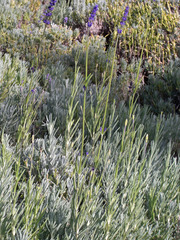 Lavandula angustifoliae0
- Treatment
- increasing water stresse0
- Outcome
- maximum quantum efficiency of photosystem II photochemistrye0
- Direction
- decreasese0
Not reportedComparator
Organisms pictured · Representative pictures of the matched species, not figures from the paper.
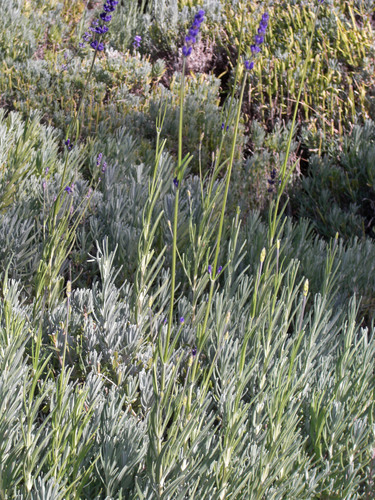
Verbatim
e0“With increasing water stress, significant decreases in the maximum quantum efficiency of photosystem II photochemistry occurred in lavender and rosemary”
Claim · model-written summary
Increasing water stress increased stomatal limitation in olive.
- Taxon
- oliveOlea europaeae0
- Treatment
- increasing water stresse0
- Outcome
- stomatal limitatione0
- Direction
- increasede0
Not reportedComparator
Organisms pictured · Representative pictures of the matched species, not figures from the paper.
Verbatim
e0“With increasing water stress, significant decreases in the maximum quantum efficiency of photosystem II photochemistry occurred in lavender and rosemary, and stomatal limitation was increased in olive”
Claim · model-written summary
No leaf showed heterogeneity of photosynthesis.
- Taxon
- oliveOlea europaeae2
- Outcome
- No indication of any heterogeneity of photosynthesise0
Organisms pictured · Representative pictures of the matched species, not figures from the paper.
Verbatim
e0“No indication of any heterogeneity of photosynthesis was found in any leaves”
e2“three Mediterranean plants (olive, Olea europea L.; rosemary, Rosmarinus officinalis L.; lavender, Lavandula stoechas L.)”
Claim · model-written summary
Drought significantly reduced leaf area across all three species.
- Taxon
- oliveOlea europaeae2
- Treatment
- Drought treatmente0
- Outcome
- leaf areae0
- Direction
- decreasede0
Not reportedComparator
Organisms pictured · Representative pictures of the matched species, not figures from the paper.
Verbatim
e0“Drought treatment significantly decreased leaf area in all species”
e2“three Mediterranean plants (olive, Olea europea L.; rosemary, Rosmarinus officinalis L.; lavender, Lavandula stoechas L.)”
Claim · model-written summary
Elevated UV-B had no significant effect on growth.
- Taxon
- oliveOlea europaeae2
- Treatment
- elevated UV-B radiation (0.47 W m(-2))e0
- Outcome
- growthe0
- Direction
- no significant effectse0
Not reportedComparator
Organisms pictured · Representative pictures of the matched species, not figures from the paper.
Verbatim
e0“Exposure of plants to elevated UV-B radiation (0.47 W m(-2)) prior to and during the drought treatment had no significant effects on the growth or photosynthetic activities of the plants”
e2“three Mediterranean plants (olive, Olea europea L.; rosemary, Rosmarinus officinalis L.; lavender, Lavandula stoechas L.)”
Claim · model-written summary
Elevated UV-B had no significant effect on photosynthetic activity.
- Taxon
- oliveOlea europaeae2
- Treatment
- elevated UV-B radiation (0.47 W m(-2))e0
- Outcome
- photosynthetic activitiese0
- Direction
- no significant effectse0
Not reportedComparator
Organisms pictured · Representative pictures of the matched species, not figures from the paper.
Verbatim
e0“Exposure of plants to elevated UV-B radiation (0.47 W m(-2)) prior to and during the drought treatment had no significant effects on the growth or photosynthetic activities of the plants”
e2“three Mediterranean plants (olive, Olea europea L.; rosemary, Rosmarinus officinalis L.; lavender, Lavandula stoechas L.)”
The same questions in other papers
drought · physiology: photosynthesis · Olea europaea (common olive)Results differ
14 papers in the same direction as this paper · 1 in the opposite direction
- negative
- no effect
- negative
12 papers more in this group
See all 16 papers →uv · physiology: photosynthesis · Olea europaea (common olive)Positive and negative results
1 paper in the same direction as this paper · 1 in the opposite direction
- negative
- positive
drought · physiology: photosynthesis · Lavandula angustifolia (lavender)Results agree
1 paper in the same direction as this paper
- negative
drought · growth · Olea europaea (common olive)Results agree
18 papers in the same direction as this paper
- negative
- negative
- negative
15 papers more in this group
See all 19 papers →Claims are grouped by organism, treatment and what was measured or targeted. A paper counts as positive when any of its claims in the group is positive.