Abstract
The reaction of spring barley to common root rot and its effect on yield components, plant stand, and disease severity was studied under several moisture regimes. Infection of barley from natural soil inoculum, primarily Cochliobolus sativus, was augmented with inoculum of C. sativus or Fusarium culmorum to insure uniform disease pressure during plant development. In one study during the 1986 and 1987 growing seasons, a line-source sprinkler irrigation system was utilized to establish a soil moisture gradient from a high-moisture regime receiving both irrigation water and rainfall to a dryland regime receiving only rainfall. In 1986, a second study was carried out to examine the effect of soil moisture at three locations that differed in annual precipitation. Plant emergence and harvestable tillers were reduced by C. sativus in both studies as compared to the noninoculated controls. Grain yield loss was associated with C. sativus and low plant density under drought but not under moderate to high moisture conditions. In the irrigated moisture regimes, moderate and high rainfall locations, the inoculated plants compensated for reduced plant stand and harvestable tillers by producing heavier kernels. Disease severity, based on the subcrown internode lesion development during the soft dough growth stage, did not differ in the dryland and irrigated moisture regimes. However, disease severity was higher in the drought location than in the moderate and high rainfall locations. Prolonged drought and disease pressure during seedling development can result in grain yield reductions, whereas subsequent moisture will affect the crop's ability to compensate for common root rot. Key words: Hordeum vulgare, ranking and selection, canopy temperature
Abstract from the paper’s OpenAlex record, shown for indexing and research. Copyright remains with the authors or the publisher. Read at the source ↗
The text the model read, with the source record’s inline markup (italics, sub- and superscripts) rendered and its character entities decoded; quote offsets refer to the raw text.
Claims 9
Claim · model-written summary
C. sativus reduced barley emergence compared with noninoculated controls.
- Taxon
- spring barley
 Hordeum vulgaret0
- Treatment
- C. sativuse0
- Interactor
- C. sativus
 Bipolaris sorokinianae0pathogen
- Outcome
- Plant emergencee0
- Direction
- reducede0
- Comparator
- noninoculated controlse0
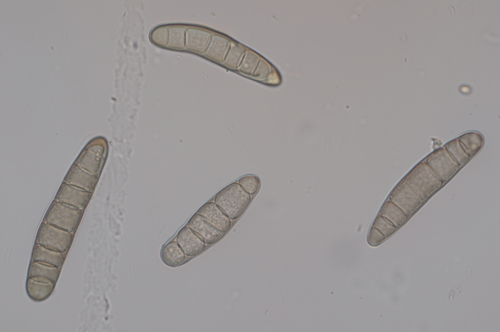
Organisms pictured · Representative pictures of the matched species, not figures from the paper.

Verbatim
e0“Plant emergence and harvestable tillers were reduced by C. sativus in both studies as compared to the noninoculated controls”
t0“spring barley”
Claim · model-written summary
C. sativus reduced barley harvestable tillers compared with noninoculated controls.
- Taxon
- spring barleyHordeum vulgaret0
- Treatment
- C. sativuse0
- Interactor
- C. sativusBipolaris sorokinianae0pathogen
- Outcome
- harvestable tillerse0
- Direction
- reducede0
- Comparator
- noninoculated controlse0
Organisms pictured · Representative pictures of the matched species, not figures from the paper.
Verbatim
e0“Plant emergence and harvestable tillers were reduced by C. sativus in both studies as compared to the noninoculated controls”
t0“spring barley”
Claim · model-written summary
Grain yield loss was associated with C. sativus and low plant density under drought.
- Taxon
- spring barleyHordeum vulgaret0
- Interactor
- C. sativusBipolaris sorokinianae0pathogen
- Outcome
- Grain yield losse0
- Direction
- losse0
- Qualifier
- low plant density under droughte0
Organisms pictured · Representative pictures of the matched species, not figures from the paper.
Verbatim
e0“Grain yield loss was associated with C. sativus and low plant density under drought”
t0“spring barley”
Claim · model-written summary
Grain yield loss was absent under moderate to high moisture conditions.
- Taxon
- spring barleyHordeum vulgaret0
- Outcome
- Grain yield losse1
- Direction
- note1
- Qualifier
- moderate to high moisture conditionse0
Organisms pictured · Representative pictures of the matched species, not figures from the paper.
Verbatim
e0“but not under moderate to high moisture conditions”
e1“Grain yield loss was associated with C. sativus and low plant density under drought but not under moderate to high moisture conditions”
t0“spring barley”
Claim · model-written summary
Inoculated plants produced heavier kernels under irrigated or moderate and high rainfall conditions.
- Taxon
- spring barleyHordeum vulgaret0
- Treatment
- inoculated plantse0
- Outcome
- kernelse0
- Direction
- heaviere0
- Qualifier
- irrigated moisture regimes, moderate and high rainfall locationse0
Organisms pictured · Representative pictures of the matched species, not figures from the paper.
Verbatim
e0“In the irrigated moisture regimes, moderate and high rainfall locations, the inoculated plants compensated for reduced plant stand and harvestable tillers by producing heavier kernels”
t0“spring barley”
Claim · model-written summary
Disease severity did not differ between dryland and irrigated moisture regimes.
- Taxon
- spring barleyHordeum vulgaret0
- Organ / stage
- subcrown internodee0
- Outcome
- Disease severitye0
- Direction
- did not differe0
- Comparator
- dryland and irrigated moisture regimese0
Organisms pictured · Representative pictures of the matched species, not figures from the paper.
Verbatim
e0“Disease severity, based on the subcrown internode lesion development during the soft dough growth stage, did not differ in the dryland and irrigated moisture regimes”
t0“spring barley”
Claim · model-written summary
Disease severity was higher at the drought location than at moderate and high rainfall locations.
- Taxon
- spring barleyHordeum vulgaret0
- Outcome
- disease severitye0
- Direction
- highere0
- Comparator
- moderate and high rainfall locationse0
- Setting
- drought locatione0
Organisms pictured · Representative pictures of the matched species, not figures from the paper.
Verbatim
e0“disease severity was higher in the drought location than in the moderate and high rainfall locations”
t0“spring barley”
Claim · model-written summary
The authors concluded that prolonged drought and seedling disease pressure can reduce grain yield.
- Taxon
- spring barleyHordeum vulgaret0
- Outcome
- grain yield reductionse0
- Direction
- reductionse0
- Qualifier
- Prolonged drought and disease pressure during seedling developmente0
Organisms pictured · Representative pictures of the matched species, not figures from the paper.
Verbatim
e0“Prolonged drought and disease pressure during seedling development can result in grain yield reductions”
t0“spring barley”
Claim · model-written summary
The authors concluded that subsequent moisture affects compensation for common root rot.
- Taxon
- spring barleyHordeum vulgaret0
- Outcome
- ability to compensate for common root rote0
- Qualifier
- subsequent moisturee0
Organisms pictured · Representative pictures of the matched species, not figures from the paper.
Verbatim
e0“subsequent moisture will affect the crop's ability to compensate for common root rot”
t0“spring barley”
The same questions in other papers
Bipolaris sorokiniana · yield · Hordeum vulgare (barley)Results agree
1 paper in the same direction as this paper
- negative
Claims are grouped by organism, treatment and what was measured or targeted. A paper counts as positive when any of its claims in the group is positive.