Abstract
Abstract. We studied revegetation patterns after experimental fine‐scale disturbance (e.g. uprooting) in an old‐growth Picea abies forest in southeastern Norway. An experimental severity gradient was established by manipulation of the depth of soil disturbance; two types of disturbed areas were used. Species recovery was recorded in the disturbed patches in three successive years after disturbance. The cover of vascular plants and, even more so the cover of bryophytes and lichens, recovered slowly after disturbance. The least severe treatments (removal of vegetation and removal of vegetation and the litter layer) was followed by the fastest recovery. The mean number of vascular plant species was usually higher three years after disturbance than before disturbance, while the opposite was true for bryophytes. Several vascular plant species that were abundant in intact forest floor vegetation ( Vaccinium myrtillus, V. vitis‐idaea and Deschampsia flexuosa ) recovered during a three‐year period primarily by resprouting from intact rhizomes and clonal in‐growth. Other important recovery mechanisms included germination from a soil‐buried propagule bank (e.g. Luzula pilosa, Plagiothecium laetum agg., Pohlia nutans and Polytrichum spp.) and dispersal of propagules into the disturbed patches (e.g. Betula pubescens and Picea abies ). Microsite limitation seemed to occur in several species that were abundant in the soil propagule bank (e.g. the ferns Athyrium filix‐femina, Gymnocarpium dryopteris and Phegopteris connectilis ) but which did not appear in disturbed patches. Disturbance severity influenced revegetation patterns, recorded both as trajectories of vegetation composition in a DCA ordination space and as change in floristic dissimilarity. The length of the successional path (compositional change measured in β‐diversity units) increased with increasing disturbance severity, and was also influenced by the area of the disturbed patch and the distance to intact vegetation. The rate of succession depended on the method by which it was measured; decreasing year by year in floristic space, while first decreasing and then increasing in ordination space. The reason for this difference is explained.
Abstract from the paper’s OpenAlex record, shown for indexing and research. Copyright remains with the authors or the publisher. Read at the source ↗
The text the model read, with the source record’s inline markup (italics, sub- and superscripts) rendered and its character entities decoded; quote offsets refer to the raw text.
Claims 14
Claim · model-written summary
Cover of vascular plants recovered slowly after disturbance.
- Taxon
- vascular plantsTracheophytae1
- Treatment
- disturbancee1
- Outcome
- covere1
- Direction
- recovered slowlye1
Not reportedComparator
Verbatim
e1“The cover of vascular plants and, even more so the cover of bryophytes and lichens, recovered slowly after disturbance”
Claim · model-written summary
Cover of bryophytes and lichens recovered even more slowly after disturbance than vascular plant cover.
- Taxon
- bryophytes and lichense1
- Treatment
- disturbancee1
- Outcome
- covere1
- Direction
- recovered slowlye1
- Qualifier
- even more soe1
Not reportedComparator
Verbatim
e1“The cover of vascular plants and, even more so the cover of bryophytes and lichens, recovered slowly after disturbance”
Claim · model-written summary
The least severe treatments were followed by the fastest recovery in Picea abies forest.
- Taxon
- Picea abies
 Picea abiese0
- Treatment
- removal of vegetatione2
- Outcome
- recoverye2
- Direction
- fasteste2
Not reportedComparator
Organisms pictured · Representative pictures of the matched species, not figures from the paper.

Verbatim
e0“in an old‐growth Picea abies forest in southeastern Norway”
e2“The least severe treatments (removal of vegetation and removal of vegetation and the litter layer) was followed by the fastest recovery”
Claim · model-written summary
The mean number of vascular plant species was higher three years after disturbance than before.
Verbatim
e3“The mean number of vascular plant species was usually higher three years after disturbance than before disturbance”
Claim · model-written summary
The number of bryophyte species showed the opposite pattern, lower three years after disturbance than before.
Verbatim
e3“The mean number of vascular plant species was usually higher three years after disturbance than before disturbance”
e4“while the opposite was true for bryophytes”
Claim · model-written summary
Vaccinium myrtillus recovered after disturbance primarily by resprouting from intact rhizomes.
- Taxon
- Vaccinium myrtillus
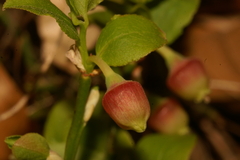 Vaccinium myrtilluse6
- Outcome
- recoverede5
- Qualifier
- primarily by resprouting from intact rhizomese5
Organisms pictured · Representative pictures of the matched species, not figures from the paper.

Verbatim
e5“recovered during a three‐year period primarily by resprouting from intact rhizomes”
e6“Vaccinium myrtillus”
Claim · model-written summary
Germination from the soil propagule bank was an important recovery mechanism for Luzula pilosa.
- Taxon
- Luzula pilosa
 Luzula pilosae1
- Outcome
- recoverye7
- Qualifier
- propagule banke7
Organisms pictured · Representative pictures of the matched species, not figures from the paper.

Verbatim
e7“Other important recovery mechanisms included germination from a soil‐buried propagule bank”
e1“Luzula pilosa”
Claim · model-written summary
Dispersal of propagules into disturbed patches was an important recovery mechanism for Betula pubescens.
- Taxon
- Betula pubescens
 Betula pubescense1
- Outcome
- recoverye7
- Qualifier
- dispersal of propagules into the disturbed patchese1
Organisms pictured · Representative pictures of the matched species, not figures from the paper.

Verbatim
e7“Other important recovery mechanisms included germination from a soil‐buried propagule bank”
e1“dispersal of propagules into the disturbed patches (e.g. Betula pubescens and Picea abies )”
Claim · model-written summary
Microsite limitation may prevent Gymnocarpium dryopteris from appearing in disturbed patches.
- Taxon
- Gymnocarpium dryopteris
 Gymnocarpium dryopterise1
- Outcome
- did not appear in disturbed patchese2
- Qualifier
- Microsite limitatione0
Organisms pictured · Representative pictures of the matched species, not figures from the paper.

Verbatim
e0“Microsite limitation seemed to occur in several species”
e1“Gymnocarpium dryopteris”
e2“but which did not appear in disturbed patches”
Claim · model-written summary
Disturbance severity influenced revegetation patterns.
- Taxon
- Picea abiesPicea abiese0
- Treatment
- Disturbance severitye1
- Outcome
- revegetation patternse1
Not reportedDirection
Organisms pictured · Representative pictures of the matched species, not figures from the paper.
Verbatim
e0“in an old‐growth Picea abies forest in southeastern Norway”
e1“Disturbance severity influenced revegetation patterns, recorded both as trajectories of vegetation composition in a DCA ordination space and as change in floristic dissimilarity”
Claim · model-written summary
The length of the successional path increased with increasing disturbance severity.
- Taxon
- Picea abiesPicea abiese0
- Treatment
- disturbance severitye2
- Outcome
- length of the successional pathe1
- Direction
- increasede2
Organisms pictured · Representative pictures of the matched species, not figures from the paper.
Verbatim
e0“in an old‐growth Picea abies forest in southeastern Norway”
e1“The length of the successional path”
e2“increased with increasing disturbance severity”
Claim · model-written summary
The length of the successional path was also influenced by the area of the disturbed patch and the distance to intact vegetation.
- Taxon
- Picea abiesPicea abiese0
- Treatment
- area of the disturbed patche2
- Outcome
- length of the successional pathe1
- Qualifier
- distance to intact vegetatione2
Not reportedDirection
Organisms pictured · Representative pictures of the matched species, not figures from the paper.
Verbatim
e0“in an old‐growth Picea abies forest in southeastern Norway”
e1“The length of the successional path”
e2“was also influenced by the area of the disturbed patch and the distance to intact vegetation”
Claim · model-written summary
The rate of succession decreased year by year in floristic space.
- Taxon
- Picea abiesPicea abiese0
- Outcome
- rate of successione1
- Direction
- decreasing year by yeare1
- Qualifier
- in floristic spacee1
Organisms pictured · Representative pictures of the matched species, not figures from the paper.
Verbatim
e0“in an old‐growth Picea abies forest in southeastern Norway”
e1“The rate of succession depended on the method by which it was measured; decreasing year by year in floristic space”
Claim · model-written summary
The rate of succession first decreased and then increased in ordination space.
- Taxon
- Picea abiesPicea abiese0
- Outcome
- rate of successione1
- Direction
- first decreasing and then increasinge2
- Qualifier
- in ordination spacee2
Organisms pictured · Representative pictures of the matched species, not figures from the paper.
Verbatim
e0“in an old‐growth Picea abies forest in southeastern Norway”
e1“The rate of succession depended on the method by which it was measured; decreasing year by year in floristic space”
e2“while first decreasing and then increasing in ordination space”