Abstract
Chrysodeixes (Plusia) chalcites Esper, which is a major pest of tomato in Israel, was controlled in a series of field applications (5,000 g of 8,000 IU/mg, in 150-200 liter/ha) with strains of Bacillus thuringiensis ssp. kurstaki. All instars were susceptible to B. thuringiensis. Thus, timing of application was not crucial for effective larval control of C. chalcites. Heliathis armigera Hübner usually accompanied the major pest at low to medium population densities (2-4 larvae per meter row). In 38 of 40 commercial fields (2-35 ha each), applications of B. thuringiensis suppressed pest populations to levels below the economic threshold and were comparable with effective chemical pesticides. In tomato fields adjacent to potato fields, extensive damage is caused by the potato tuberworm, Phthorimaea operculella (Zeller). Three consecutive applications of B. thuringiensis at a high volume (500 liter/ha) were required to control this species.
Abstract from the paper’s OpenAlex record, shown for indexing and research. Copyright remains with the authors or the publisher. Read at the source ↗
The text the model read, with the source record’s inline markup (italics, sub- and superscripts) rendered and its character entities decoded; quote offsets refer to the raw text.
Claims 8
Claim · model-written summary
Bacillus thuringiensis ssp. kurstaki controlled Chrysodeixes chalcites in tomato fields.
- Taxon
- tomato
 Solanum lycopersicume0
- Treatment
- strains of Bacillus thuringiensis ssp. kurstakie0
- Second interactor
- Bacillus thuringiensis ssp. kurstakiBacillus thuringiensis serovar kurstakie0biocontrol_agent
- Outcome
- Chrysodeixes (Plusia) chalcites Espere0
- Direction
- controllede0
- Setting
- Israele0
 Plusia
Not reportedComparator
Organisms pictured · Representative pictures of the matched species, not figures from the paper.


Verbatim
e0“Chrysodeixes (Plusia) chalcites Esper, which is a major pest of tomato in Israel, was controlled in a series of field applications (5,000 g of 8,000 IU/mg, in 150-200 liter/ha) with strains of Bacillus thuringiensis ssp. kurstaki.”
Claim · model-written summary
All instars of the pest were susceptible to B. thuringiensis.
- Taxon
- TomatoSolanum lycopersicumt0
- Interactor
- B. thuringiensis
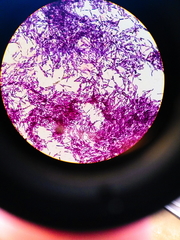 Bacillus thuringiensise0biocontrol_agent
- Outcome
- All instars were susceptiblee0
Organisms pictured · Representative pictures of the matched species, not figures from the paper.
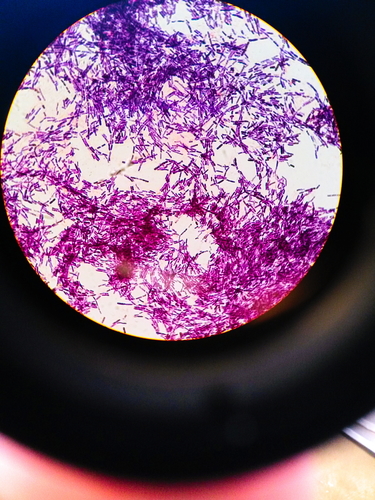
Verbatim
e0“All instars were susceptible to B. thuringiensis.”
t0“Tomato”
Claim · model-written summary
Application timing was not crucial for effective larval control of C. chalcites.
- Taxon
- TomatoSolanum lycopersicumt0
- Interactor
- C. chalcitese0pest
- Outcome
- timing of application was not crucial for effective larval control of C. chalcitese0
Organisms pictured · Representative pictures of the matched species, not figures from the paper.
Verbatim
e0“Thus, timing of application was not crucial for effective larval control of C. chalcites.”
t0“Tomato”
Claim · model-written summary
Heliathis armigera occurred with the major pest at 2-4 larvae per meter row.
- Taxon
- TomatoSolanum lycopersicumt0
- Interactor
- Heliathis armigera Hübnere0pest
- Outcome
- population densitiese0
- Value
- 2-4 larvae per meter rowe0
Organisms pictured · Representative pictures of the matched species, not figures from the paper.
Verbatim
e0“Heliathis armigera Hübner usually accompanied the major pest at low to medium population densities (2-4 larvae per meter row).”
t0“Tomato”
Claim · model-written summary
B. thuringiensis suppressed pest populations below the economic threshold in 38 of 40 commercial fields.
- Taxon
- TomatoSolanum lycopersicumt0
- Treatment
- applications of B. thuringiensise0
- Interactor
- B. thuringiensisBacillus thuringiensise0biocontrol_agent
- Outcome
- pest populationse0
- Direction
- suppressede0
- Value
- 38 of 40 commercial fieldse0
- Comparator
- economic thresholde0
- Setting
- commercial fieldse0
Organisms pictured · Representative pictures of the matched species, not figures from the paper.
Verbatim
e0“In 38 of 40 commercial fields (2-35 ha each), applications of B. thuringiensis suppressed pest populations to levels below the economic threshold and were comparable with effective chemical pesticides.”
t0“Tomato”
Claim · model-written summary
B. thuringiensis applications performed comparably to effective chemical pesticides.
- Taxon
- TomatoSolanum lycopersicumt0
- Treatment
- applications of B. thuringiensise0
- Interactor
- B. thuringiensisBacillus thuringiensise0biocontrol_agent
- Outcome
- pest populationse0
- Direction
- comparablee0
- Comparator
- effective chemical pesticidese0
Organisms pictured · Representative pictures of the matched species, not figures from the paper.
Verbatim
e0“In 38 of 40 commercial fields (2-35 ha each), applications of B. thuringiensis suppressed pest populations to levels below the economic threshold and were comparable with effective chemical pesticides.”
t0“Tomato”
Claim · model-written summary
Potato tuberworm caused extensive damage in tomato fields adjacent to potato fields.
- Taxon
- tomatoSolanum lycopersicume0
- Interactor
- Phthorimaea operculella (Zeller)
 Phthorimaea operculellae0pest
- Outcome
- extensive damagee0
- Setting
- tomato fields adjacent to potato fieldse0
Organisms pictured · Representative pictures of the matched species, not figures from the paper.

Verbatim
e0“In tomato fields adjacent to potato fields, extensive damage is caused by the potato tuberworm, Phthorimaea operculella (Zeller).”
Claim · model-written summary
Three consecutive high-volume B. thuringiensis applications were required to control Phthorimaea operculella.
- Taxon
- TomatoSolanum lycopersicumt0
- Interactor
- B. thuringiensisBacillus thuringiensise0biocontrol_agent
- Outcome
- Three consecutive applications of B. thuringiensis at a high volume (500 liter/ha) were required to control this speciese0
Organisms pictured · Representative pictures of the matched species, not figures from the paper.
Verbatim
e0“Three consecutive applications of B. thuringiensis at a high volume (500 liter/ha) were required to control this species.”
t0“Tomato”
The same questions in other papers
Bacillus thuringiensis · pest · Solanum lycopersicum (tomato)Positive and negative results
4 papers in the same direction as this paper · 1 in the opposite direction
- negative
- positive
- positive
2 papers more in this group
See all 6 papers →Claims are grouped by organism, treatment and what was measured or targeted. A paper counts as positive when any of its claims in the group is positive.