Abstract
Abstract Information on the Aphis species that feed on evening primroses (Oenothera spp.) has been summarized in the catalogue of the aphid species inhabiting herbaceous plants of the world (Blackman & Eastop, 2006). Recent descriptions of the European species, A. holoenotherae (Rakauskas, 2007), that appeared to be a sibling of the American A. oenotherae, demonstrated the need of reexamining the current state of knowledge of the Aphis species inhabiting evening primroses in Europe. The present study, based on published original data, revealed nine aphid species of the genus Aphis which are capable of living on Oenothera plants in Europe. Only two of them are really dependent on Oenothera species during their life cycle: A. oenotherae Oestlund and A. holoenotherae Rakauskas. They have different life cycles and host plant spectrum, although they are very close in their morphology. Processus terminalis length appeared to be the most reliable morphological character in distinguishing between apterous and alate viviparous females, and males of A. oenotherae and A. holoenotherae at the present time. A. grossulariae is not a typical Oenothera-feeder in Europe, occurring on evening primroses only by chance. Other Aphis species (epilobiaria, fabae, sambuci, praeterita, frangulae, nasturtii), are opportunistic inhabitants of Oenothera plants. Information about host specificity and morphology of the Oenothera-inhabiting European Aphis species is summarized, and a key for the entire range of species found living on European Oenothera is provided.
Abstract from the paper’s OpenAlex record; open copy licensed cc-by-nc-nd. Read at the source ↗
The text the model read, with the source record’s inline markup (italics, sub- and superscripts) rendered and its character entities decoded; quote offsets refer to the raw text.
Claims 7
Claim · model-written summary
Nine Aphis species can live on Oenothera in Europe.
- Outcome
- aphid species of the genus Aphis which are capable of living on Oenothera plantse0
- Value
- ninee0
- Setting
- Europee0
 Oenothera
 Aphis
Organisms pictured · Representative pictures of the matched species, not figures from the paper.


Verbatim
e0“nine aphid species of the genus Aphis which are capable of living on Oenothera plants in Europe”
Claim · model-written summary
A. oenotherae depends on Oenothera during its life cycle.
- Interactor
- A. oenotherae OestlundAphis oenotheraee0pest
- Outcome
- really dependent on Oenothera species during their life cyclee0
Organisms pictured · Representative pictures of the matched species, not figures from the paper.
Verbatim
e0“Only two of them are really dependent on Oenothera species during their life cycle: A. oenotherae Oestlund and A. holoenotherae Rakauskas”
Claim · model-written summary
A. holoenotherae depends on Oenothera during its life cycle.
- Interactor
- A. holoenotherae Rakauskas
 Aphis holoenotheraee0pest
- Outcome
- really dependent on Oenothera species during their life cyclee0
Organisms pictured · Representative pictures of the matched species, not figures from the paper.
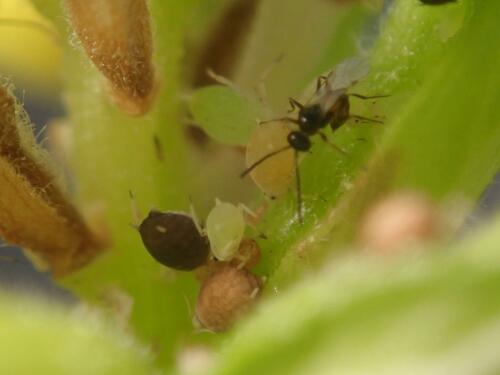
Verbatim
e0“Only two of them are really dependent on Oenothera species during their life cycle: A. oenotherae Oestlund and A. holoenotherae Rakauskas”
Claim · model-written summary
The two dependent aphids differ in life cycle and host plant spectrum despite close morphology.
- Interactor
- A. oenotheraeAphis oenotheraee1pest
- Second interactor
- A. holoenotheraeAphis holoenotheraee1pest
- Outcome
- different life cycles and host plant spectrume0
Organisms pictured · Representative pictures of the matched species, not figures from the paper.
Verbatim
e0“They have different life cycles and host plant spectrum, although they are very close in their morphology”
t0“Oenothera”
e1“Only two of them are really dependent on Oenothera species during their life cycle: A. oenotherae Oestlund and A. holoenotherae Rakauskas”
Claim · model-written summary
Processus terminalis length was the most reliable character for distinguishing A. oenotherae from A. holoenotherae.
- Interactor
- A. oenotheraeAphis oenotheraee0pest
- Second interactor
- A. holoenotheraeAphis holoenotheraee0pest
- Outcome
- most reliable morphological charactere0
- Comparator
- A. holoenotheraee0
Organisms pictured · Representative pictures of the matched species, not figures from the paper.
Verbatim
e0“Processus terminalis length appeared to be the most reliable morphological character in distinguishing between apterous and alate viviparous females, and males of A. oenotherae and A. holoenotherae at the present time”
t0“Oenothera”
Claim · model-written summary
A. grossulariae occurs on European evening primroses only by chance.
- Interactor
- A. grossulariae
 Aphis grossulariaee0pest
- Outcome
- occurring on evening primroses only by chancee0
- Setting
- Europee0
Organisms pictured · Representative pictures of the matched species, not figures from the paper.
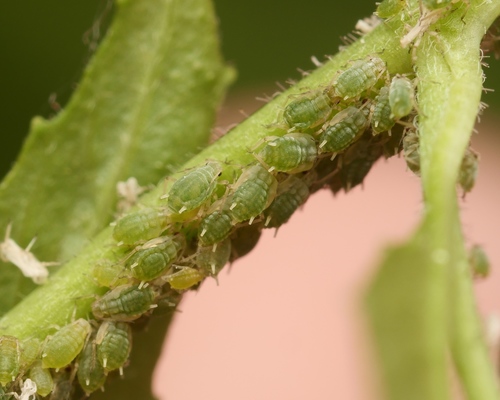
Verbatim
e0“A. grossulariae is not a typical Oenothera-feeder in Europe, occurring on evening primroses only by chance”
Claim · model-written summary
Six other Aphis species are opportunistic inhabitants of Oenothera.
- Outcome
- opportunistic inhabitants of Oenothera plantse0
Organisms pictured · Representative pictures of the matched species, not figures from the paper.
Verbatim
e0“Other Aphis species (epilobiaria, fabae, sambuci, praeterita, frangulae, nasturtii), are opportunistic inhabitants of Oenothera plants”