Abstract
Aseptic germination of 27 North European and 2 North American orchids was tested on ZAK medium, which contains coconut liquid and sucrose, CHANG medium, based on fish protein hydrolysate, and two mineral media: FAST's medium for Cypripedium and Burgeffs Eg 1. The two latter media gave good germination and growth, Egl proving better for tuberous species. Of the 29 taxa tested, 25 germinated, the four nongerminating species belonging to the rhizomatous genera Cephalanthera and Epipactis. Immature seeds, when used, gave better germination than mature dried seeds. The time needed for germination to start, 2—10 weeks, was clearly species specific. Cold treatment was not required even in the case of such boreal or alpine species as Calypso bulbosa, Cypripedium passerinum and Chamorchis alpina. The effect of disinfection and the significance of the stage of maturation of the seed are discussed. The extremely juvenile condition of the embryo at seed capsule dehiscence and the heterotrophic stage preceding emergence above the ground may partly explain why the germination behaviour of a species does not change with the latitude or environmental conditions.
Abstract from the paper’s OpenAlex record, shown for indexing and research. Copyright remains with the authors or the publisher. Read at the source ↗
The text the model read, with the source record’s inline markup (italics, sub- and superscripts) rendered and its character entities decoded; quote offsets refer to the raw text.
Claims 8
Claim · model-written summary
FAST and Burgeffs mineral media gave good germination and growth.
- Taxon
- orchidse2
- Treatment
- FAST's medium for Cypripedium and Burgeffs Eg 1e1
- Outcome
- good germination and growthe0
Not reportedComparatorDirection
Verbatim
e0“The two latter media gave good germination and growth”
e1“FAST's medium for Cypripedium and Burgeffs Eg 1”
e2“orchids”
Claim · model-written summary
Eg 1 performed better for tuberous species.
Not reportedComparator
Verbatim
e0“Egl proving better for tuberous species”
e1“Burgeffs Eg 1”
e2“orchids”
Claim · model-written summary
Twenty-five of 29 orchid taxa germinated.
Verbatim
e0“Of the 29 taxa tested, 25 germinated”
e1“orchids”
Claim · model-written summary
The four nongerminating species belonged to Cephalanthera and Epipactis.
- Taxon
- Cephalanthera and Epipactis
 Epipactis
 Cephalantherae0
- Outcome
- nongerminating speciese0
- Value
- foure0
Organisms pictured · Representative pictures of the matched species, not figures from the paper.


Verbatim
e0“the four nongerminating species belonging to the rhizomatous genera Cephalanthera and Epipactis”
Claim · model-written summary
Immature seeds germinated better than mature dried seeds.
Verbatim
e0“Immature seeds, when used, gave better germination than mature dried seeds”
e1“orchids”
Claim · model-written summary
Germination onset took 2—10 weeks and varied by species.
Verbatim
e0“The time needed for germination to start, 2—10 weeks, was clearly species specific”
e1“orchids”
Claim · model-written summary
Cold treatment was not required for the named boreal or alpine species.
- Taxon
- Calypso bulbosa, Cypripedium passerinum and Chamorchis alpina
 Cypripedium passerinum
 Calypso bulbosa
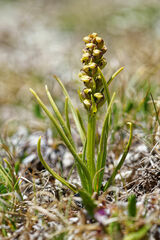 Chamorchis alpinae0
- Treatment
- Cold treatmente0
- Outcome
- not requirede0
Not reportedComparatorDirection
Organisms pictured · Representative pictures of the matched species, not figures from the paper.


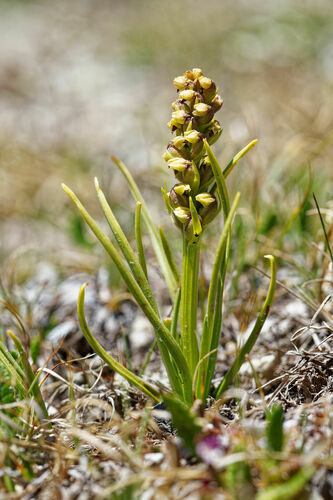
Verbatim
e0“Cold treatment was not required even in the case of such boreal or alpine species as Calypso bulbosa, Cypripedium passerinum and Chamorchis alpina”
Claim · model-written summary
Juvenile embryos and a heterotrophic stage may explain latitude-independent germination behavior.
Verbatim
e0“The extremely juvenile condition of the embryo at seed capsule dehiscence and the heterotrophic stage preceding emergence above the ground may partly explain why the germination behaviour of a species does not change with the latitude or environmental conditions”
e1“orchids”