Abstract
Relative leaf damage caused by the combined effects of 2 leaf diseases, stemphylium leaf spot and leptosphaerulina leaf spot (caused by Stemphylium vesicarium [Wallr.] Simmons and Leptosphaerulina trifolii [Rostr.] Petr.), was monitored in 2- and 3-year old stands of commercial and experimental lucernes (Medicago sativa L.) in subcoastal south-eastern Queensland. A range of fungicides was evaluated for efficacy in reducing damage caused by both diseases. None of the 38 lucerne cultivars tested showed substantial resistance to these diseases. The level of damage resulting from a severe infection was significantly (Pt0.001) and positively related to the relative winter activity level of the cultivar. Of the 8 fungicides evaluated, iprodione and propineb were the most effective, reducing the amount of leaf damage relative to the untreated areas. The most effective rate of application was a spray concentration of 0.1% product, applied at 300 L/ha. All rates were most effective when applied every 10 days. Although the increase in yield in response to fungicide application was less consistent than that of lesion suppression, up to a 90% yield increase over that of untreated areas was measured.
Abstract from the paper’s OpenAlex record, shown for indexing and research. Copyright remains with the authors or the publisher. Read at the source ↗
The text the model read, with the source record’s inline markup (italics, sub- and superscripts) rendered and its character entities decoded; quote offsets refer to the raw text.
Claims 7
Claim · model-written summary
None of 38 lucerne cultivars showed substantial resistance to the two leaf spot diseases.
- Taxon
- lucerne
 Medicago sativae0
- Material
- 38 lucerne cultivarse0
- Interactor
- Stemphylium vesicarium
 Stemphylium vesicariume1pathogen
- Second interactor
- Leptosphaerulina trifolii
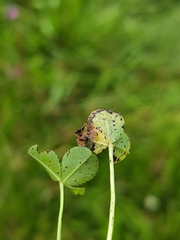 Leptosphaerulina trifoliie1pathogen
- Outcome
- substantial resistancee0
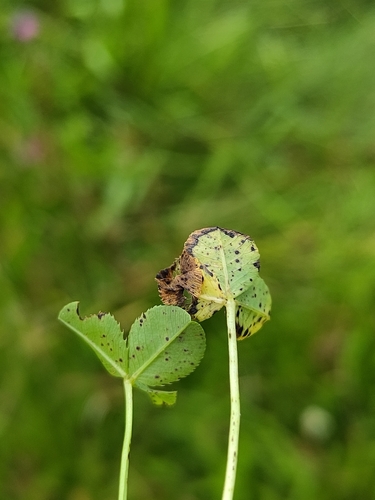
Organisms pictured · Representative pictures of the matched species, not figures from the paper.


Verbatim
e0“None of the 38 lucerne cultivars tested showed substantial resistance to these diseases.”
e1“stemphylium leaf spot and leptosphaerulina leaf spot (caused by Stemphylium vesicarium [Wallr.] Simmons and Leptosphaerulina trifolii [Rostr.] Petr.)”
Claim · model-written summary
Severe infection damage was significantly positively related to cultivar winter activity.
- Taxon
- lucernesMedicago sativae1
- Material
- cultivare0
- Outcome
- level of damagee0
- Direction
- positively relatede0
- Qualifier
- severe infectione0
Organisms pictured · Representative pictures of the matched species, not figures from the paper.
Verbatim
e0“The level of damage resulting from a severe infection was significantly (Pt0.001) and positively related to the relative winter activity level of the cultivar.”
e1“lucernes (Medicago sativa L.)”
Claim · model-written summary
Iprodione was among the most effective fungicides for reducing leaf damage.
- Taxon
- lucernesMedicago sativae1
- Treatment
- iprodionee0
- Outcome
- amount of leaf damagee0
- Direction
- reducinge0
- Comparator
- untreated arease0
Organisms pictured · Representative pictures of the matched species, not figures from the paper.
Verbatim
e0“iprodione and propineb were the most effective, reducing the amount of leaf damage relative to the untreated areas.”
e1“lucernes (Medicago sativa L.)”
Claim · model-written summary
Propineb was among the most effective fungicides for reducing leaf damage.
- Taxon
- lucernesMedicago sativae1
- Treatment
- propinebe0
- Outcome
- amount of leaf damagee0
- Direction
- reducinge0
- Comparator
- untreated arease0
Organisms pictured · Representative pictures of the matched species, not figures from the paper.
Verbatim
e0“iprodione and propineb were the most effective, reducing the amount of leaf damage relative to the untreated areas.”
e1“lucernes (Medicago sativa L.)”
Claim · model-written summary
The most effective application rate was a 0.1% spray at 300 L/ha.
- Taxon
- lucernesMedicago sativae1
- Treatment
- spray concentration of 0.1% product, applied at 300 L/hae0
- Outcome
- most effective rate of applicatione0
Organisms pictured · Representative pictures of the matched species, not figures from the paper.
Verbatim
e0“The most effective rate of application was a spray concentration of 0.1% product, applied at 300 L/ha.”
e1“lucernes (Medicago sativa L.)”
Claim · model-written summary
All fungicide rates were most effective when applied every 10 days.
- Taxon
- lucernesMedicago sativae1
- Treatment
- every 10 dayse0
- Outcome
- most effectivee0
Organisms pictured · Representative pictures of the matched species, not figures from the paper.
Verbatim
e0“All rates were most effective when applied every 10 days.”
e1“lucernes (Medicago sativa L.)”
Claim · model-written summary
Fungicide application increased lucerne yield by up to 90% over untreated areas, less consistently than lesion suppression.
- Taxon
- lucernesMedicago sativae1
- Treatment
- fungicide applicatione0
- Outcome
- yielde0
- Direction
- increasee0
- Value
- 90%e0
- Qualifier
- less consistent than that of lesion suppressione0
- Comparator
- untreated arease0
Organisms pictured · Representative pictures of the matched species, not figures from the paper.
Verbatim
e0“Although the increase in yield in response to fungicide application was less consistent than that of lesion suppression, up to a 90% yield increase over that of untreated areas was measured.”
e1“lucernes (Medicago sativa L.)”
The same questions in other papers
fungicide · yield · Medicago sativa (alfalfa)Results differ
6 papers in the same direction as this paper · 3 in the opposite direction · 1 reporting no difference from an alternative
- no effect
- no effect
- no effect
7 papers more in this group
See all 11 papers →Claims are grouped by organism, treatment and what was measured or targeted. A paper counts as positive when any of its claims in the group is positive.