Abstract
Cochliobolus sativus cultures were collected from symptomatic wheat plants from a plot planted continuously to wheat for over 90 yr and from symptomatic wheat plants in commercial grain fields cropped rotationally in the surrounding area. Pathogenicity of these isolates was tested in replicated greenhouse trials using wheat plants scored for disease 6 wk after inoculation. Isolates from the continuous-cropped wheat plot were more aggressive on average than were isolates from commercial fields. Long-term continuous cropping to wheat appears to shift the population of C. sativus toward more aggressive types, although many less aggressive types also remain.Key words: Aggressiveness, Drechslera sorkiniana, Helminthosporium sativum, wheat root rot
Abstract from the paper’s OpenAlex record, shown for indexing and research. Copyright remains with the authors or the publisher. Read at the source ↗
The text the model read, with the source record’s inline markup (italics, sub- and superscripts) rendered and its character entities decoded; quote offsets refer to the raw text.
Claims 2
Claim · model-written summary
Isolates from continuously cropped wheat were more aggressive on wheat than isolates from commercial fields.
- Taxon
- wheat
 Triticum aestivume0
- Treatment
- Isolates from the continuous-cropped wheat plote0
- Interactor
- Cochliobolus sativus
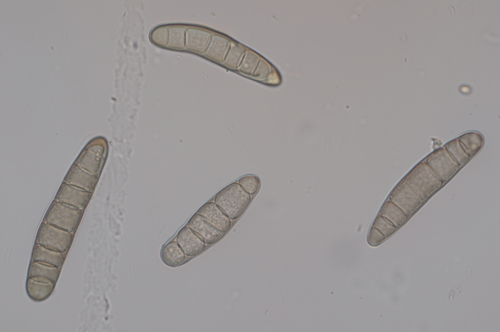
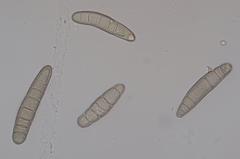 Bipolaris sorokinianat0pathogen
- Outcome
- aggressivee0
- Direction
- more aggressivee0
- Comparator
- isolates from commercial fieldse0
Organisms pictured · Representative pictures of the matched species, not figures from the paper.

Verbatim
e0“Isolates from the continuous-cropped wheat plot were more aggressive on average than were isolates from commercial fields.”
t0“WHEAT ON AGGRESSIVENESS OF Cochliobolus sativus”
Claim · model-written summary
Less aggressive types remained in the continuously cropped pathogen population.
- Taxon
- WHEATTriticum aestivumt0
- Interactor
- Cochliobolus sativusBipolaris sorokinianat0pathogen
- Outcome
- less aggressive types also remaine0
Organisms pictured · Representative pictures of the matched species, not figures from the paper.
Verbatim
e0“although many less aggressive types also remain”
t0“WHEAT ON AGGRESSIVENESS OF Cochliobolus sativus”