Abstract
Abstract Various turf management activities may influence weed population dynamics and interfere with weed control. The effects of a biocontrol agent, Sclerotinia minor, a chemical herbicide, Killex™, and mowing height on broadleaf weed dynamics were examined in two turfgrass stands for two consecutive years. Mowing did not reduce the population densities of dandelion or the ground cover of broadleaf weeds. In the second year, mowing significantly reduced white clover density, but significantly increased broadleaf plantain density, particularly at the closest mowing height (3–5 cm). Apart from the close height, the S. minor and Killex™ treatments were equally effective in suppression of dandelion, white clover, broadleaf plantain, and prostrate knotweed in the second year. Common mallow increased in the herbicide treated plots and other species including yellow woodsorrel, yellow toadflax and lambsquarters increased in abundance in plots mowed at the 3–5 cm height and in plots treated with Killex™. Significant differences between the Killex™ and S. minor treatments on dandelion population dynamics were rarely present and did not favour either treatment. S. minor did not damage the turfgrass, but Killex™ reduced turf quality in 25% of the plots. The application of S. minor with a regular, medium height (∼7 cm) mowing regime was highly effective in controlling broadleaf weeds in temperate Kentucky bluegrass turf.
Abstract from the paper’s OpenAlex record, shown for indexing and research. Copyright remains with the authors or the publisher. Read at the source ↗
The text the model read, with the source record’s inline markup (italics, sub- and superscripts) rendered and its character entities decoded; quote offsets refer to the raw text.
Claims 11
Claim · model-written summary
Mowing did not reduce dandelion population density.
- Taxon
- turft0
- Treatment
- Mowinge0
- Interactor
- dandelion
 Taraxacum officinalee0weede1
- Outcome
- population densities of dandelione0
- Direction
- did not reducee0
Not reportedComparator
Organisms pictured · Representative pictures of the matched species, not figures from the paper.
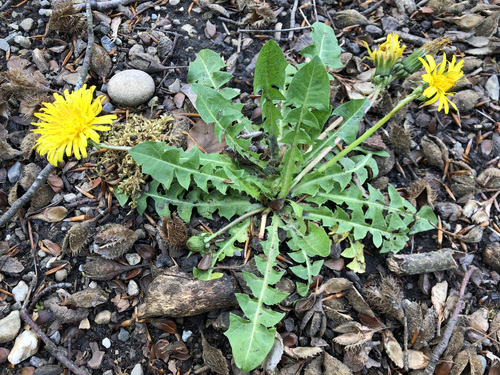
Verbatim
e0“Mowing did not reduce the population densities of dandelion or the ground cover of broadleaf weeds.”
t0“turf”
e1“weed population dynamics”
Claim · model-written summary
Mowing did not reduce broadleaf weed ground cover.
Not reportedComparator
Verbatim
e0“Mowing did not reduce the population densities of dandelion or the ground cover of broadleaf weeds.”
t0“turf”
e1“weed population dynamics”
Claim · model-written summary
In year two, mowing significantly reduced white clover density.
- Taxon
- turft0
- Treatment
- mowinge0
- Interactor
- white clover
 Trifolium repense0weede1
- Outcome
- white clover densitye0
- Direction
- reducede0
Not reportedComparator
Organisms pictured · Representative pictures of the matched species, not figures from the paper.

Verbatim
e0“In the second year, mowing significantly reduced white clover density, but significantly increased broadleaf plantain density, particularly at the closest mowing height (3–5 cm).”
t0“turf”
e1“weed population dynamics”
Claim · model-written summary
In year two, mowing significantly increased broadleaf plantain density, especially at 3–5 cm.
- Taxon
- turft0
- Treatment
- mowinge0
- Outcome
- broadleaf plantain densitye0
- Direction
- increasede0
- Qualifier
- closest mowing height (3–5 cm)e0
Not reportedComparator
Verbatim
e0“In the second year, mowing significantly reduced white clover density, but significantly increased broadleaf plantain density, particularly at the closest mowing height (3–5 cm).”
t0“turf”
e1“weed population dynamics”
Claim · model-written summary
S. minor and Killex equally suppressed four broadleaf weed species in year two except at close mowing height.
- Taxon
- turft0
- Treatment
- S. minore0
- Interactor
- dandelionTaraxacum officinalee0weede1
- Second interactor
- S. minorSclerotinia minore0biocontrol_agente2
- Outcome
- suppression of dandelion, white clover, broadleaf plantain, and prostrate knotweede0
- Direction
- equally effectivee0
- Qualifier
- Apart from the close heighte0
- Comparator
- Killex™e0
Organisms pictured · Representative pictures of the matched species, not figures from the paper.
Verbatim
e0“Apart from the close height, the S. minor and Killex™ treatments were equally effective in suppression of dandelion, white clover, broadleaf plantain, and prostrate knotweed in the second year.”
t0“turf”
e1“weed population dynamics”
e2“a biocontrol agent, Sclerotinia minor”
Claim · model-written summary
Common mallow increased in herbicide treated plots.
- Taxon
- turft0
- Treatment
- herbicidee0
- Interactor
- Common mallow
 Malva neglectae0weede1
- Outcome
- Common mallowe0
- Direction
- increasede0
Not reportedComparator
Organisms pictured · Representative pictures of the matched species, not figures from the paper.

Verbatim
e0“Common mallow increased in the herbicide treated plots”
t0“turf”
e1“weed population dynamics”
Claim · model-written summary
Yellow woodsorrel, yellow toadflax and lambsquarters increased in close-mown and Killex plots.
- Taxon
- turft0
- Treatment
- plots mowed at the 3–5 cm heighte0
- Outcome
- yellow woodsorrel, yellow toadflax and lambsquarterse0
- Direction
- increasede0
Not reportedComparator
Verbatim
e0“other species including yellow woodsorrel, yellow toadflax and lambsquarters increased in abundance in plots mowed at the 3–5 cm height and in plots treated with Killex™.”
t0“turf”
e1“weed population dynamics”
Claim · model-written summary
Killex and S. minor rarely differed significantly in dandelion population dynamics.
- Taxon
- turft0
- Treatment
- Killex™e0
- Interactor
- dandelionTaraxacum officinalee0weede1
- Outcome
- dandelion population dynamicse0
- Direction
- did not favour either treatmente0
- Comparator
- S. minore0
Organisms pictured · Representative pictures of the matched species, not figures from the paper.
Verbatim
e0“Significant differences between the Killex™ and S. minor treatments on dandelion population dynamics were rarely present and did not favour either treatment.”
t0“turf”
e1“weed population dynamics”
Claim · model-written summary
S. minor did not damage turfgrass.
- Taxon
- turfgrasse0
- Treatment
- S. minore0
- Interactor
- S. minorSclerotinia minore0biocontrol_agente1
- Outcome
- damage the turfgrasse0
- Direction
- did not damagee0
Not reportedComparator
Verbatim
e0“S. minor did not damage the turfgrass”
e1“a biocontrol agent, Sclerotinia minor”
Claim · model-written summary
Killex reduced turf quality in 25% of plots.
Not reportedComparator
Verbatim
e0“Killex™ reduced turf quality in 25% of the plots.”
t0“turf”
Claim · model-written summary
S. minor with regular medium-height mowing effectively controlled broadleaf weeds in Kentucky bluegrass turf.
- Taxon
- Kentucky bluegrass turf
 Poa pratensise0
- Treatment
- application of S. minor with a regular, medium height (∼7 cm) mowing regimee0
- Second interactor
- S. minorSclerotinia minore0biocontrol_agente2
- Outcome
- controlling broadleaf weedse0
- Direction
- highly effectivee0
Not reportedComparator
Organisms pictured · Representative pictures of the matched species, not figures from the paper.

Verbatim
e0“The application of S. minor with a regular, medium height (∼7 cm) mowing regime was highly effective in controlling broadleaf weeds in temperate Kentucky bluegrass turf.”
e1“weed population dynamics”
e2“a biocontrol agent, Sclerotinia minor”