Abstract
Aluminum-induced secretion of organic acids from the root apex has been demonstrated to be one major Al resistance mechanism in plants. However, whether the organic acid concentration is high enough to detoxify Al in the growth medium is frequently questioned. The genotypes of Al-resistant wheat, Cassia tora L. and buckwheat secrete malate, citrate and oxalate, respectively. In the present study we found that at a 35% inhibition of root elongation, the Al activities in the solution were 10, 20, and 50 muM with the corresponding malate, citrate, and oxalate exudation at the rates of 15, 20 and 21 nmol/cm(2) per 12 h, respectively, for the above three plant species. When exogenous organic acids were added to ameliorate Al toxicity, twofold and eightfold higher oxalate and malate concentrations were required to produce the equal effect by citrate. After the root apical cell walls were isolated and preincubated in 1 mM malate, oxalate or citrate solution overnight, the total amount of Al adsorbed to the cell walls all decreased significantly to a similar level, implying that these organic acids own an equal ability to protect the cell walls from binding Al. These findings suggest that protection of cell walls from binding Al by organic acids may contribute significantly to Al resistance.
Abstract from the paper’s OpenAlex record, shown for indexing and research. Copyright remains with the authors or the publisher. Read at the source ↗
The text the model read, with the source record’s inline markup (italics, sub- and superscripts) rendered and its character entities decoded; quote offsets refer to the raw text.
Claims 8
Claim · model-written summary
At 35% root elongation inhibition, wheat had 10 muM aluminum activity and malate exudation of 15 nmol/cm(2) per 12 h.
- Taxon
- wheat
 Triticum aestivume1
- Outcome
- malatee0
- Value
- 15, 20 and 21 nmol/cm(2) per 12 he0
- Qualifier
- at a 35% inhibition of root elongatione2
Organisms pictured · Representative pictures of the matched species, not figures from the paper.

Verbatim
e0“Al activities in the solution were 10, 20, and 50 muM with the corresponding malate, citrate, and oxalate exudation at the rates of 15, 20 and 21 nmol/cm(2) per 12 h, respectively”
e1“Al-resistant wheat, Cassia tora L. and buckwheat”
e2“at a 35% inhibition of root elongation”
Claim · model-written summary
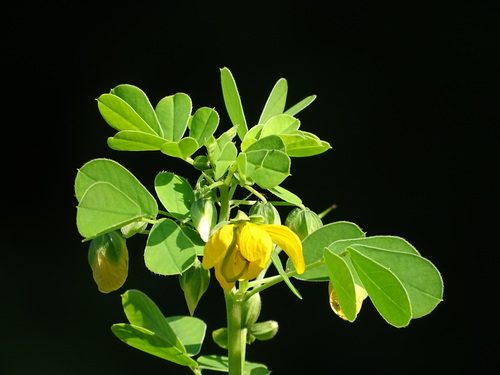
At 35% root elongation inhibition, Cassia tora had 20 muM aluminum activity and citrate exudation of 20 nmol/cm(2) per 12 h.
- Taxon
- Cassia tora L.
 Senna torae1
- Outcome
- citratee0
- Value
- 20 and 21 nmol/cm(2) per 12 he0
- Qualifier
- at a 35% inhibition of root elongatione2
Organisms pictured · Representative pictures of the matched species, not figures from the paper.
Verbatim
e0“Al activities in the solution were 10, 20, and 50 muM with the corresponding malate, citrate, and oxalate exudation at the rates of 15, 20 and 21 nmol/cm(2) per 12 h, respectively”
e1“Al-resistant wheat, Cassia tora L. and buckwheat”
e2“at a 35% inhibition of root elongation”
Claim · model-written summary
At 35% root elongation inhibition, buckwheat had 50 muM aluminum activity and oxalate exudation of 21 nmol/cm(2) per 12 h.
Verbatim
e0“Al activities in the solution were 10, 20, and 50 muM with the corresponding malate, citrate, and oxalate exudation at the rates of 15, 20 and 21 nmol/cm(2) per 12 h, respectively”
e1“Al-resistant wheat, Cassia tora L. and buckwheat”
e2“at a 35% inhibition of root elongation”
Claim · model-written summary
Oxalate required a twofold higher concentration than citrate to equally ameliorate aluminum toxicity.
- Taxon
- wheatTriticum aestivume1
- Treatment
- oxalatee0
- Outcome
- concentrationse0
- Direction
- highere0
- Value
- twofolde0
- Comparator
- citratee0
Organisms pictured · Representative pictures of the matched species, not figures from the paper.
Verbatim
e0“twofold and eightfold higher oxalate and malate concentrations were required to produce the equal effect by citrate”
e1“wheat, Cassia tora L. and buckwheat”
Claim · model-written summary
Malate required an eightfold higher concentration than citrate to equally ameliorate aluminum toxicity.
- Taxon
- wheatTriticum aestivume1
- Treatment
- malatee0
- Outcome
- concentrationse0
- Direction
- highere0
- Value
- eightfolde0
- Comparator
- citratee0
Organisms pictured · Representative pictures of the matched species, not figures from the paper.
Verbatim
e0“twofold and eightfold higher oxalate and malate concentrations were required to produce the equal effect by citrate”
e1“wheat, Cassia tora L. and buckwheat”
Claim · model-written summary
Pretreating root apical walls with malate significantly reduced adsorbed aluminum.
- Taxon
- wheatTriticum aestivume1
- Treatment
- 1 mM malatee0
- Outcome
- total amount of Al adsorbed to the cell wallse0
- Direction
- decreasede0
Not reportedComparator
Organisms pictured · Representative pictures of the matched species, not figures from the paper.
Verbatim
e0“preincubated in 1 mM malate, oxalate or citrate solution overnight, the total amount of Al adsorbed to the cell walls all decreased significantly to a similar level”
e1“wheat, Cassia tora L. and buckwheat”
Claim · model-written summary
Pretreating root apical walls with oxalate significantly reduced adsorbed aluminum.
- Taxon
- Cassia tora L.Senna torae1
- Treatment
- oxalatee0
- Outcome
- total amount of Al adsorbed to the cell wallse0
- Direction
- decreasede0
Not reportedComparator
Organisms pictured · Representative pictures of the matched species, not figures from the paper.
Verbatim
e0“preincubated in 1 mM malate, oxalate or citrate solution overnight, the total amount of Al adsorbed to the cell walls all decreased significantly to a similar level”
e1“wheat, Cassia tora L. and buckwheat”
Claim · model-written summary
Pretreating root apical walls with citrate significantly reduced adsorbed aluminum.
- Taxon
- buckwheate1
- Treatment
- citratee0
- Outcome
- total amount of Al adsorbed to the cell wallse0
- Direction
- decreasede0
Not reportedComparator
Verbatim
e0“preincubated in 1 mM malate, oxalate or citrate solution overnight, the total amount of Al adsorbed to the cell walls all decreased significantly to a similar level”
e1“wheat, Cassia tora L. and buckwheat”
The same questions in other papers
malate · nutrient: content · Triticum aestivum (wheat)Results agree
1 paper in the same direction as this paper
- positive
Claims are grouped by organism, treatment and what was measured or targeted. A paper counts as positive when any of its claims in the group is positive.