Abstract
Abstract— Ultraviolet‐B (UV‐B) and blue light photoreceptors have been shown to regulate chalcone synthase and flavonoid synthesis in parsley cell cultures. These photoreceptors have not yet been identified. In the present work, we studied UV‐B photoreception with physiological experiments involving temperature shifts and examined the possible role of flavin in blue and UV‐B light photoreception. Cells irradiated with UV‐B light (0.5–15 min) at 2°C have the same fluence requirement for chalcone synthase and flavonoid induction as controls irradiated at 25°C. This is indicative of a purely photochemical reaction. Cells fed with riboflavin and irradiated with 6 h of UV‐containing white light synthesize higher levels of chalcone synthase and flavonoid than unfed controls. This effect did not occur with blue light. These results indicate that flavin‐sensitization requires excitation of flavin and the UV‐B light photoreceptor. The in vivo kinetics of flavin uptake and bleaching indicate that the added flavin may act at the surface of the plasma membrane. In view of the likely role of membrane‐associated flavin in photoreception, we measured in vitro flavin binding to microsomal membranes. At least one microsomal flavin binding site was solubilized by resuspension of a microsomal pellet in buffer with high KPi and NaCl concentrations and centrifugation at 38000 g. The 38000 g insoluble fraction had much greater flavin binding and contained a receptor with an apparent K D of about 3.6 μ M and an estimated in vivo concentration of at least 6.7 × 10– 8 M. Flavin mononucleotide, roseoflavin, and flavin adenine dinucleotide can compete with riboflavin for this binding site(s), although each has lower affinity than riboflavin. Most microsomal protein was solubilized by resuspension of the microsomal pellet in non‐denaturing detergents and centrifugation at 38 000 g ; however, this inhibited flavin binding, presumably because of disruption of the environment of the flavin receptor. The parsley microsomal flavin binding receptor(s) have a possible role in physiological photoreception.
Abstract from the paper’s OpenAlex record, shown for indexing and research. Copyright remains with the authors or the publisher. Read at the source ↗
The text the model read, with the source record’s inline markup (italics, sub- and superscripts) rendered and its character entities decoded; quote offsets refer to the raw text.
Claims 6
Claim · model-written summary
Riboflavin-fed parsley cells synthesised higher levels of chalcone synthase and flavonoid than unfed controls.
- Taxon
- parsley
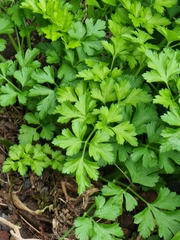 Petroselinum crispume0
- Treatment
- Cells fed with riboflavine1
- Outcome
- levels of chalcone synthase and flavonoide2
- Direction
- highere2
- Comparator
- unfed controlse2
Organisms pictured · Representative pictures of the matched species, not figures from the paper.
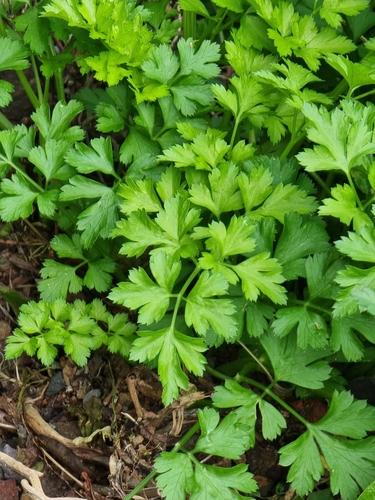
Verbatim
e0“regulate chalcone synthase and flavonoid synthesis in parsley cell cultures”
e1“Cells fed with riboflavin”
e2“synthesize higher levels of chalcone synthase and flavonoid than unfed controls”
Claim · model-written summary
The riboflavin effect in parsley cells did not occur with blue light.
- Taxon
- parsleyPetroselinum crispume0
- Treatment
- blue lighte3
- Outcome
- This effecte3
- Direction
- did not occure3
Not reportedComparator
Organisms pictured · Representative pictures of the matched species, not figures from the paper.
Verbatim
e0“regulate chalcone synthase and flavonoid synthesis in parsley cell cultures”
e3“This effect did not occur with blue light”
Claim · model-written summary
UV-B irradiation of parsley cells at 2°C required the same fluence as controls irradiated at 25°C for chalcone synthase and flavonoid induction.
- Taxon
- parsleyPetroselinum crispume0
- Treatment
- UV‐B light (0.5–15 min) at 2°Ce5
- Outcome
- fluence requirement for chalcone synthase and flavonoid inductione4
- Direction
- samee4
- Comparator
- controls irradiated at 25°Ce4
Organisms pictured · Representative pictures of the matched species, not figures from the paper.
Verbatim
e0“regulate chalcone synthase and flavonoid synthesis in parsley cell cultures”
e4“have the same fluence requirement for chalcone synthase and flavonoid induction as controls irradiated at 25°C”
e5“Cells irradiated with UV‐B light (0.5–15 min) at 2°C”
Claim · model-written summary
The apparent K D of the parsley microsomal flavin-binding receptor is about 3.6 μM.
- Taxon
- parsleyPetroselinum crispume6
- Outcome
- apparent K De7
- Value
- 3.6 μ Me7
Organisms pictured · Representative pictures of the matched species, not figures from the paper.
Verbatim
e6“The parsley microsomal flavin binding receptor(s) have a possible role in physiological photoreception”
e7“apparent K D of about 3.6 μ M”
Claim · model-written summary
Flavin mononucleotide, roseoflavin and FAD compete with riboflavin for the parsley microsomal flavin-binding site, each with lower affinity.
- Taxon
- parsleyPetroselinum crispume6
- Compound
- Flavin mononucleotidee1
- Outcome
- can compete with riboflavin for this binding site(s)e1
- Qualifier
- lower affinity than riboflavine1
Organisms pictured · Representative pictures of the matched species, not figures from the paper.
Verbatim
e6“The parsley microsomal flavin binding receptor(s) have a possible role in physiological photoreception”
e1“Flavin mononucleotide, roseoflavin, and flavin adenine dinucleotide can compete with riboflavin for this binding site(s), although each has lower affinity than riboflavin”
Claim · model-written summary
Non-denaturing detergent solubilisation of parsley microsomal protein inhibited flavin binding.
- Taxon
- parsleyPetroselinum crispume6
- Treatment
- resuspension of the microsomal pellet in non‐denaturing detergentse1
- Outcome
- flavin bindinge2
- Direction
- inhibitede2
Not reportedComparator
Organisms pictured · Representative pictures of the matched species, not figures from the paper.
Verbatim
e6“The parsley microsomal flavin binding receptor(s) have a possible role in physiological photoreception”
e1“Most microsomal protein was solubilized by resuspension of the microsomal pellet in non‐denaturing detergents”
e2“this inhibited flavin binding”
The same questions in other papers
light · quality: phytochemicals · Petroselinum crispum (parsley)Positive and negative results
3 in the opposite direction
- positive
- positive
- positive
Claims are grouped by organism, treatment and what was measured or targeted. A paper counts as positive when any of its claims in the group is positive.