Abstract
Chicory (Cichorium intybus L.) is a cash crop cultivated in Western Europe for inulin production. Due to actual and future climate changes, this plant could be exposed to severe water stress at the end of its growing period, leading to a decrease of its yield. The aim of this work was to investigate the chicory root water uptake dynamics and the plant ability to compensate a lack of water in the upper horizons. We performed a controlled experiment with 3 replicates under contrasted irrigation scenarios. We observed that, in case of drought, total root length decreased and root profiles developed deeper. We successfully used a one-dimensional Richards-based model with a stress function and a compensation mechanism (Hydrus 1-D) to inversely characterize the dynamics of the actual sink-term profiles under both irrigation scenarios. We could also use the model to assess the compensation thanks to a weighted stress index that is consistent between replicates. The extraction profiles evolved differently under water-deficit and controlled situations. The passive compensation mechanism allowed chicory roots under water-limited conditions to take water deeper in the soil, where they had only few lateral roots. We found that, in case of drought, compensation started before the plants had to reduce their transpiration rate. Because the soil kept drying out, compensation was not sufficient anymore, and the plants had to decrease their transpiration some days later. However, chicories maintained their metabolism and continued to transpire and to growth slowly. This allowed them to adapt thanks to an active compensation mechanism, by generating new lateral roots in wetter horizons. This study also showed that there was no unique Feddes stress parameter set able to describe plant behavior under contrasted irrigation conditions or even under different plant development stages.
Abstract from the paper’s OpenAlex record, shown for indexing and research. Copyright remains with the authors or the publisher. Read at the source ↗
The text the model read, with the source record’s inline markup (italics, sub- and superscripts) rendered and its character entities decoded; quote offsets refer to the raw text.
Claims 12
Claim · model-written summary
Drought decreased total root length.
- Taxon
- Cichorium intybus var. sativum
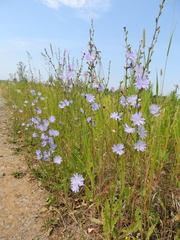 Cichorium intybus var. sativumt0
- Treatment
- droughte0
- Outcome
- total root lengthe0
- Direction
- decreasede0
Not reportedComparator
Organisms pictured · Representative pictures of the matched species, not figures from the paper.
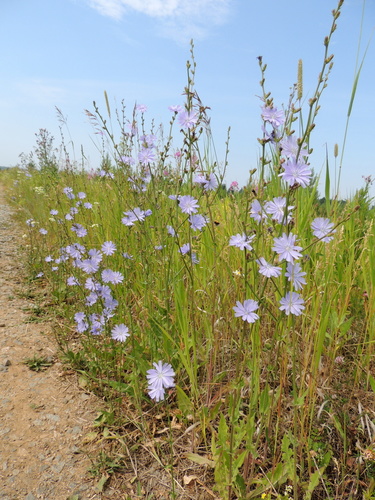
Verbatim
e0“in case of drought, total root length decreased”
t0“Cichorium intybus var. sativum”
Claim · model-written summary
Drought shifted root profiles deeper.
- Taxon
- Cichorium intybus var. sativumCichorium intybus var. sativumt0
- Treatment
- droughte0
- Outcome
- root profilese0
- Direction
- deepere0
Not reportedComparator
Organisms pictured · Representative pictures of the matched species, not figures from the paper.
Verbatim
e0“in case of drought, total root length decreased and root profiles developed deeper.”
t0“Cichorium intybus var. sativum”
Claim · model-written summary
Hydrus 1-D inversely characterized actual sink-term profile dynamics under both irrigation scenarios.
- Taxon
- Cichorium intybus var. sativumCichorium intybus var. sativumt0
- Outcome
- dynamics of the actual sink-term profilese0
Not reportedComparatorValue
Organisms pictured · Representative pictures of the matched species, not figures from the paper.
Verbatim
e0“We successfully used a one-dimensional Richards-based model with a stress function and a compensation mechanism (Hydrus 1-D) to inversely characterize the dynamics of the actual sink-term profiles under both irrigation scenarios.”
t0“Cichorium intybus var. sativum”
Claim · model-written summary
A weighted stress index assessed compensation consistently between replicates.
- Taxon
- Cichorium intybus var. sativumCichorium intybus var. sativumt0
- Outcome
- compensatione0
- Comparator
- between replicatese0
Organisms pictured · Representative pictures of the matched species, not figures from the paper.
Verbatim
e0“We could also use the model to assess the compensation thanks to a weighted stress index that is consistent between replicates.”
t0“Cichorium intybus var. sativum”
Claim · model-written summary
Water extraction profiles differed between water deficit and controlled conditions.
- Taxon
- Cichorium intybus var. sativumCichorium intybus var. sativumt0
- Treatment
- water-deficite0
- Outcome
- extraction profilese0
- Comparator
- controlled situationse0
Not reportedDirection
Organisms pictured · Representative pictures of the matched species, not figures from the paper.
Verbatim
e0“The extraction profiles evolved differently under water-deficit and controlled situations.”
t0“Cichorium intybus var. sativum”
Claim · model-written summary
Passive compensation let chicory roots take up water deeper in soil despite few lateral roots there.
- Taxon
- chicory
 Cichorium intybuse0
- Outcome
- take water deeper in the soile0
- Qualifier
- passive compensation mechanisme0
Organisms pictured · Representative pictures of the matched species, not figures from the paper.

Verbatim
e0“The passive compensation mechanism allowed chicory roots under water-limited conditions to take water deeper in the soil, where they had only few lateral roots.”
Claim · model-written summary
Under drought, compensation began before transpiration had to decline.
- Taxon
- Cichorium intybus var. sativumCichorium intybus var. sativumt0
- Outcome
- compensation started before the plants had to reduce their transpiration ratee0
Organisms pictured · Representative pictures of the matched species, not figures from the paper.
Verbatim
e0“in case of drought, compensation started before the plants had to reduce their transpiration rate.”
t0“Cichorium intybus var. sativum”
Claim · model-written summary
As soil dried further, compensation became insufficient.
- Taxon
- Cichorium intybus var. sativumCichorium intybus var. sativumt0
- Outcome
- compensation was not sufficient anymoree0
Organisms pictured · Representative pictures of the matched species, not figures from the paper.
Verbatim
e0“Because the soil kept drying out, compensation was not sufficient anymore”
t0“Cichorium intybus var. sativum”
Claim · model-written summary
Plants subsequently decreased transpiration.
- Taxon
- Cichorium intybus var. sativumCichorium intybus var. sativumt0
- Outcome
- transpiratione0
- Direction
- decreasee0
Organisms pictured · Representative pictures of the matched species, not figures from the paper.
Verbatim
e0“the plants had to decrease their transpiration some days later”
t0“Cichorium intybus var. sativum”
Claim · model-written summary
Chicories maintained metabolism and continued slow transpiration and growth.
- Taxon
- chicoriesCichorium intybuse0
- Outcome
- maintained their metabolism and continued to transpire and to growth slowlye0
Organisms pictured · Representative pictures of the matched species, not figures from the paper.
Verbatim
e0“chicories maintained their metabolism and continued to transpire and to growth slowly.”
Claim · model-written summary
Chicories generated new lateral roots in wetter horizons as active compensation.
- Taxon
- Cichorium intybus var. sativumCichorium intybus var. sativumt0
- Outcome
- generating new lateral roots in wetter horizonse0
- Qualifier
- active compensation mechanisme0
Organisms pictured · Representative pictures of the matched species, not figures from the paper.
Verbatim
e0“active compensation mechanism, by generating new lateral roots in wetter horizons.”
t0“Cichorium intybus var. sativum”
Claim · model-written summary
No single Feddes stress parameter set described behavior across irrigation conditions or development stages.
- Taxon
- Cichorium intybus var. sativumCichorium intybus var. sativumt0
- Outcome
- describe plant behaviore0
- Comparator
- contrasted irrigation conditionse0
Organisms pictured · Representative pictures of the matched species, not figures from the paper.
Verbatim
e0“there was no unique Feddes stress parameter set able to describe plant behavior under contrasted irrigation conditions or even under different plant development stages.”
t0“Cichorium intybus var. sativum”
The same questions in other papers
drought · growth · Cichorium intybus (chicory)Positive and negative results
3 papers in the same direction as this paper · 2 in the opposite direction
- positive
- positive
- negative
2 papers more in this group
See all 6 papers →Claims are grouped by organism, treatment and what was measured or targeted. A paper counts as positive when any of its claims in the group is positive.