Abstract
In 1999, pod pest surveys were conducted within the Blantyre Shire Highlands Rural Development Project (RDP) Area, at on-farm trial sites in Nansadi and Mangunda sections of Matapwata Extension Planning Area (EPA) and Lirangwe section of Chiradzulu North (Mombezi) EPA. This article reports results of the surveys in Mangunda section. At crop maturity, pigeon pea (Cajanus cajan) pods as well as pods from Crotalaria ochroleuca, Tephrosia vogelii, Dolichos and other plant hosts were collected and examined for infestation. The results from medium duration genotypes indicated that pod-sucking bugs are a major problem for all genotypes. There were some indications that Chilinga and ICEAP 00073 showed less damage to borers compared to ICEAP 00068 and ICP 6927. Results from long duration genotypes showed that pod-sucking bugs are also a major constraint later in the season. ICP 9145 showed less pest damage in intercrops compared to sole crops, but the differences were not significant. With respect to overall damage and damage by pod-sucking bugs, the ICEAP genotypes performed slightly worse than ICP 9145. The odds of damage were significantly different between the locations, with higher values for the humid and cool sites (Matapwata) compared to the warm and semi-humid sites (Mombezi). The pests were identified as the noctuid Pardasena virgulana that was occasionally parasitized by Cotesia sp. and the tortricid Leguminivora ptychora. L. ptychora and Etiella zinckenella were also collected from Tephrosia pods. Within pods of both pigeon pea and Crotalaria a large chalcidoid wasp (Eurytoma sp.) was abundant. Parasitism of Lampides boeticus by Neotypus intermedius (Ichneumonidae) was high, particularly on Crotalaria. Maruca vitrata parasitization by Braunsia sp. (Braconidae) was also greater on Crotalaria than on pigeon pea.
Abstract from the paper’s OpenAlex record, shown for indexing and research. Copyright remains with the authors or the publisher.
The text the model read, with the source record’s inline markup (italics, sub- and superscripts) rendered and its character entities decoded; quote offsets refer to the raw text.
Claims 12
Claim · model-written summary
Pod-sucking bugs were a major problem for all medium duration pigeon pea genotypes.
- Taxon
- pigeon pea
 Cajanus cajane0
- Material
- medium duration genotypese1
- Interactor
- pod-sucking bugse1pest
- Outcome
- major probleme1
- Qualifier
- for all genotypese1
Organisms pictured · Representative pictures of the matched species, not figures from the paper.

Verbatim
e0“At crop maturity, pigeon pea (Cajanus cajan) pods as well as pods from Crotalaria ochroleuca, Tephrosia vogelii, Dolichos and other plant hosts were collected and examined for infestation”
e1“The results from medium duration genotypes indicated that pod-sucking bugs are a major problem for all genotypes”
Claim · model-written summary
Pod-sucking bugs were also a major constraint later in the season for long duration pigeon pea genotypes.
- Taxon
- pigeon peaCajanus cajane0
- Material
- long duration genotypese2
- Interactor
- pod-sucking bugse2pest
- Outcome
- major constrainte2
- Qualifier
- later in the seasone2
Organisms pictured · Representative pictures of the matched species, not figures from the paper.
Verbatim
e0“At crop maturity, pigeon pea (Cajanus cajan) pods as well as pods from Crotalaria ochroleuca, Tephrosia vogelii, Dolichos and other plant hosts were collected and examined for infestation”
e2“Results from long duration genotypes showed that pod-sucking bugs are also a major constraint later in the season”
Claim · model-written summary
Chilinga showed some indication of less borer damage than ICEAP 00068 and ICP 6927.
- Taxon
- pigeon peaCajanus cajane0
- Material
- Chilingae3
- Interactor
- borerse3pest
- Outcome
- damage to borerse3
- Direction
- lesse3
- Qualifier
- some indicationse3
- Comparator
- ICEAP 00068 and ICP 6927e3
Organisms pictured · Representative pictures of the matched species, not figures from the paper.
Verbatim
e0“At crop maturity, pigeon pea (Cajanus cajan) pods as well as pods from Crotalaria ochroleuca, Tephrosia vogelii, Dolichos and other plant hosts were collected and examined for infestation”
e3“There were some indications that Chilinga and ICEAP 00073 showed less damage to borers compared to ICEAP 00068 and ICP 6927”
Claim · model-written summary
ICEAP 00073 showed some indication of less borer damage than ICEAP 00068 and ICP 6927.
- Taxon
- pigeon peaCajanus cajane0
- Material
- ICEAP 00073e3
- Interactor
- borerse3pest
- Outcome
- damage to borerse3
- Direction
- lesse3
- Qualifier
- some indicationse3
- Comparator
- ICEAP 00068 and ICP 6927e3
Organisms pictured · Representative pictures of the matched species, not figures from the paper.
Verbatim
e0“At crop maturity, pigeon pea (Cajanus cajan) pods as well as pods from Crotalaria ochroleuca, Tephrosia vogelii, Dolichos and other plant hosts were collected and examined for infestation”
e3“There were some indications that Chilinga and ICEAP 00073 showed less damage to borers compared to ICEAP 00068 and ICP 6927”
Claim · model-written summary
ICP 9145 had less pest damage in intercrops than in sole crops, a difference that was not significant.
- Taxon
- pigeon peaCajanus cajane0
- Material
- ICP 9145e4
- Treatment
- intercropse4
- Outcome
- pest damagee4
- Direction
- lesse4
- Qualifier
- differences were not significante4
- Comparator
- sole cropse4
Organisms pictured · Representative pictures of the matched species, not figures from the paper.
Verbatim
e0“At crop maturity, pigeon pea (Cajanus cajan) pods as well as pods from Crotalaria ochroleuca, Tephrosia vogelii, Dolichos and other plant hosts were collected and examined for infestation”
e4“ICP 9145 showed less pest damage in intercrops compared to sole crops, but the differences were not significant”
Claim · model-written summary
ICEAP genotypes performed slightly worse than ICP 9145 for overall damage and damage by pod-sucking bugs.
- Taxon
- pigeon peaCajanus cajane0
- Material
- ICEAP genotypese5
- Interactor
- pod-sucking bugse5pest
- Outcome
- overall damage and damage by pod-sucking bugse5
- Direction
- worsee5
- Qualifier
- slightlye5
- Comparator
- ICP 9145e5
Organisms pictured · Representative pictures of the matched species, not figures from the paper.
Verbatim
e0“At crop maturity, pigeon pea (Cajanus cajan) pods as well as pods from Crotalaria ochroleuca, Tephrosia vogelii, Dolichos and other plant hosts were collected and examined for infestation”
e5“With respect to overall damage and damage by pod-sucking bugs, the ICEAP genotypes performed slightly worse than ICP 9145”
Claim · model-written summary
The odds of damage were significantly higher at the humid and cool Matapwata sites than at the warm and semi-humid Mombezi sites.
- Taxon
- pigeon peaCajanus cajane0
- Outcome
- odds of damagee6
- Direction
- highere6
- Comparator
- warm and semi-humid sites (Mombezi)e6
- Setting
- humid and cool sites (Matapwata)e6
Organisms pictured · Representative pictures of the matched species, not figures from the paper.
Verbatim
e0“At crop maturity, pigeon pea (Cajanus cajan) pods as well as pods from Crotalaria ochroleuca, Tephrosia vogelii, Dolichos and other plant hosts were collected and examined for infestation”
e6“The odds of damage were significantly different between the locations, with higher values for the humid and cool sites (Matapwata) compared to the warm and semi-humid sites (Mombezi)”
Claim · model-written summary
The pests were identified as the noctuid Pardasena virgulana and the tortricid Leguminivora ptychora.
- Taxon
- pigeon peaCajanus cajane0
- Interactor
- Pardasena virgulanae7pest
- Second interactor
- Leguminivora ptychoraLeguminivora ptychorae7pest
- Outcome
- pests were identifiede7
- Qualifier
- occasionally parasitized by Cotesia sp.e7
Organisms pictured · Representative pictures of the matched species, not figures from the paper.
Verbatim
e0“At crop maturity, pigeon pea (Cajanus cajan) pods as well as pods from Crotalaria ochroleuca, Tephrosia vogelii, Dolichos and other plant hosts were collected and examined for infestation”
e7“The pests were identified as the noctuid Pardasena virgulana that was occasionally parasitized by Cotesia sp. and the tortricid Leguminivora ptychora”
Claim · model-written summary
L. ptychora and Etiella zinckenella were also collected from Tephrosia pods.
- Interactor
- L. ptychoraLeguminivora ptychorae1pest
- Second interactor
- Etiella zinckenella
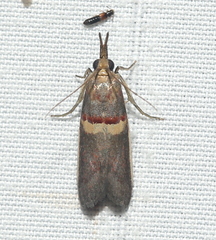 Etiella zinckenellae1pest
- Outcome
- collectede1
 Tephrosia
Organisms pictured · Representative pictures of the matched species, not figures from the paper.


Verbatim
e1“L. ptychora and Etiella zinckenella were also collected from Tephrosia pods”
Claim · model-written summary
A large chalcidoid wasp, Eurytoma sp., was abundant within pods of pigeon pea and Crotalaria.
- Taxon
- pigeon peaCajanus cajane1
- Outcome
- was abundante1
 Eurytoma
Organisms pictured · Representative pictures of the matched species, not figures from the paper.

Verbatim
e1“Within pods of both pigeon pea and Crotalaria a large chalcidoid wasp (Eurytoma sp.) was abundant”
Claim · model-written summary
Parasitism of Lampides boeticus by Neotypus intermedius was high, particularly on Crotalaria.
- Taxon
- Crotalaria
 Crotalariae1
- Interactor
- Lampides boeticus
 Lampides boeticuse1pest
- Second interactor
- Neotypus intermediuse1biocontrol_agent
- Outcome
- Parasitism of Lampides boeticuse1
- Qualifier
- was high, particularly on Crotalariae1
Organisms pictured · Representative pictures of the matched species, not figures from the paper.


Verbatim
e1“Parasitism of Lampides boeticus by Neotypus intermedius (Ichneumonidae) was high, particularly on Crotalaria”
Claim · model-written summary
Parasitization of Maruca vitrata by Braunsia sp. was greater on Crotalaria than on pigeon pea.
- Taxon
- CrotalariaCrotalariae1
- Interactor
- Maruca vitrata
 Maruca vitratae1pest
- Second interactor
- Braunsia sp.e1biocontrol_agent
- Outcome
- Maruca vitrata parasitizatione1
- Direction
- greatere1
- Comparator
- pigeon peae1
Organisms pictured · Representative pictures of the matched species, not figures from the paper.

Verbatim
e1“Maruca vitrata parasitization by Braunsia sp. (Braconidae) was also greater on Crotalaria than on pigeon pea”
The same questions in other papers
intercropping · pest · Cajanus cajan (pigeon pea)Results differ
2 papers in the same direction as this paper · 10 reporting no difference from an alternative
- positive
- positive
- positive
9 papers more in this group
See all 13 papers →Claims are grouped by organism, treatment and what was measured or targeted. A paper counts as positive when any of its claims in the group is positive.