Abstract
Two pot trials were conducted in Sugar Crops Research Institute, Giza Research Station, ARC, Egypt in the two successive seasons of 1992/93 and 1993/94. The purpose of this work was to assess the effect of sugar beet interference (1 sugar beef: 5 weed plants ratio) on growth characteristics of above and sub-soil parts some common assodated weed species. Sugar beet exerted a noticeable reductions in height, number of branches and leaves ,fresh and dry weights of foliage and underground parts/plant of existing weed species after 105, 135 and 180 days from sowing. The extent of reductions was mainly depenent on the neighbour-ing weed species. Shoot growth reduction was more striking with bindweed (Convowulus arvensis, L.), followed by wild beet (Beta vulgaris, L.). Sugar beet interference decreased the number of branches and leaves and fresh and dry weights of aerial parts of bindweed plant than the control after 135 days from sowing by 61.4, 63.2, 78.3 and 74.7% respectively. Contrarily, canarygrass (Phalaris minor Retz) can withstand competition of sugar beet without any significant reductions in its shoot growth. Other weed species: dock weed (Rumex dentatus L.); lambsquarters (Chenopodium murale L.); tooth pick (Ammi majus L.) and bermuda-grass (Cynodon dactylon (L.) Pers.) were in-between. Hazardous impact of beet interference on underground parts of weeds was more pronounced with dock weed followed by wild beet and lambsquarters, whereas tooth pick was the only non affected weed by sub-soil competition.
Abstract from the paper’s OpenAlex record, shown for indexing and research. Copyright remains with the authors or the publisher. Read at the source ↗
The text the model read, with the source record’s inline markup (italics, sub- and superscripts) rendered and its character entities decoded; quote offsets refer to the raw text.
Claims 10
Claim · model-written summary
Sugar beet interference reduced weed height, branching, leaf number, and biomass across sampled times.
- Taxon
- Sugar beet
 Beta vulgaris subsp. vulgarise0
- Treatment
- Sugar beete0
- Interactor
- weed speciese0weed
- Outcome
- height, number of branches and leaves ,fresh and dry weights of foliage and underground parts/plant of existing weed speciese0
- Direction
- reductionse0
- Qualifier
- after 105, 135 and 180 days from sowinge0
Not reportedComparator
Organisms pictured · Representative pictures of the matched species, not figures from the paper.

Verbatim
e0“Sugar beet exerted a noticeable reductions in height, number of branches and leaves ,fresh and dry weights of foliage and underground parts/plant of existing weed species after 105, 135 and 180 days from sowing”
Claim · model-written summary
Shoot growth reduction was greatest for bindweed.
- Taxon
- SUGAR BEETBeta vulgaris subsp. vulgarist0
- Interactor
- bindweed (Convowulus arvensis, L.)e0weed
- Outcome
- Shoot growthe0
- Direction
- reduction was more strikinge0
Organisms pictured · Representative pictures of the matched species, not figures from the paper.
Verbatim
t0“SUGAR BEET”
e0“Shoot growth reduction was more striking with bindweed (Convowulus arvensis, L.), followed by wild beet (Beta vulgaris, L.)”
Claim · model-written summary
Wild beet had the next largest shoot growth reduction.
- Taxon
- SUGAR BEETBeta vulgaris subsp. vulgarist0
- Interactor
- wild beet (Beta vulgaris, L.)e0weed
- Outcome
- Shoot growthe0
- Direction
- reductione0
Organisms pictured · Representative pictures of the matched species, not figures from the paper.
Verbatim
t0“SUGAR BEET”
e0“Shoot growth reduction was more striking with bindweed (Convowulus arvensis, L.), followed by wild beet (Beta vulgaris, L.)”
Claim · model-written summary
Sugar beet interference reduced bindweed branch number by 61.4% at 135 days.
- Taxon
- Sugar beetBeta vulgaris subsp. vulgarise0
- Treatment
- Sugar beet interferencee0
- Interactor
- bindweede0weed
- Outcome
- number of branchese0
- Direction
- decreasede0
- Value
- 61.4e0
- Comparator
- controle0
Organisms pictured · Representative pictures of the matched species, not figures from the paper.
Verbatim
e0“Sugar beet interference decreased the number of branches and leaves and fresh and dry weights of aerial parts of bindweed plant than the control after 135 days from sowing by 61.4, 63.2, 78.3 and 74.7% respectively”
Claim · model-written summary
Sugar beet interference reduced bindweed leaf number by 63.2% at 135 days.
- Taxon
- Sugar beetBeta vulgaris subsp. vulgarise0
- Treatment
- Sugar beet interferencee0
- Interactor
- bindweede0weed
- Outcome
- leavese0
- Direction
- decreasede0
- Value
- 63.2e0
- Comparator
- controle0
Organisms pictured · Representative pictures of the matched species, not figures from the paper.
Verbatim
e0“Sugar beet interference decreased the number of branches and leaves and fresh and dry weights of aerial parts of bindweed plant than the control after 135 days from sowing by 61.4, 63.2, 78.3 and 74.7% respectively”
Claim · model-written summary
Sugar beet interference reduced bindweed fresh aerial weight by 78.3% at 135 days.
- Taxon
- Sugar beetBeta vulgaris subsp. vulgarise0
- Treatment
- Sugar beet interferencee0
- Interactor
- bindweede0weed
- Outcome
- freshe0
- Direction
- decreasede0
- Value
- 78.3e0
- Comparator
- controle0
Organisms pictured · Representative pictures of the matched species, not figures from the paper.
Verbatim
e0“Sugar beet interference decreased the number of branches and leaves and fresh and dry weights of aerial parts of bindweed plant than the control after 135 days from sowing by 61.4, 63.2, 78.3 and 74.7% respectively”
Claim · model-written summary
Sugar beet interference reduced bindweed dry aerial weight by 74.7% at 135 days.
- Taxon
- Sugar beetBeta vulgaris subsp. vulgarise0
- Treatment
- Sugar beet interferencee0
- Interactor
- bindweede0weed
- Outcome
- dry weights of aerial partse0
- Direction
- decreasede0
- Value
- 74.7%e0
- Comparator
- controle0
Organisms pictured · Representative pictures of the matched species, not figures from the paper.
Verbatim
e0“Sugar beet interference decreased the number of branches and leaves and fresh and dry weights of aerial parts of bindweed plant than the control after 135 days from sowing by 61.4, 63.2, 78.3 and 74.7% respectively”
Claim · model-written summary
Canarygrass shoot growth did not fall significantly under sugar beet competition.
- Taxon
- sugar beetBeta vulgaris subsp. vulgarise0
- Treatment
- competition of sugar beete0
- Interactor
- canarygrass (Phalaris minor Retz)
 Phalaris minore0weed
- Outcome
- shoot growthe0
- Direction
- without any significant reductionse0
Not reportedComparator
Organisms pictured · Representative pictures of the matched species, not figures from the paper.

Verbatim
e0“canarygrass (Phalaris minor Retz) can withstand competition of sugar beet without any significant reductions in its shoot growth”
Claim · model-written summary
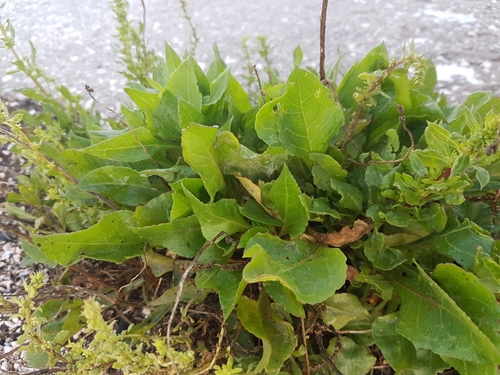
Dock weed had the strongest underground growth damage from beet interference.
- Taxon
- beet
 Beta vulgarise0
- Interactor
- dock weede0weed
- Outcome
- underground parts of weedse0
- Direction
- more pronouncede0
Organisms pictured · Representative pictures of the matched species, not figures from the paper.
Verbatim
e0“Hazardous impact of beet interference on underground parts of weeds was more pronounced with dock weed followed by wild beet and lambsquarters”
Claim · model-written summary
Tooth pick underground parts were unaffected by beet competition.
- Taxon
- SUGAR BEETBeta vulgaris subsp. vulgarist0
- Treatment
- sub-soil competitione0
- Interactor
- tooth picke0weed
- Outcome
- tooth picke0
- Direction
- non affectede0
Not reportedComparator
Organisms pictured · Representative pictures of the matched species, not figures from the paper.
Verbatim
e0“tooth pick was the only non affected weed by sub-soil competition”
t0“SUGAR BEET”
The same questions in other papers
Beta vulgaris subsp. vulgaris · growth · Beta vulgaris (beet)Positive and negative results
16 papers in the same direction as this paper · 5 in the opposite direction
- no effect
- negative
- no effect
18 papers more in this group
See all 22 papers →Beta vulgaris subsp. vulgaris · yield · Beta vulgaris (beet)Positive and negative results
38 papers in the same direction as this paper · 3 in the opposite direction
- negative
- negative
- negative
38 papers more in this group
See all 42 papers →Beta vulgaris subsp. vulgaris · weed · Beta vulgaris (beet)Results agree
3 papers in the same direction as this paper
- positive
- positive
- positive
Claims are grouped by organism, treatment and what was measured or targeted. A paper counts as positive when any of its claims in the group is positive.